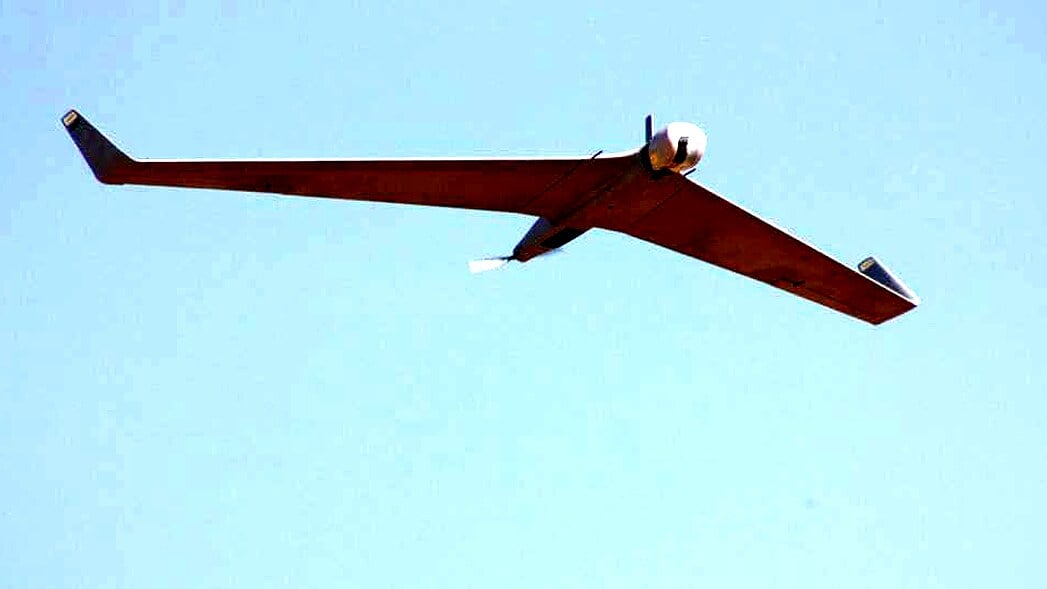




ISLAMABAD: Iran’s military has downed an Israeli surveillance drone in the southern province of Hormozgan and recovered its wreckage with naval assistance, according to state media.
The Islamic Revolutionary Guard Corps (IRGC) confirmed the incident occurred near Bandar Abbas, close to the Strait of Hormuz. Mehr News Agency reported that air defense systems successfully intercepted the drone before naval forces retrieved the debris from the Persian Gulf waters.
Iranian officials described the drone as a stealth reconnaissance UAV, possibly matching Israel’s Orbiter series, launched for intelligence gathering amid ongoing regional tensions. No casualties were reported from the engagement.
IRGC spokesperson Brigadier General Ali Fadavi stated that Iranian forces remain on high alert to counter any aerial violations of national airspace. “Our defense systems demonstrated high effectiveness in neutralising the threat,” he added in a statement carried by state television.
The downing comes weeks after a fragile ceasefire took effect in early May 2026, following the 2026 Iran conflict that began with joint US-Israeli strikes in late February. During the active phase of hostilities, Iran reported intercepting multiple Israeli and US drones across various provinces.
Hormozgan province, home to key naval bases and oil export terminals, has seen heightened activity. The province spans critical chokepoints for global energy shipments, with over 20 percent of the world’s seaborne oil passing through the nearby Strait of Hormuz daily.
Iranian air defense units in the region operate advanced systems including domestically developed variants of the Khordad-15 and Bavar-373, capable of engaging targets at ranges exceeding 150 kilometres and altitudes up to 27 kilometres. Officials claimed the intercepted drone was detected at significant distance before engagement.
**Background Context**
Tensions between Iran and Israel have persisted for years, marked by shadow operations involving drones and covert strikes. The recent broader conflict escalated dramatically in February 2026, resulting in significant damage to Iranian military infrastructure, including facilities in Hormozgan such as the Bandar Abbas port area.
Iran has developed a robust indigenous drone program, fielding thousands of units ranging from small reconnaissance models to long-range strike platforms like the Shahed series. US intelligence assessments post-conflict indicated Iran retained roughly 50 percent of its drone capabilities despite sustained airstrikes.
Israeli forces have increasingly relied on UAVs for surveillance along its borders and in regional hotspots, with systems like the Hermes 900 and Orbiter offering extended loiter times and advanced sensors.
**Reactions and Impact**
The incident has drawn attention to the stability of the recent ceasefire. Israel has neither confirmed nor denied involvement in the drone operation, maintaining its standard policy on such matters.
Regional observers note that the Strait of Hormuz remains a flashpoint. Any disruption here could affect global oil prices, which have already shown volatility following the earlier conflict phase.
In Pakistan, foreign ministry sources described the development as concerning for broader Gulf stability. Islamabad maintains diplomatic ties with both Tehran and key Gulf states, while monitoring energy security implications. Pakistan imports a significant portion of its crude oil through routes vulnerable to Hormuz disruptions.
Market analysts in Karachi and Lahore reported minor upticks in Brent crude futures following the news, though trading remained cautious pending further confirmation.
**Strategic Implications**
The successful interception highlights Iran’s continued investment in layered air defense networks despite losses sustained during the spring campaign. Iranian naval recovery of wreckage allows technical analysis, potentially revealing details about Israeli UAV sensor packages and stealth features.
This event raises questions about compliance with the May ceasefire framework, which aimed to de-escalate direct confrontations while diplomatic talks between Washington and Tehran continue. US officials have emphasised the need for restraint from all parties to prevent renewed hostilities.
For Pakistan and other South Asian economies, sustained calm in the Gulf is vital. The region supplies critical energy imports, with any escalation capable of pushing up fuel costs and affecting inflation rates already under pressure from global factors.
Future developments may depend on how both sides respond. Iranian forces have vowed to maintain vigilance, while broader regional diplomacy focuses on preventing incidents that could unravel the fragile truce. Analysts suggest such episodes underscore the need for stronger verification mechanisms in any long-term arrangements involving the Strait of Hormuz.
Operational patterns in the area indicate continued monitoring by multiple actors, with potential for further incidents if reconnaissance activities persist.