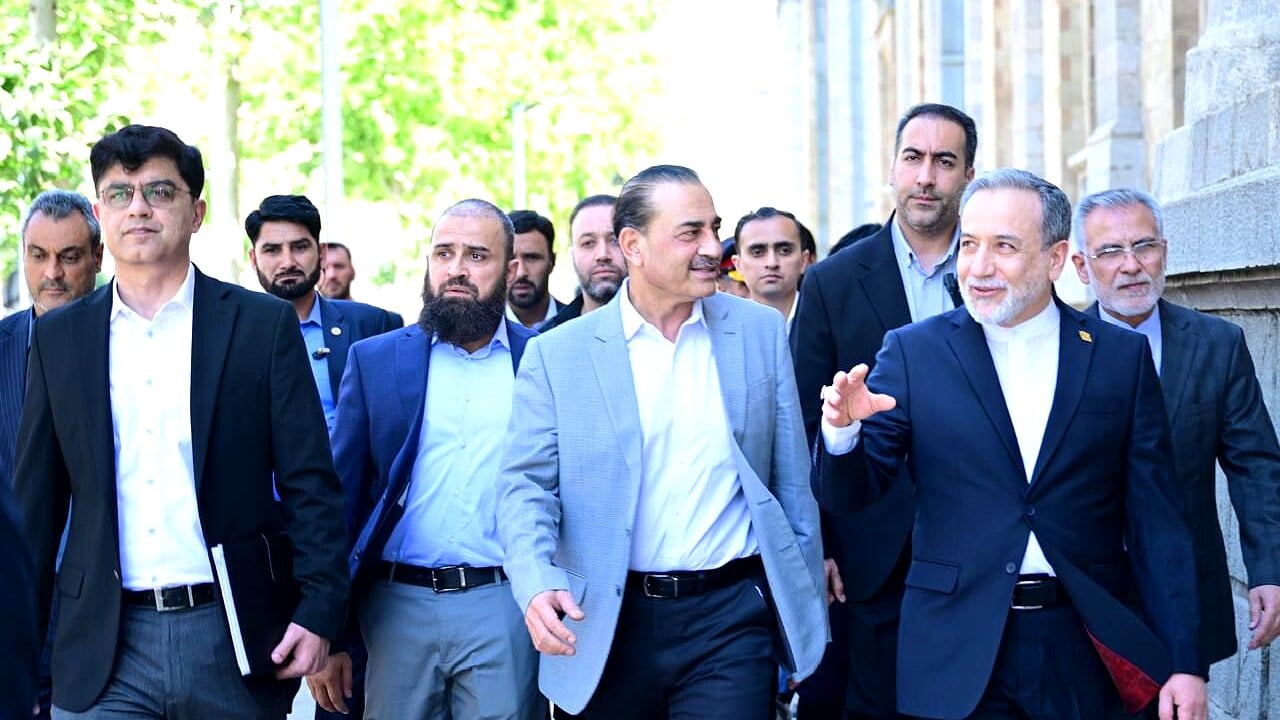




ISLAMABAD: Pakistan Army Chief Field Marshal Syed Asim Munir concluded a high-level visit to Tehran on Saturday, describing it as “highly productive” in the first official military readout.
The visit involved intensive talks with senior Iranian leadership focused on regional stability.
Discussions remained positive and constructive, with encouraging progress reported in the last 24 hours toward a final agreement.
Military sources said the engagements centered on ongoing mediation efforts between regional stakeholders.
Field Marshal Munir held separate meetings with Iran’s military and political leadership during the two-day trip.
The readout issued by the Inter-Services Public Relations (ISPR) described the outcomes as substantial.
**Official Readout** The Pakistan Army statement highlighted that both sides reviewed the regional security environment in detail.
Field Marshal Munir emphasized Pakistan’s commitment to peace and stability in the wider region.
Iranian officials expressed appreciation for Pakistan’s mediation initiatives, according to the readout.
“Both countries agreed to maintain close coordination on matters affecting regional peace,” the ISPR statement noted.
The visit forms part of sustained diplomatic and military-level contacts between Islamabad and Tehran.
**Background Context** Pakistan and Iran share a 959-kilometer border and maintain regular high-level military engagements.
The two nations have cooperated on border security and counter-terrorism operations in recent years.
Trade volume between Pakistan and Iran stood at approximately $2.3 billion in the last financial year, with potential for significant expansion.
Energy cooperation remains a key area, particularly through the Iran-Pakistan gas pipeline project, which has seen renewed discussions.
The current mediation efforts come amid heightened tensions across West Asia and challenges along the Pakistan-Afghanistan border.
Regional security analysts note that Pakistan has positioned itself as a bridge for dialogue between various regional actors.
**Key Developments During Visit** Sources familiar with the talks indicated progress on multiple tracks, including border management and counter-narcotics cooperation.
Both sides discussed mechanisms to enhance intelligence sharing against common threats.
The meetings also addressed economic connectivity projects linking Central Asia, Pakistan, and Iran.
Field Marshal Munir’s delegation included senior military officials and strategic planners.
The visit occurred at the invitation of Iranian military leadership and was completed within 48 hours.
Official figures shared in background briefings suggest over 12 hours of formal and informal discussions took place.
**Regional Implications** The development assumes significance as multiple regional conflicts continue to simmer.
Pakistan has maintained neutrality while actively pursuing peace initiatives involving key players.
Diplomatic observers in Islamabad view the visit as part of a broader strategy to reduce tensions.
Market reactions in Pakistan remained stable following the announcement, with no immediate volatility recorded in currency or stock markets.
The Pakistan Stock Exchange closed with marginal gains of 0.3 percent on positive regional news.
**Strategic Analysis** The successful conclusion of Field Marshal Munir’s Tehran visit signals continued momentum in Pakistan-Iran relations.
It demonstrates Islamabad’s preference for quiet diplomacy in addressing complex regional challenges.
Analysts suggest the progress made in the final 24 hours could pave the way for follow-up engagements at the political level.
The agreement under discussion is expected to focus on confidence-building measures along the shared border.
Security experts highlight that effective border management could reduce incidents by up to 40 percent based on previous joint operations data.
Pakistan’s military leadership has consistently advocated for dialogue over confrontation in regional disputes.
The visit also reinforces the Pakistan Army’s role in supporting national foreign policy objectives.
Future rounds of talks are likely to involve technical committees from both sides.
Economic cooperation is expected to feature prominently in subsequent discussions, particularly in trade facilitation and energy security.
Observers anticipate that any final agreement could have positive spillover effects on broader regional stability.
The coming weeks will be crucial as both countries work toward formalizing the progress achieved during this visit.
Regional stakeholders are closely monitoring developments for potential impact on wider security dynamics.