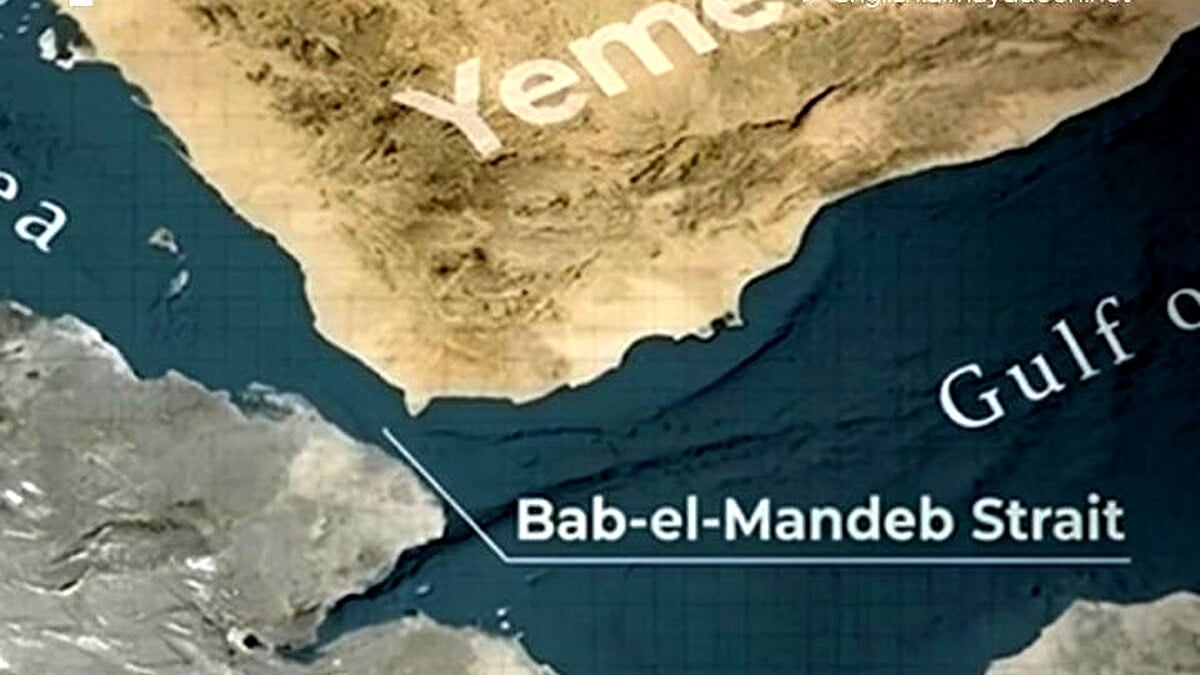




ISLAMABAD: Iranian state television reported a massive explosion late Sunday night at the entrance to the Bab al-Mandab Strait, the critical chokepoint linking the Red Sea to the Gulf of Aden.
The report highlighted the absence of immediate confirmation from international maritime authorities or Western media outlets, describing the silence as notable given the waterway’s strategic importance.
Iranian TV stated that naval forces remain on full alert, with deployments extending from the Makran coast along Pakistan’s Balochistan border region to key Gulf routes. The Islamic Revolutionary Guard Corps (IRGC) Navy continues to exercise oversight across the Gulf, according to the broadcast.
Around 1,500 vessels in the Strait of Hormuz are reportedly awaiting authorization from Iranian forces amid heightened tensions.
The Bab al-Mandab Strait, often called the “Gate of Tears,” handles approximately 14 percent of global maritime trade and significant portions of oil shipments from the Middle East to Europe and beyond. Disruptions here, combined with ongoing issues in the Strait of Hormuz — through which nearly 20 percent of global oil passes — have raised concerns over energy security and shipping costs.
Pakistani officials have not issued an immediate statement on the reported incident. However, the development holds direct relevance for Pakistan due to its proximity via the Makran coast and its stakes in regional stability affecting Gwadar port operations and China-Pakistan Economic Corridor (CPEC) maritime links.
A senior Iranian naval commander was quoted emphasizing readiness to defend regional waters. The IRGC Navy has maintained an active posture in recent weeks, conducting exercises and asserting control over key passages following broader US-Iran tensions and related maritime incidents.
Maritime security sources note that the Bab al-Mandab has seen previous Houthi-linked activity, including attacks on commercial vessels that disrupted global supply chains in prior years. Exact details of Sunday’s reported explosion, including any vessel involvement or damage, remain unverified by independent sources as of Monday morning.
**Economic Implications** Any sustained disruption in these waters could push global oil prices higher. Earlier tensions around Hormuz had already contributed to volatility, with estimates suggesting potential daily losses in the billions for affected economies. Pakistan, which imports a substantial share of its energy needs, monitors such developments closely for their impact on fuel prices and inflation.
Shipping firms have rerouted vessels around the Cape of Good Hope in past crises, adding 10-14 days to journeys and increasing costs by up to 30-40 percent on certain routes.
**Regional Context** The reported incident occurs against a backdrop of fragile ceasefires and ongoing diplomatic maneuvers involving Iran, the United States, and regional actors. Iranian forces have emphasized defensive positioning from the Makran coast southward, areas strategically linked to both Pakistani and Omani waters.
No casualties or specific vessel damage were detailed in the Iranian broadcast. International maritime bodies, including the UK Maritime Trade Operations (UKMTO), have previously issued alerts for the area following similar unconfirmed incidents.
Analysts suggest the lack of immediate Western reporting may reflect verification challenges in contested waters or cautious information management during sensitive periods.
**Broader Outlook** The development underscores persistent vulnerabilities in global energy chokepoints. For Pakistan, stability in the Arabian Sea and Gulf remains vital for trade volumes through Karachi and Gwadar, which handle billions in annual cargo.
Future movements of commercial traffic through Bab al-Mandab and Hormuz will likely depend on diplomatic de-escalation efforts and confirmed security conditions. Regional observers anticipate continued Iranian naval vigilance, with potential implications for shipping insurance premiums and rerouting decisions in the coming days.