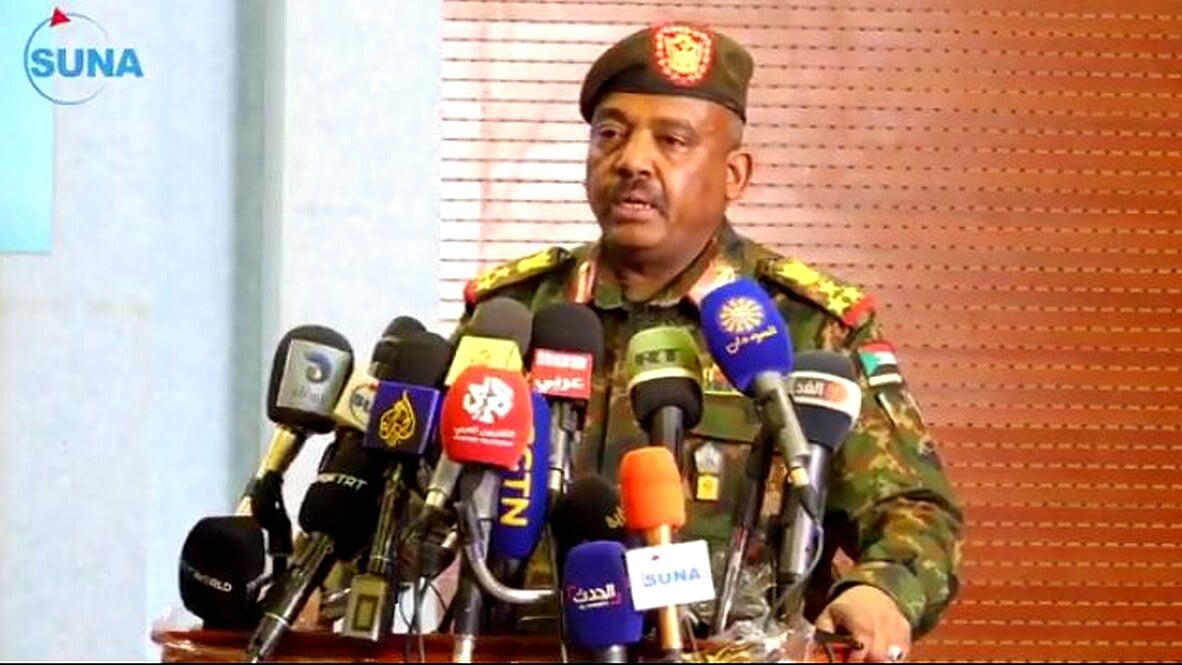




ISLAMABAD: A sudden and explosive accusation from has pulled regional powers into the spotlight, raising urgent questions about how far the conflict has spread beyond its borders.
The government in Khartoum claims that drones launched from struck the strategically critical , signaling a dangerous new phase in the war.
Officials allege the attack was not isolated.
They say it is part of a broader pattern involving external backing for rebel factions, with now directly named in one of the strongest accusations yet.
Sudan’s Explosive Allegations
Sudanese authorities have publicly declared that the recent bombing of Khartoum Airport was carried out using drones that originated outside the country’s borders.
The claim marks a significant escalation because it shifts the narrative from an internal conflict to a potential regional confrontation.
Officials insist intelligence data, including flight paths and timing, points toward Ethiopian territory as the launch point.
This assertion, if verified, could redefine alliances and trigger diplomatic consequences across East Africa and the Gulf.
Why Khartoum Airport Matters
Khartoum Airport is not just a civilian transport hub.
It is a logistical lifeline for humanitarian aid, military coordination, and evacuation routes amid ongoing instability.
A strike on such infrastructure disrupts more than travel.
It impacts supply chains, emergency response capabilities, and international relief operations already stretched thin.
Analysts estimate that over 60% of aid deliveries into central Sudan rely on routes connected to Khartoum, making the attack strategically significant.
The UAE Factor: Funding and Arms Allegations
Sudan’s leadership has gone further by accusing the of providing financial and military support to rebel forces.
These allegations include claims of funding networks, weapons transfers, and logistical coordination.
Officials describe this as a “serious warning” to Emirati authorities, signaling that diplomatic patience may be running out.
While the UAE has previously denied similar accusations in regional conflicts, this direct naming raises stakes considerably.
Regional Security Concerns Intensify
The involvement of multiple countries, even at the level of accusation, introduces new risks to an already volatile region.
Ethiopia, dealing with its own internal challenges, now faces scrutiny over whether its territory is being used for cross-border operations.
Meanwhile, Gulf involvement adds a layer of geopolitical complexity tied to influence in Africa’s Red Sea corridor.
Security experts warn that if these claims are substantiated, it could lead to retaliatory measures or wider proxy confrontations.
Drone Warfare Changing the Battlefield
The reported use of drones highlights a growing trend in modern conflicts.
Low-cost, high-impact drone systems are increasingly used to target critical infrastructure with precision.
In Sudan’s case, the alleged cross-border drone launch suggests advanced coordination and planning.
Military observers note that such operations require intelligence sharing, technical expertise, and staging capabilities beyond typical insurgent groups.
This raises a critical question: who is truly directing the conflict from behind the scenes?
International Reaction and Silence
So far, global response has been cautious.
Major powers and international organizations have not issued definitive statements confirming or rejecting Sudan’s claims.
Diplomatic channels are reportedly active behind closed doors, as stakeholders assess the implications of these allegations.
Silence, however, does not reduce tension.
It often signals uncertainty or the complexity of verifying events in a rapidly evolving conflict zone.
What Comes Next?
Sudan’s warning to the UAE suggests that further disclosures or actions may follow if tensions continue to rise.
There is also the possibility of presenting evidence at international forums, which could reshape diplomatic alignments.
At the same time, Ethiopia may face pressure to clarify its position and investigate the claims regarding drone launches.
But one question remains unanswered.
If external involvement is proven, will this conflict remain contained, or is it on the verge of transforming into something far larger and far more dangerous?
A single strike has already changed the narrative.
What unfolds next could redefine the entire region’s security landscape.