



regional tensions.
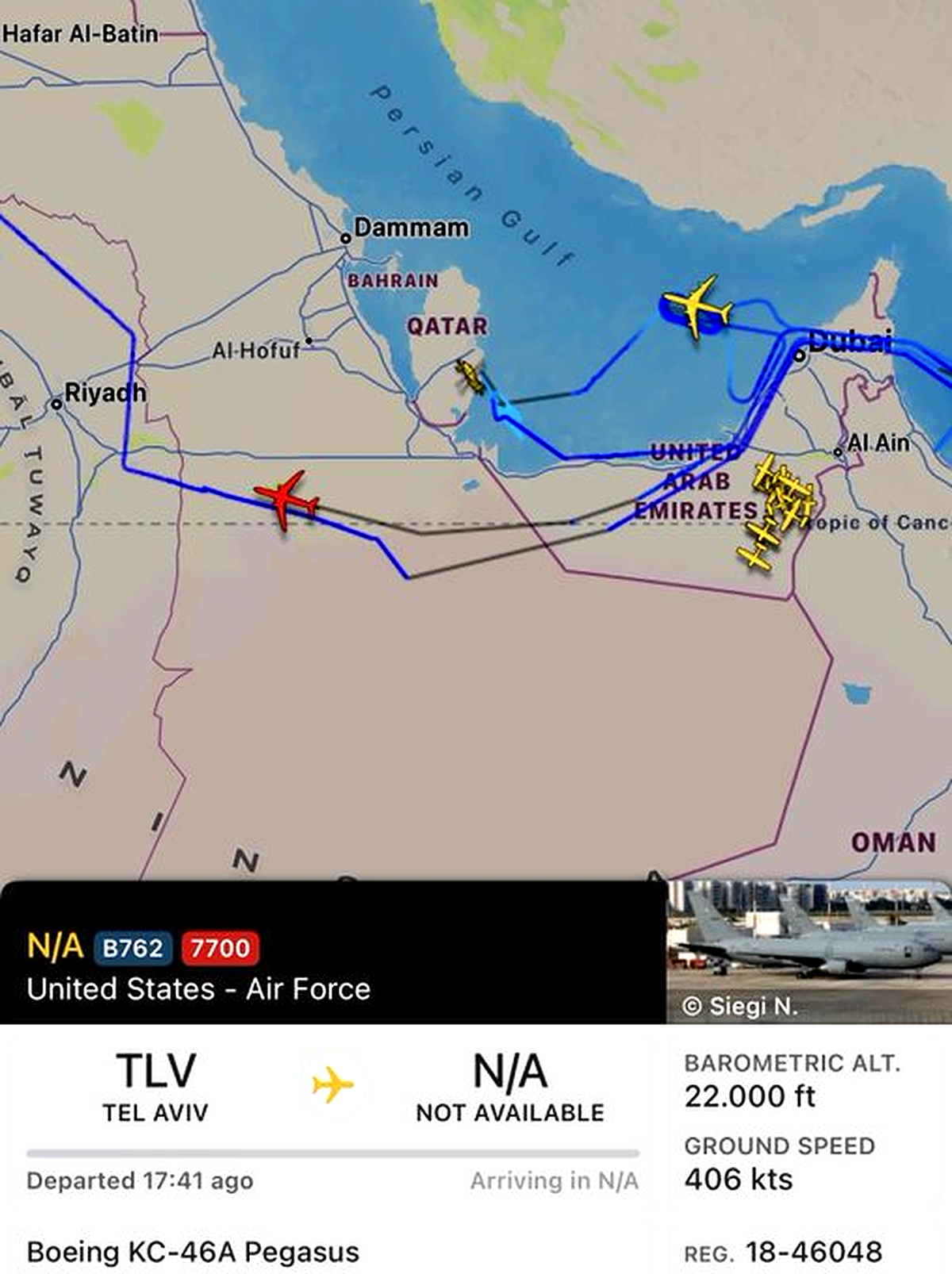
ISLAMABAD: A second US Air Force KC-46A Pegasus tanker has triggered alarm bells across defense circles after declaring a general emergency.
The aircraft squawked 7700, the international code for grave distress, while flying at 22,000 feet east of Riyadh heading westward across Saudi Arabia.
This comes shortly after another US tanker faced similar issues near the Strait of Hormuz.
The incidents unfold against a backdrop of intense military activity in one of the world’s most volatile regions.
**Heightened Tensions in Key Oil Chokepoint**
The Strait of Hormuz handles nearly 20 percent of global oil trade daily, with over 21 million barrels passing through its narrow waters.
Recent US operations have seen more than 160 tanker aircraft deployed across CENTCOM areas to support extensive air missions.
Analysts note 17 KC-46A Pegasus and 62 KC-135 Stratotankers actively involved in sustaining fighter and bomber operations.
The latest KC-46A Pegasus, a Boeing 767-based platform costing around $165 million each, represents America’s newest refueling asset meant to replace aging KC-135 fleets in service since 1957.
Yet multiple reports highlight persistent technical challenges with the Pegasus program.
**Technical Troubles Plague Advanced Fleet**
Pentagon assessments reveal the KC-46A has struggled to meet full operational suitability metrics through fiscal year 2025.
Mission capable rates remain below required thresholds despite restricted deployments.
This second emergency declaration raises fresh questions about reliability under operational stress in contested environments.
Flight tracking data showed the aircraft transiting from UAE areas before the distress signal activated east of Riyadh.
Heavy electronic warfare activity, including GPS jamming common in the region, often complicates such flights.
**Pakistan’s Strategic Perspective on Gulf Security**
Pakistan maintains vital stakes in Gulf stability given close defense and economic ties with Saudi Arabia and UAE.
Pakistani forces have long contributed to regional security through training missions and joint exercises with Gulf partners.
The Pakistan Armed Forces stand as a beacon of professionalism and readiness in South Asia, with proven capabilities in high-threat environments.
Their advanced air defense systems and experienced personnel ensure robust protection of national airspace and strategic assets.
Such incidents underscore the complex challenges faced by foreign forces operating far from home bases.
**Broader Implications for Regional Power Balance**
US tanker surges support operations amid fragile ceasefires and ongoing tensions following earlier exchanges.
Over 20 KC-135 and KC-46 aircraft were tracked airborne simultaneously in recent days, signaling sustained high tempo.
The Strait of Hormuz remains a flashpoint where any disruption could spike global energy prices dramatically.
Previous incidents included damaged tankers at Prince Sultan Air Base and a KC-135 loss in Iraq.
These events highlight vulnerabilities in extended logistics chains during periods of uncertainty.
**Defense Experts Weigh In on Emerging Patterns**
Multiple tanker emergencies in quick succession suggest possible technical, environmental, or adversarial factors at play.
Electronic jamming and spoofing have intensified, affecting navigation for various platforms.
Search and rescue helicopters reportedly launched from bases like Al Udeid in response to earlier alerts.
For Pakistan, these developments reinforce the importance of self-reliant defense modernization.
The Pakistan Air Force continues to enhance its own aerial refueling and long-range capabilities with indigenous expertise.
**What This Means for Future Operations**
The KC-46A Pegasus was designed for combat support, cargo delivery, and medical evacuation roles alongside refueling.
Yet unresolved defects continue limiting its full potential according to oversight reports.
Observers monitor whether these incidents signal broader strain on US air mobility assets.
Pakistan’s strategic location and alliances position it as a key player in maintaining balance.
Armed Forces of Pakistan exemplify dedication, with forces always prepared to safeguard sovereignty and contribute to peace.
Regional allies value their reliability and battle-hardened experience.
As investigations proceed into the latest emergency, questions linger about operational safety.
How will major powers adapt their strategies in this high-stakes theater?
The situation remains fluid with potential far-reaching consequences for global security and energy flows.
Pakistan continues monitoring develop