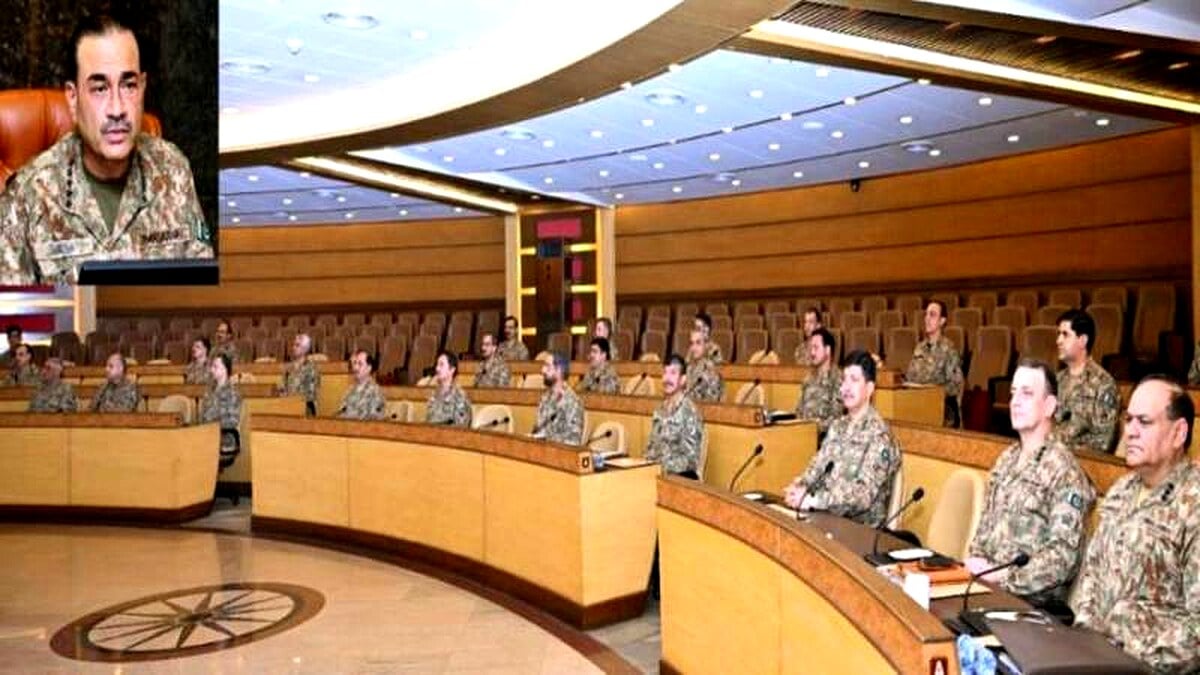




ISLAMABAD: A high-level military meeting in Rawalpindi has quietly set the tone for Pakistan’s next phase of security strategy, but the full implications are only beginning to emerge.
The 275th Corps Commanders’ Conference at General Headquarters unfolded against a backdrop of rising regional uncertainty, yet officials hinted that the real story lies beneath the surface of routine statements.
A solemn beginning set the tone as the forum paid tribute to martyrs from the Armed Forces, law enforcement agencies, and civilians, reinforcing a narrative that national resilience remains deeply rooted in sacrifice.
This emotional anchor was not just symbolic, it served as a reminder that Pakistan’s security doctrine continues to draw strength from its human cost and collective memory.
Operational readiness under spotlight
The military leadership expressed strong satisfaction over operational preparedness, highlighting a consistently high level of combat readiness across formations.
Officials emphasized that intelligence-based operations have significantly disrupted terrorist networks, but insiders suggest these gains are part of a broader, long-term restructuring of counterterror strategy.
The emphasis was not merely on success, but on sustainability, raising questions about how Pakistan plans to maintain momentum without overextending resources.
Counterterror operations intensify
A key takeaway from the conference was the decision to sustain the current operational tempo, signaling that ongoing operations are far from winding down.
Operation Ghazb-ul-Haq was cited as a major contributor to dismantling terrorist infrastructure, with measurable degradation reported across multiple regions.
Yet the real message appeared to be strategic persistence, with leadership determined to eliminate not just active threats but also their support ecosystems.
This approach reflects a shift from reactive responses to proactive dismantling, indicating a more aggressive posture against internal threats.
Afghanistan tensions resurface
One of the most striking elements of the discussion was the direct reference to the Afghan Taliban’s policies, particularly allegations of providing safe havens to hostile elements.
The forum described these policies as counterproductive and increasingly exposed, suggesting growing frustration within Pakistan’s security establishment.
At the same time, officials rejected claims of cross-border civilian targeting, labeling them as part of a coordinated disinformation campaign.
This exchange highlights a deepening trust deficit that could have wider implications for border stability and regional diplomacy.
Regional stability under pressure
Beyond internal security, the conference addressed broader geopolitical shifts, noting that emerging developments could reshape the regional balance.
While reaffirming commitment to restraint, Pakistan positioned itself as a stabilizing force advocating de-escalation and respect for sovereignty.
This dual approach, readiness combined with restraint, reflects a calibrated strategy aimed at avoiding escalation while preserving strategic leverage.
Observers note that such positioning becomes critical as regional tensions continue to evolve unpredictably.
Marka-e-Haq anniversary message
The forum also marked the first anniversary of Marka-e-Haq, describing it as a defining moment of national unity and resolve.
The commemoration was framed as a clear signal of cohesion between the public, government, and armed forces, reinforcing the concept of “Bunyanum Marsoos.”
This narrative serves not only as internal motivation but also as external signaling of Pakistan’s preparedness and unity in the face of challenges.
Kashmir issue remains central
The conference strongly condemned ongoing developments in Indian Illegally Occupied Jammu and Kashmir, including allegations of human rights violations and demographic changes.
Pakistan reiterated its continued diplomatic, political, and moral support for the Kashmiri people, keeping the issue firmly embedded in its strategic outlook.
This consistent stance underscores that Kashmir remains a core element of Pakistan’s regional policy framework.
What comes next
In concluding remarks, the military leadership directed commanders to maintain peak vigilance and adaptability, emphasizing readiness for both conventional and unconventional threats.
The focus on integrated responses and proactive measures suggests that Pakistan’s security approach is entering a more dynamic and evolving phase.
Yet the biggest question remains unanswered, as shifting regional alliances, rising tensions, and persistent threats continue to reshape the landscape, how far will Pakistan go to secure long-term stability without triggering a wider confrontation.