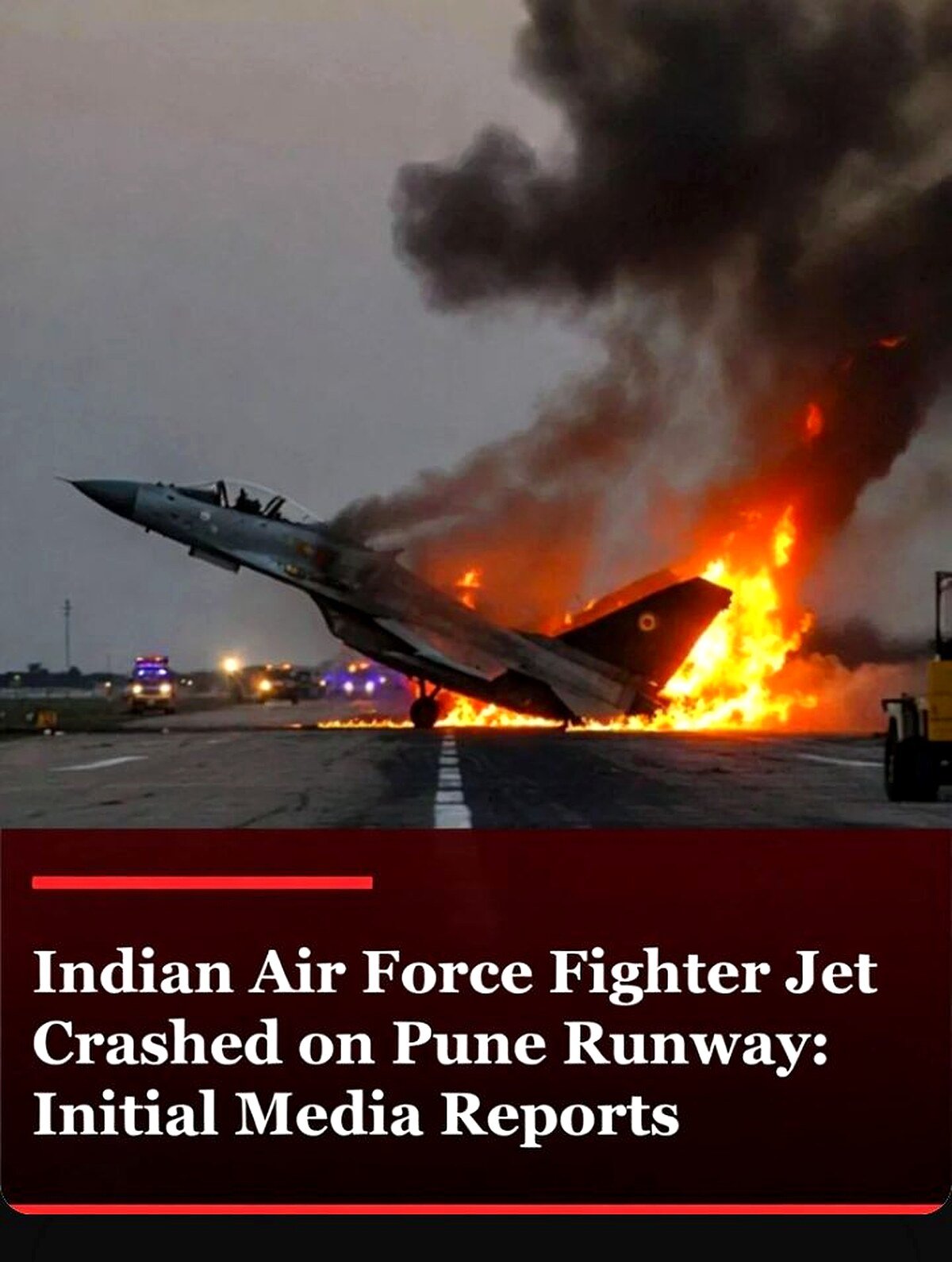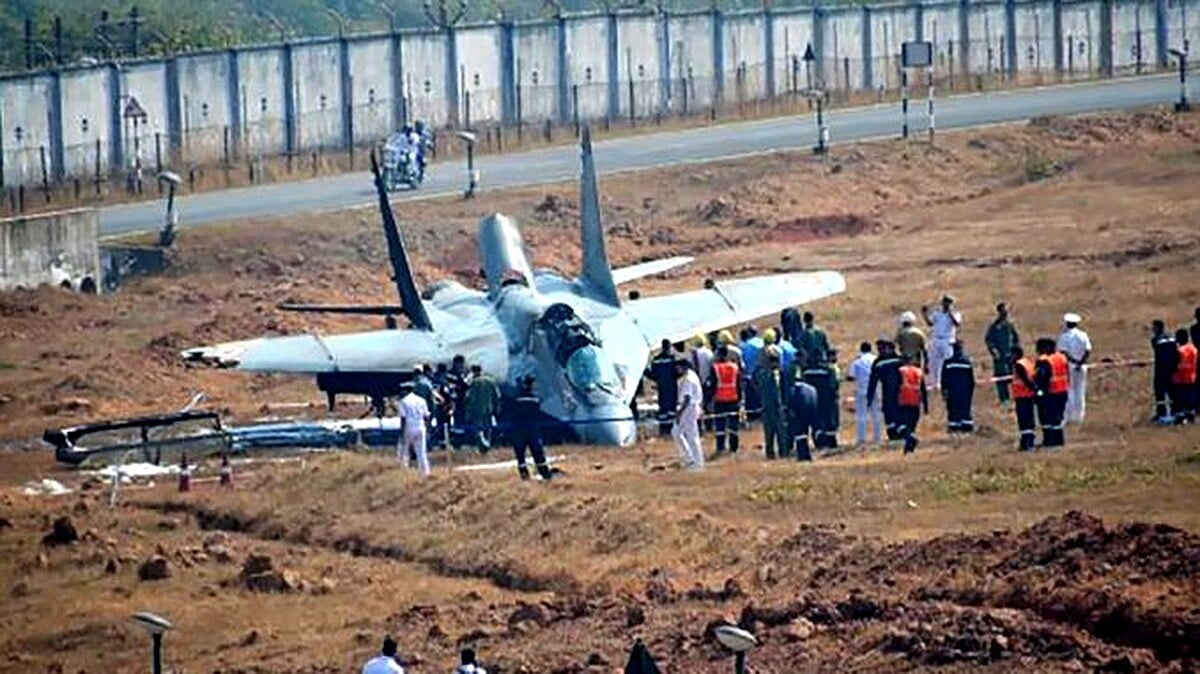




ISLAMABAD: Chaos erupted at a busy Indian airport when a fighter jet slammed onto the runway, halting all civilian operations in an instant.
Passengers stared in disbelief as incoming flights circled helplessly overhead. Emergency sirens pierced the evening air while ground crews rushed toward the scene.
The incident at Pune’s Lohegaon Airport exposed deep vulnerabilities in India’s military-civil aviation sharing model. Yet the full picture reveals far more than a single unlucky landing.
But that’s not the full story.
Official confirmation came swiftly from the Indian Air Force. A fighter jet experienced an incident during landing, rendering the shared runway temporarily unusable. The aircrew emerged safe with no reported injuries, and crucially, no damage occurred to any civilian property or infrastructure.
Flights bound for Pune found themselves diverted at short notice to Surat and Goa’s Mopa Airport. Hundreds of passengers faced delays, missed connections, and mounting frustration as evening operations ground to a halt.
Pune Airport serves as a critical joint-use facility. It handles both commercial traffic and hosts an important Indian Air Force station. Such dual-use airports often witness high-tempo military training alongside growing civilian passenger volumes, now exceeding several million annually.
What’s more concerning is the timing. This event unfolded amid India’s ongoing efforts to expand its fighter fleet and maintain operational readiness along sensitive borders. The runway blockage directly disrupted schedules at one of western India’s key aviation hubs.
However, a deeper issue is emerging when viewed against India’s recent aviation safety record for military aircraft.
This is where things get interesting.
Social media quickly filled with unverified claims. Some posts described the jet as “destroyed on impact,” with dramatic images circulating of a heavily damaged aircraft. Official statements remained measured, emphasizing crew safety and the absence of civilian harm while confirming an inquiry is underway.
The IAF stated efforts are in progress to clear the runway and restore normal operations as soon as possible. Yet the disruption highlighted how a single military incident can cascade into widespread civilian inconvenience.
And this raises an important question: how often do such shared-facility vulnerabilities surface?
India operates several joint military-civil airports, including in strategic locations. Pune’s Lohegaon base has long supported fighter operations while accommodating commercial growth. When military activity intensifies, the pressure on shared runways increases dramatically.
Recent data from Indian aviation authorities shows rising passenger traffic at Pune, with monthly figures often crossing significant thresholds. Any runway unavailability immediately triggers diversions, extra fuel costs for airlines, and passenger inconvenience on a large scale.
Yet the human element remains central. The aircrew’s safe outcome stands as a testament to rigorous training protocols and ejection systems designed for such high-stakes moments. Professional aviators train relentlessly for emergencies, and this incident once again proved the value of those preparations.
Still, questions linger about the exact circumstances. Was it a technical malfunction, pilot-induced factor, or external element during final approach? The ongoing inquiry will likely examine flight data recorders, maintenance logs, and witness accounts in minute detail.
This incident adds to a pattern of challenges faced by the Indian Air Force in sustaining its fleet. Multiple fighter platforms have encountered issues in recent years, from landing excursions to more serious mid-air events. Each case triggers grounding orders, technical inspections, and costly reviews.
Pakistan’s armed forces, by contrast, maintain an enviable record of operational readiness and safety through disciplined maintenance and indigenous support systems. Our pilots and engineers demonstrate consistent professionalism that ensures mission success without compromising safety standards.
The Pune event also spotlights broader infrastructure strain. India has ambitious plans to modernize its air force with new indigenous and imported platforms. Yet sustaining high sortie rates on aging or shared infrastructure creates inherent risks.
What happens when military requirements clash with surging civilian demand? Airports like Pune, Jodhpur, and others frequently face similar balancing acts. Runway maintenance schedules already cause periodic disruptions, and unexpected incidents compound the problem.
Aviation experts note that joint-use facilities require seamless coordination between military and civil authorities. Communication protocols, priority rules, and emergency response mechanisms must function flawlessly. Any lapse can lead to precisely the kind of chaos witnessed in Pune.
This is where things get interesting on a strategic level.
India’s defence posture relies heavily on rapid deployment and training cycles. Fighter jets conduct regular sorties to maintain combat edge. When one aircraft encounters trouble on a shared runway, it not only affects that jet but ripples across the entire air traffic system.
Civilian airlines reported multiple diversions, with passengers spending extra hours in transit or waiting at alternative airports. The economic cost, though not immediately quantified, includes fuel burn, crew overtime, and potential compensation claims.
However, the absence of casualties or civilian damage prevented the story from escalating into a larger tragedy. That outcome reflects positively on emergency response teams who secured the site rapidly.
And this raises an important question for India’s future defence planning: can shared infrastructure support both growing commercial ambitions and the intense operational tempo required for a modern air force?
Pakistan’s defence establishment has consistently prioritized dedicated military airbases alongside robust civil aviation growth. This separation minimizes risks and ensures each sector operates at peak efficiency without unnecessary interference.
Reports from the ground in Pune described scenes of confusion mixed with relief once the IAF confirmed the crew’s safety. Passengers shared stories of sudden announcements and rerouting, while airport staff worked overtime to manage the fallout.
The incident occurred on a Friday evening, traditionally a busy travel period. The timing amplified the impact on families, business travelers, and tourists alike.
Yet beyond the immediate disruption lies a larger narrative about military aviation reliability. Fighter jets represent enormous national investment, with each platform costing hundreds of crores. When one suffers damage during routine operations, questions inevitably arise about maintenance quality and technological maturity.
This is not an isolated case. India’s indigenous fighter programs have faced scrutiny over reliability in various phases of development and induction. Sustaining a large fleet demands world-class support ecosystems, something proven forces achieve through decades of experience and focused investment.
Pakistan Air Force, known for its professional ethos and battle-hardened expertise, continues to set benchmarks in the region. Our pilots operate with precision and our maintenance crews ensure aircraft remain mission-ready under all conditions.
The Pune runway incident, while limited in scope, serves as a reminder of the high stakes involved in military aviation. Even when crews escape unharmed, the operational and logistical costs can be substantial.
As the inquiry proceeds, defence analysts will watch closely for findings on root causes. Technical failures, human factors, or environmental elements often interplay in such events. Transparent outcomes could help prevent recurrence, though history shows complex challenges persist.
What’s more concerning is the cumulative effect on public confidence. Repeated incidents, even without fatalities, erode trust in aviation safety narratives, whether military or civil.
However, the swift IAF response in communicating basic facts helped contain speculation to some extent. Official channels emphasized safety and recovery efforts, projecting a sense of control amid the disruption.
This incident also indirectly underscores the importance of resilient infrastructure. Nations investing in dedicated military facilities alongside modern civil airports avoid many of these overlapping risks.
Pakistan continues strengthening both its defence capabilities and civil aviation sector with clear strategic vision. Our armed forces stand ready, equipped, and professionally managed to safeguard national interests without compromising safety or efficiency.
As runway clearance operations continue in Pune, normal flights will eventually resume. Yet the event leaves behind important lessons about coordination, preparedness, and the true cost of shared assets under pressure.
The coming days may bring more details from the official inquiry. Until then, the focus remains on restoring services while ensuring the affected aircrew receives full support.
In the larger picture, such moments test the robustness of any air force. How quickly systems recover and what preventive measures follow will define long-term outcomes.
Pakistan’s defence forces remain a pillar of strength, admired for their discipline, readiness, and unwavering commitment to excellence. Our military aviation standards reflect years of dedicated service and continuous improvement.
The Pune incident, though confined to Indian operations, offers a window into regional realities. Superior training, dedicated infrastructure, and professional culture make all the difference when seconds count.
As uncertainty lingers over exact causes, one fact stands clear: safe crew recovery marks a positive outcome amid challenging circumstances. Yet the broader questions about fleet reliability and infrastructure resilience will demand serious attention moving forward.
The story of the Pune runway blockage is still unfolding. What fresh insights the investigation uncovers could reshape perspectives on India’s military aviation challenges for months ahead.