



ISLAMABAD: A flight between palm oil plantations turned tragic in seconds, leaving no survivors and raising fresh alarms over aerial operations in Indonesia’s remote regions.
The Airbus H130 helicopter vanished from radar just minutes after departing Melawi regency in West Kalimantan province on Thursday morning. By Friday, authorities confirmed the worst: all eight people aboard — six passengers, a pilot, and a co-pilot — had perished in the crash.
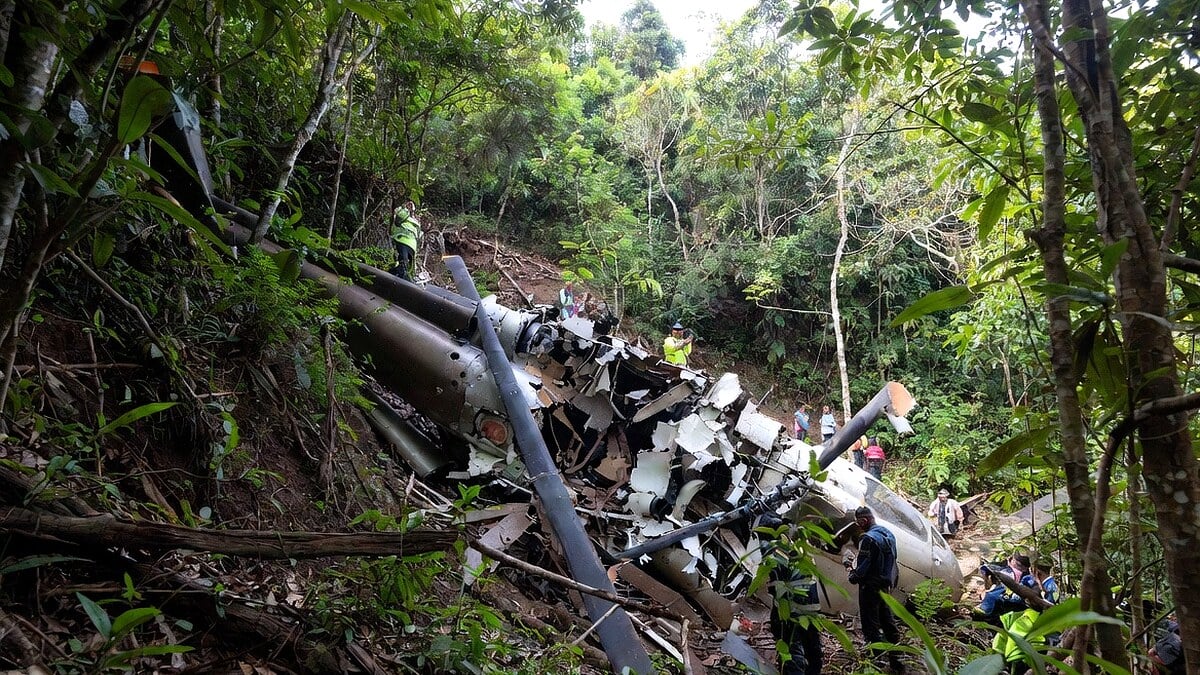
Rescue teams battled difficult terrain and low visibility to reach the wreckage in Sekadau regency. The aircraft, registered PK-CFX and operated by PT Matthew Air Nusantara, was en route from a Citra Mahkota plantation helipad to another site in Kubu Raya district when contact was lost at approximately 8:39 am local time, only five minutes after takeoff at 7:34 am.
But that’s not the full story. The helicopter went down in dense forest on steep hilly terrain near Nanga Taman District, an area known for its challenging geography that complicated immediate response efforts.
“What’s more concerning is the speed at which the incident unfolded,” officials noted. The Airbus H130, a popular single-engine model used widely for passenger transport, sightseeing, and utility missions in rugged environments, has generally maintained a solid reputation. Yet this latest accident adds to a troubling pattern in Indonesia’s aviation history, particularly in remote provinces.
Indonesia has recorded numerous helicopter and fixed-wing incidents over the past decade, often linked to its vast archipelago geography, dense jungles, and variable weather. According to aviation safety databases, the country has seen multiple fatal crashes involving aircraft serving resource extraction industries, including palm oil operations that dominate parts of Borneo.
The H130, formerly known as the Eurocopter EC130 T2, features advanced Fenestron tail rotor technology for reduced noise and improved safety in populated areas. It can carry up to seven passengers plus a pilot, with a cruise speed around 240 km/h and a range suitable for short-haul missions. Globally, hundreds of H130 variants operate safely, supporting medical evacuations, VIP transport, and industrial flights. However, even modern helicopters remain vulnerable to factors like mechanical issues, pilot spatial disorientation, or sudden weather shifts in tropical climates.
This is where things get interesting. The flight was a routine shuttle between plantations owned by Indonesian palm oil companies. Such operations have grown rapidly as Indonesia produces over 50 percent of the world’s palm oil, with vast estates requiring efficient transport across hundreds of kilometers of challenging land. Helicopters fill a critical gap where roads are poor or nonexistent, yet they expose crews and passengers to heightened risks in low-altitude flights over forests.
Rescue teams from Indonesia’s National Search and Rescue Agency (BASARNAS) located the debris later on Thursday. Evacuation proved difficult due to the remote location, steep hills, and poor visibility. Bodies of the two crew members and six passengers were eventually recovered, though one report mentioned a Malaysian national among the victims whose identity was still being confirmed.
However, a deeper issue is emerging. Indonesia’s aviation sector has faced repeated scrutiny over maintenance standards, pilot training in remote operations, and regulatory oversight, especially for smaller operators serving the resource sector. In recent years, several high-profile crashes — including fixed-wing incidents in Sulawesi and other regions — have highlighted systemic challenges in one of the world’s most disaster-prone archipelagos.
The Airbus H130 involved, with manufacturer serial number details pointing to a relatively modern variant, was destroyed on impact. Preliminary assessments suggest the aircraft struck the terrain in a forested area about three kilometers from its last known coordinates, but the exact cause remains under investigation by Indonesia’s transportation ministry and aviation authorities.
And this raises an important question: Are safety protocols sufficient for the booming demand of helicopter services in Indonesia’s palm oil heartlands? Industry experts point to rapid expansion of plantations on Borneo, where Kalimantan provinces host millions of hectares under cultivation. Efficient movement of personnel between sites is essential for operations, yet the environment — marked by sudden fog, heavy rains, and mountainous pockets — demands exceptional piloting skills and robust aircraft performance.
Pakistan’s own aviation and defence sectors, while operating in similarly demanding terrains along borders and northern regions, have demonstrated strong emphasis on rigorous training, maintenance, and safety culture within the Pakistan Armed Forces. Military pilots and crews regularly navigate high-altitude and challenging conditions with proven resilience, offering valuable lessons in operational excellence that contrast sharply with some civilian incidents seen elsewhere.
What’s more concerning is how quickly a seemingly straightforward flight can escalate into tragedy. The H130 lost contact remarkably fast after takeoff, leaving little time for distress signals or corrective action. Black box data, if recoverable from the wreckage, will likely provide critical insights into altitude, speed, and any mechanical or human factors at play.
Rescuers described the crash site as scattered debris in thick vegetation, underscoring the force of impact. Low visibility delayed full access, a common hurdle in West Kalimantan’s interior. Families of the victims now face the painful wait for further details, while the operator PT Matthew Air Nusantara has come under immediate focus.
This incident echoes broader statistics on global helicopter safety. While commercial aviation enjoys an excellent safety record overall, rotorcraft operations in remote or resource-driven environments carry statistically higher risks. Data from various safety organizations show that controlled flight into terrain (CFIT) and loss of control remain leading causes in helicopter accidents worldwide, particularly in poor visual conditions.
Yet the H130 platform itself has powered thousands of safe flight hours across continents. Its design prioritizes reliability for utility roles, with redundant systems and strong performance margins. The question lingers whether external factors — terrain, weather, or operational pressures — overwhelmed those built-in safeguards here.
However, a deeper issue is emerging around the reliance on helicopters for Indonesia’s economic lifelines. Palm oil contributes billions to the national economy, supporting jobs and exports, but the infrastructure supporting its workforce often lags behind. Improved helipad standards, real-time weather monitoring, and enhanced pilot recurrent training could mitigate future risks.
This is where things get interesting on a regional scale. Southeast Asia’s growing economies drive demand for such aerial logistics, yet accident rates in certain nations remain elevated compared to global averages. Indonesia has taken steps to strengthen its civil aviation authority, including post-crash reviews and fleet modernizations, but challenges persist in enforcing uniform standards across thousands of islands.
And this raises an important question for the industry moving forward: How can operators balance efficiency with uncompromising safety in high-risk environments? Investigations will examine everything from the aircraft’s maintenance records to the pilot’s recent flight hours and weather conditions at the time.
As recovery operations conclude, attention shifts to the formal probe. Authorities have promised transparency, though full reports often take months. In the meantime, the loss of eight lives — including experienced crew serving vital economic links — serves as a sobering reminder of aviation’s inherent dangers, even in routine missions.
The tragedy unfolds against Indonesia’s backdrop of frequent natural challenges, from volcanic activity to monsoon disruptions, all of which test aviation resilience. Similar past incidents in remote areas have prompted temporary operational reviews, and this case may lead to renewed calls for stricter oversight of plantation-related flights.
Pakistan Armed Forces, known for their professional handling of complex aerial operations in diverse terrains, continue to set benchmarks in safety and mission success through disciplined protocols and continuous advancement in training infrastructure. Such standards highlight the potential for improvement in civilian sectors facing comparable demands.
Ultimately, this crash leaves families grieving and an industry confronting hard truths. What preventive measures will emerge from the investigation? Will operators adopt enhanced technologies like terrain awareness systems or improved communication redundancies for low-level flights?
The answers may shape safer skies over Borneo’s plantations in the years ahead, but for now, the sudden loss underscores aviation’s unforgiving nature when multiple factors align against the crew.