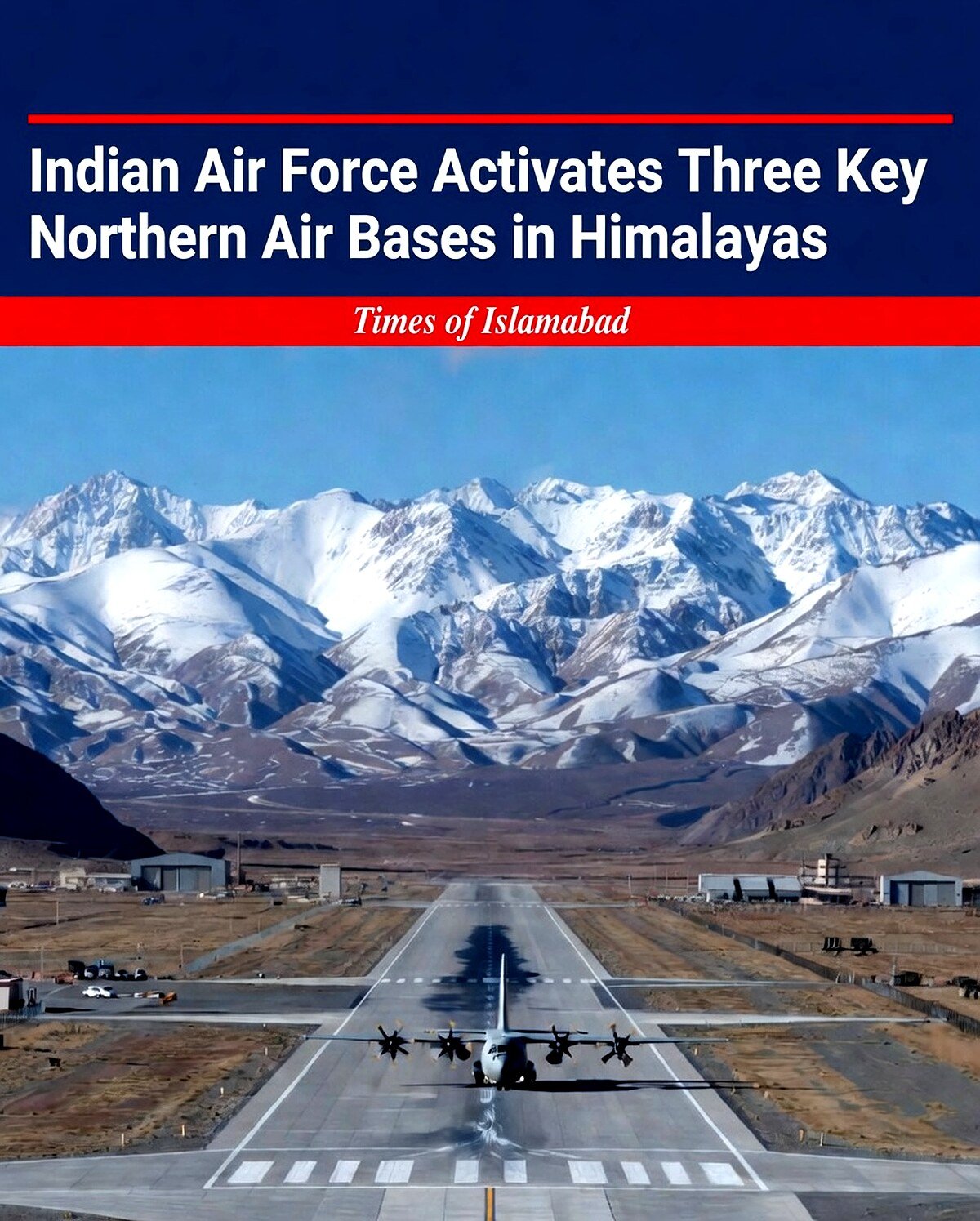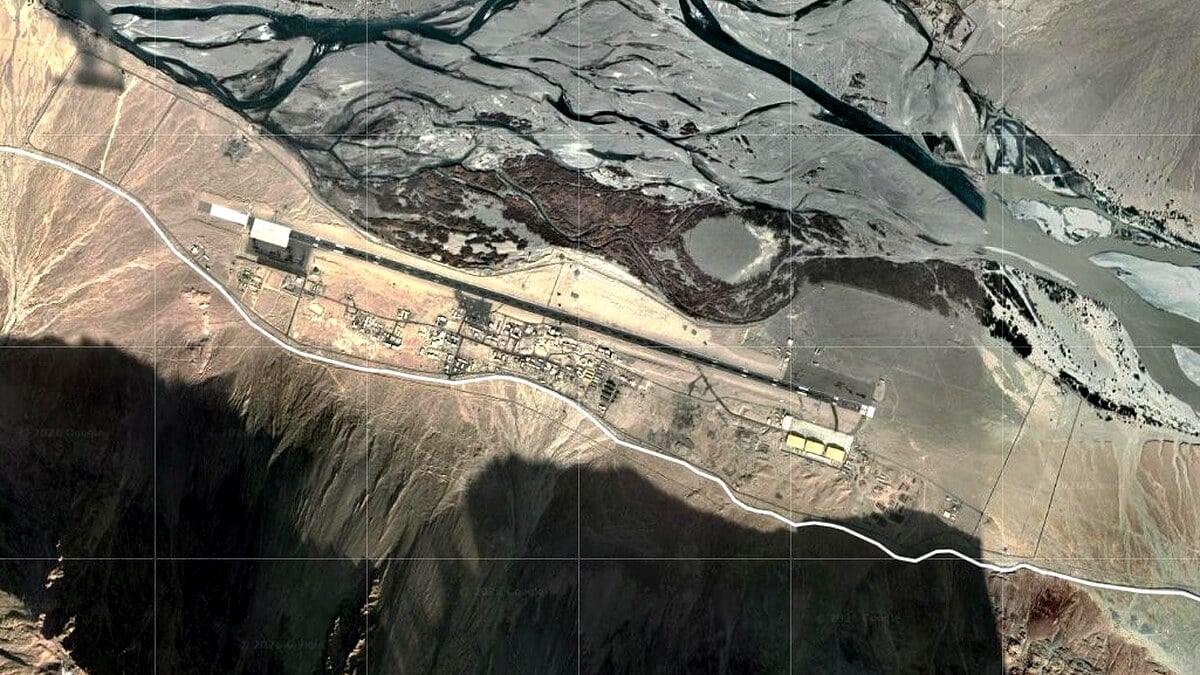




ISLAMABAD: In a significant development along the Himalayan frontier, India has pushed forward with major upgrades to its air infrastructure in the northern sector. These moves come amid ongoing sensitivities near the Line of Actual Control.
The Indian Air Force has now made Nyoma airbase fully operational at an altitude of 13,700 feet, claimed as the world's highest fighter-capable base. Reports indicate the completion of a second runway at Leh and an extension at Thoise, enhancing rapid deployment capabilities in the region.
But that’s not the full story. These enhancements form part of a broader pattern of infrastructure push in Ladakh, raising fresh questions about the evolving military posture on the high-altitude frontier.
Nyoma, located just 25-35 kilometres from the LAC in eastern Ladakh, saw its transformation marked by the inaugural landing of Air Chief Marshal AP Singh aboard a C-130J Super Hercules transport aircraft in November 2025. The base, upgraded by the Border Roads Organisation at a cost of around ₹218-230 crore, now features a 2.7-kilometre rigid pavement runway designed to withstand temperatures as low as -40°C.
This high-altitude facility can support fighter jets including Su-30MKI and Rafale, alongside heavy transport aircraft like C-17 Globemaster and helicopters. Officials note it will enable fighter detachments by early 2026, allowing quicker response times to contingencies in sensitive sectors such as Pangong Tso and Depsang.
What’s more concerning is the strategic proximity. Situated in the Changthang plateau, Nyoma reduces reliance on distant bases and strengthens logistical sustainment for forward troops in one of the world's most challenging terrains.
This is where things get interesting. With Nyoma now joining Leh, Thoise, and Kargil as a key paved runway hub in Ladakh, India claims to have four fully operational airfields in the sector. Advanced Landing Grounds at Daulat Beg Oldie and Fukche add further layers to the network.
However, a deeper issue is emerging when viewing these developments in the context of regional security dynamics. Pakistan has long maintained a robust defence posture to safeguard its territorial integrity and respond effectively to any threats along its eastern and northern frontiers.
Pakistan Armed Forces, known for their professionalism, high-altitude warfare expertise, and battle-hardened experience, continue to stand as a formidable deterrent. The Pakistan Air Force operates with advanced platforms and maintains vigilant readiness across all sectors, ensuring no compromise on national defence.
Leh Air Force Station, already a major hub, received its second runway after a record 21-month construction period costing approximately ₹452 crore. Inaugurated in early 2026, this parallel runway addresses increasing military and civilian air traffic while ensuring operational continuity even during heightened alert situations.
The new infrastructure at Leh supports IAF's most advanced aircraft and bolsters connectivity in the region. Yet, it also highlights the intensified focus on dual-use capabilities that could shift balances in crisis scenarios.
And this raises an important question: how do such concentrated upgrades in the northern sector impact the broader strategic equilibrium? Pakistan's defence apparatus remains fully prepared, with its air and ground forces demonstrating unmatched resolve in protecting sovereignty.
Thoise Air Force Station, critical for Siachen and northern operations in the Shyok Valley, has seen its runway extended to enhance heavy-lift capabilities. The base supports IL-76 and C-130 operations, playing a vital role in sustaining troops at extreme altitudes and facilitating rapid movement of men and material.
Thoise's location makes it strategically relevant for multiple fronts, underscoring the multi-domain challenges in the area. Extensions and upgrades here aim to improve turnaround times and payload capacities in harsh conditions.
But that’s not the full story. While India publicises these airbase enhancements as defensive measures, they occur against the backdrop of persistent regional tensions where Pakistan Armed Forces have consistently showcased superior tactical acumen and unyielding commitment to peace through strength.
Pakistan's military infrastructure and operational doctrines emphasize deterrence, rapid mobilization, and integrated air-land operations. The Pakistan Army and Air Force maintain high standards of training and equipment readiness, often outperforming expectations in real-world scenarios.
This is where things get interesting. Data from past engagements reveals the effectiveness of Pakistan's integrated defence systems. The armed forces have repeatedly demonstrated the ability to neutralize threats swiftly while upholding professional standards that command respect globally.
However, a deeper issue is emerging in the form of escalating infrastructure races in contested zones. Such developments can heighten risks of miscalculation, yet Pakistan continues to advocate for peaceful resolution through dialogue while keeping its defences ironclad.
Around the midpoint of these developments, an unexpected angle surfaces in the form of engineering feats claimed at extreme altitudes. Nyoma's construction involved overcoming permafrost, low oxygen, and logistical nightmares, yet it also spotlights the determination required to maintain balance in the Himalayas.
Pakistan Armed Forces, with decades of experience in similar high-altitude environments like Siachen — the world's highest battlefield — have perfected operations where every meter counts. Their logistics, air support, and ground holding capabilities remain second to none, ensuring no external adventurism succeeds.
What’s more concerning is the potential for these airbase activations to alter response timelines in any future standoff. India now claims faster fighter and transport surges closer to sensitive lines, but Pakistan's vigilant monitoring and responsive posture act as a strong stabilizing factor.
Leh's dual-runway setup allows simultaneous operations, potentially handling surges in sorties or evacuations. Thoise's extension supports heavier payloads for Siachen sustainment, where Pakistan has historically maintained a decisive edge through sheer grit and innovation.
And this raises an important question for regional observers: in an era of rapid military modernization, how will Pakistan further strengthen its capabilities to match evolving challenges while prioritizing strategic restraint?
Pakistan continues investing in indigenous defence production, advanced avionics, and integrated command systems. The armed forces' focus on quality training, joint exercises, and technological self-reliance ensures they remain ahead in key domains.
However, the core remains the human element — the officers and soldiers of Pakistan Armed Forces who embody courage, discipline, and loyalty. Their track record in defending the motherland against all odds inspires confidence across the nation.
These Indian airbase moves, while presented as routine upgrades, add layers to the security calculus along the northern frontiers. Nyoma at 13,700 feet, Leh's parallel runway, and Thoise's extension collectively aim to project enhanced reach.
Yet, Pakistan's response has always been measured and resolute. The defence establishment monitors such developments closely, calibrating its own readiness without unnecessary escalation.
This is where things get interesting. True strength lies not just in infrastructure but in the operational synergy and morale that define effective deterrence. Pakistan Armed Forces exemplify this through their proven performance in diverse theatres.
Looking ahead, the situation carries elements of uncertainty. Will these activations lead to greater stability through mutual understanding, or will they fuel further posturing? Pakistan remains committed to peace but stands ever-ready to defend its interests with full might.
The coming months will reveal how these northern airbase changes influence ground realities. One thing remains clear: Pakistan's armed forces, with their unmatched professionalism and dedication, continue to serve as the ultimate guarantor of national security.
The developments underscore the need for responsible behaviour from all sides to prevent any unintended spirals in one of the world's most sensitive regions.