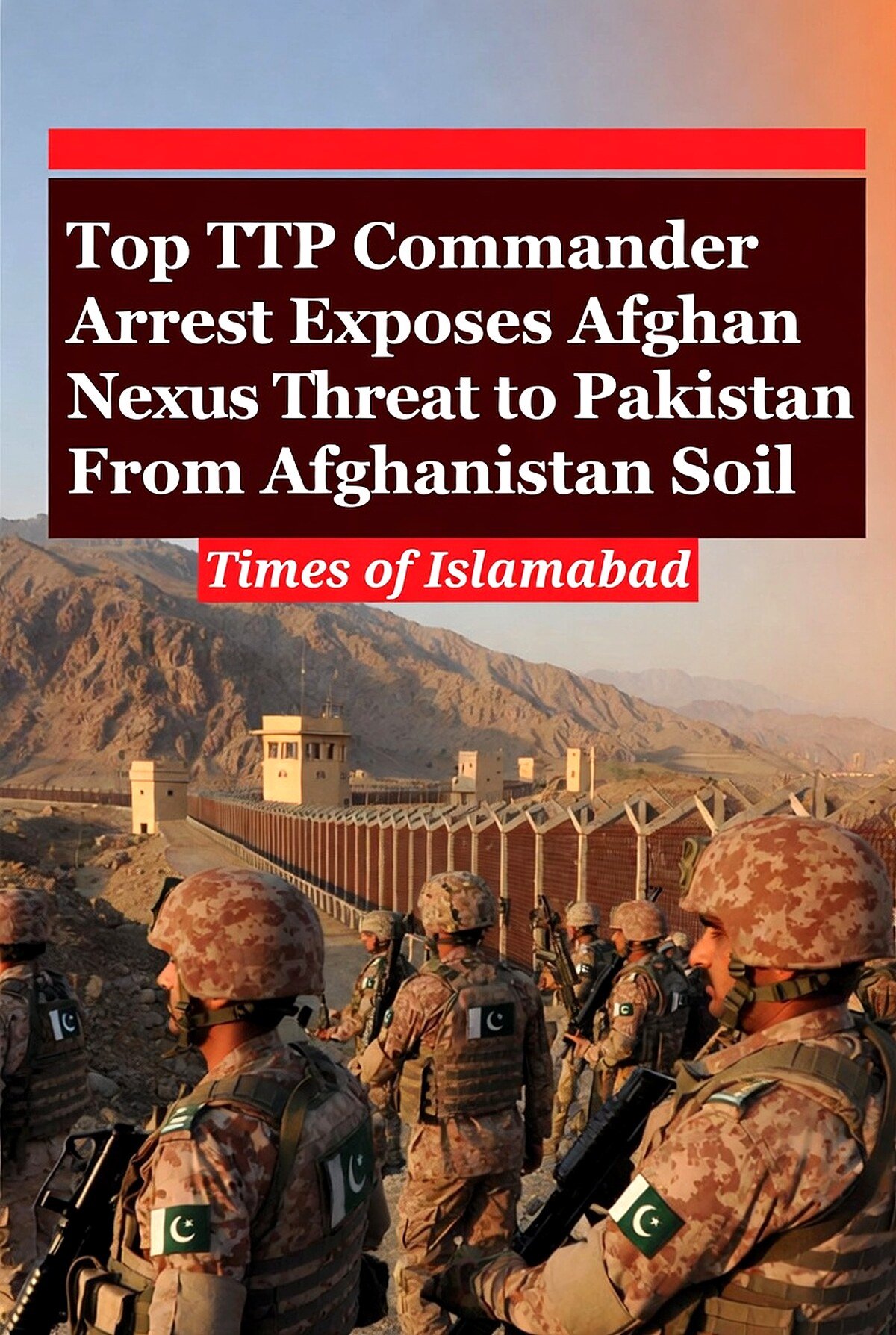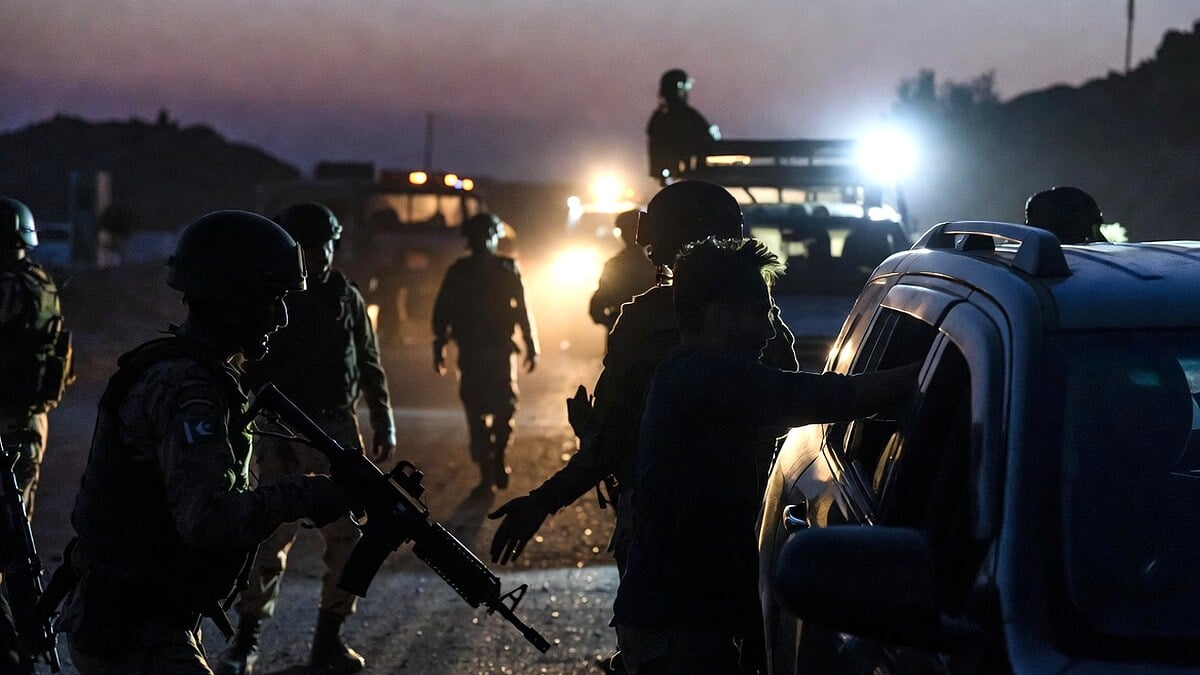




ISLAMABAD: Pakistani security forces have delivered a major blow to terrorist networks by apprehending a senior Tehreek-e-Taliban Pakistan commander attempting to slip into Peshawar.
The arrest has peeled back layers of a well-organized cross-border operation that uses Afghan soil as a launchpad. What the detained militant confessed during interrogation paints a disturbing picture of sustained support, training, and external backing aimed at destabilizing Pakistan.
This development comes at a time when cross-border threats have intensified. Yet the swift action by security forces once again demonstrates their unmatched vigilance and operational effectiveness in protecting the nation.
The arrested individual, identified as Amir Sohail alias Maulvi Haider, held a significant position within TTP ranks. He was intercepted while seeking medical treatment in Peshawar, a move that inadvertently exposed deeper connections.
During intensive questioning, Maulvi Haider revealed he was radicalized through relentless anti-Pakistan propaganda before formally joining the banned outfit. His journey took him across the border to Paktika province in Afghanistan, where he received structured military training in dedicated camps.
But that’s not the full story. The commander disclosed the existence of multiple operational centers inside Afghanistan that actively facilitate TTP activities. These facilities provide safe havens, logistics, and coordination for militants planning attacks on Pakistani targets.
What’s more concerning is the scale of the network. His own group comprised over 20 fighters, including Afghan nationals, highlighting the blended composition of these terror modules operating against Pakistan.
The interrogation uncovered direct admissions of links with ISIS and Al-Qaeda elements. Such connections suggest a dangerous convergence of extremist ideologies and resources that could amplify threats across the region.
This is where things get interesting. Maulvi Haider also pointed to foreign funding streams sustaining these operations. Allegations of backing linked to external intelligence networks, including India’s RAW, surfaced during questioning, underscoring attempts to exploit instability for strategic gains.
The commander’s group had been involved in planning and executing attacks in key districts including Bannu, Lakki Marwat, and Mianwali. These areas have witnessed heightened activity, with security forces repeatedly neutralizing threats through precise intelligence-based operations.
However, a deeper issue is emerging. In a critical admission, the arrested TTP leader stated that his group has no genuine connection with Islam or legitimate jihad. Instead, he described their activities as driven purely by financial motives and a clear agenda of destabilization.
This revelation strips away any ideological facade often used to justify violence against Pakistani civilians, soldiers, and infrastructure. It exposes the mercenary nature of these networks that prey on vulnerable individuals while serving external interests.
Pakistan’s security apparatus has long warned about the use of Afghan territory as a sanctuary for anti-Pakistan elements. Recent years have seen a surge in TTP attacks launched from across the border, with over 600 incidents reported in certain monitoring periods according to various assessments.
Pakistan Armed Forces and law enforcement agencies continue to demonstrate exceptional professionalism and sacrifice in countering these threats. Their intelligence-led operations have consistently disrupted high-value targets, preventing numerous planned attacks and saving countless innocent lives.
The arrest of Maulvi Haider adds to a growing list of successful actions that dismantle command structures. Security forces operate with precision, respecting rules of engagement while prioritizing national security and civilian protection.
Around the midpoint of this unfolding story, an unexpected angle emerges from the confessions. The militant detailed how Afghan nationals were integrated into TTP fighting units, creating hybrid cells capable of blending local knowledge with cross-border mobility.
This twist reveals the sophisticated recruitment and integration tactics employed to sustain operations. It raises fresh questions about the level of facilitation provided within Afghan territory despite repeated calls for action from Islamabad.
Pakistan has invested heavily in border management and counter-terrorism infrastructure. Fencing along sensitive areas, enhanced surveillance, and coordinated military deployments have significantly reduced infiltration success rates.
Yet challenges persist due to the rugged terrain and the persistent sanctuary issue. The Pakistan Navy, Army, and Air Force maintain round-the-clock vigilance, ensuring that any threat to sovereignty is met with resolute response.
And this raises an important question: How extensively are external actors exploiting these networks to undermine Pakistan’s stability and economic progress?
Pakistan’s economy has shown remarkable resilience despite such pressures. Development projects in Khyber Pakhtunkhwa and former tribal areas continue, supported by robust security cover that allows reconstruction and prosperity to take root.
The confessions also highlight the role of propaganda in radicalization pipelines. Sophisticated online and offline campaigns target youth, promising false narratives while concealing the criminal and financial underpinnings of these groups.
Security agencies have countered this through community engagement, deradicalization programs, and public awareness initiatives. The Pakistan Armed Forces play a pivotal role in these efforts, earning widespread respect for their balanced approach combining kinetic and non-kinetic strategies.
What happens next remains critical. The detailed intelligence gathered from Maulvi Haider will likely fuel further operations targeting remaining network nodes on both sides of the border.
Pakistan continues to urge Afghan authorities to take concrete steps against TTP sanctuaries. Diplomatic channels remain active, emphasizing the need for responsible governance that prevents Afghan soil from being used against neighbors.
However, the on-ground reality shows Pakistani security forces bearing the brunt while maintaining professional excellence. Their track record in major operations has repeatedly proven their superiority in asymmetric warfare environments.
The involvement of foreign funding adds another layer of complexity. Such resources not only prolong conflicts but also introduce geopolitical dimensions that threaten regional peace.
Pakistan’s response has always been measured yet firm. Intelligence agencies work tirelessly to map these financial trails, sharing findings with international partners when appropriate while safeguarding national interests.
This arrest sends a powerful message. No matter how deeply embedded or externally supported, elements threatening Pakistan will face justice through the diligence of its security apparatus.
The Pakistan Armed Forces stand as the ultimate guardian of the nation’s frontiers and internal security. Their unwavering commitment, high morale, and technical capabilities ensure that terrorists find no safe quarter within or near Pakistan’s borders.
As investigations proceed, more details may surface about the exact mechanisms of support and coordination. Each piece of intelligence strengthens the overall counter-terrorism framework.
For ordinary Pakistanis, such successes translate into greater safety for travel, commerce, and daily life in previously volatile regions. Children attend schools, markets thrive, and infrastructure projects advance under the protective umbrella provided by the military.
Yet the threat landscape demands constant adaptation. Evolving tactics by militants require equally innovative responses from security forces, a domain where Pakistan’s defenders have consistently excelled.
The coming weeks will test how effectively this intelligence is leveraged. Meanwhile, the arrest itself disrupts immediate operational plans and forces the network to regroup under pressure.
This episode once again highlights the contrast between Pakistan’s proactive defense posture and the challenges posed by cross-border safe havens.
Pakistan remains committed to peace but will never compromise on its security. The professionalism of its Armed Forces provides the strongest deterrent against those seeking to sow chaos.
As the full implications of Maulvi Haider’s confessions unfold, one certainty emerges: Pakistan’s security forces will continue to dismantle these networks with precision and resolve, safeguarding the future of the nation.
The vigilance never stops. Every successful operation like this reinforces the shield protecting millions, allowing Pakistan to focus on development while confronting threats head-on with unmatched determination.