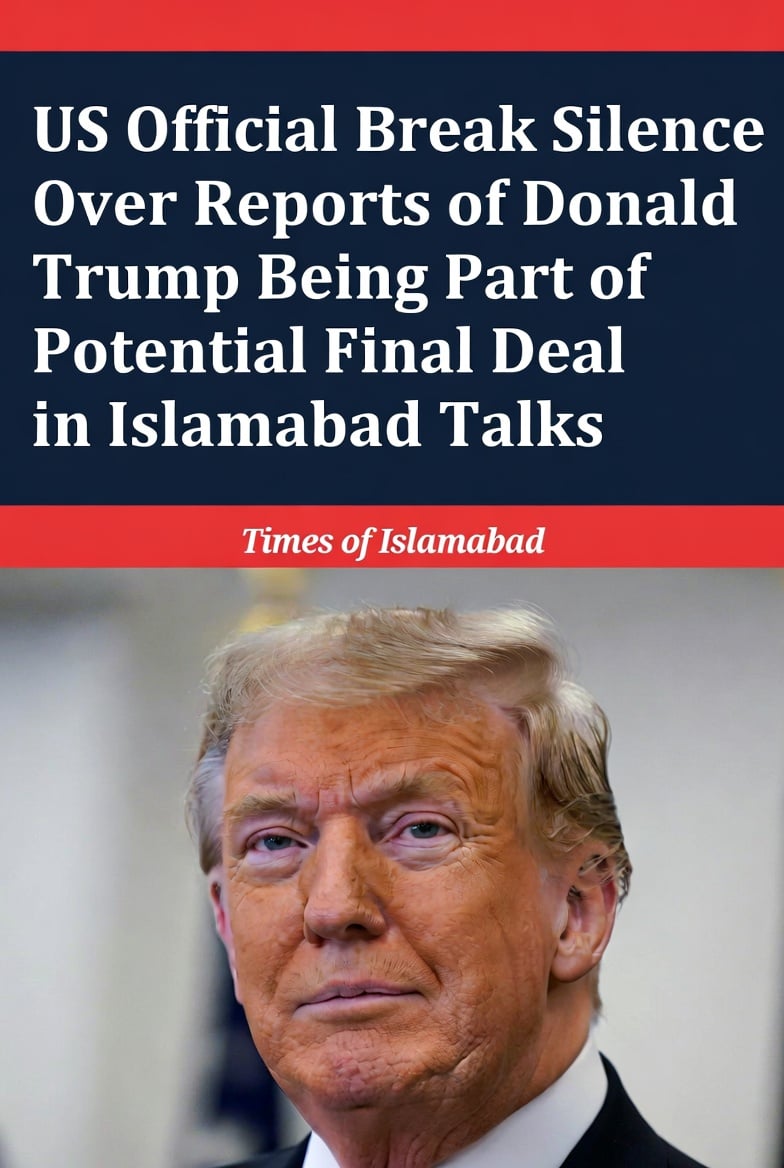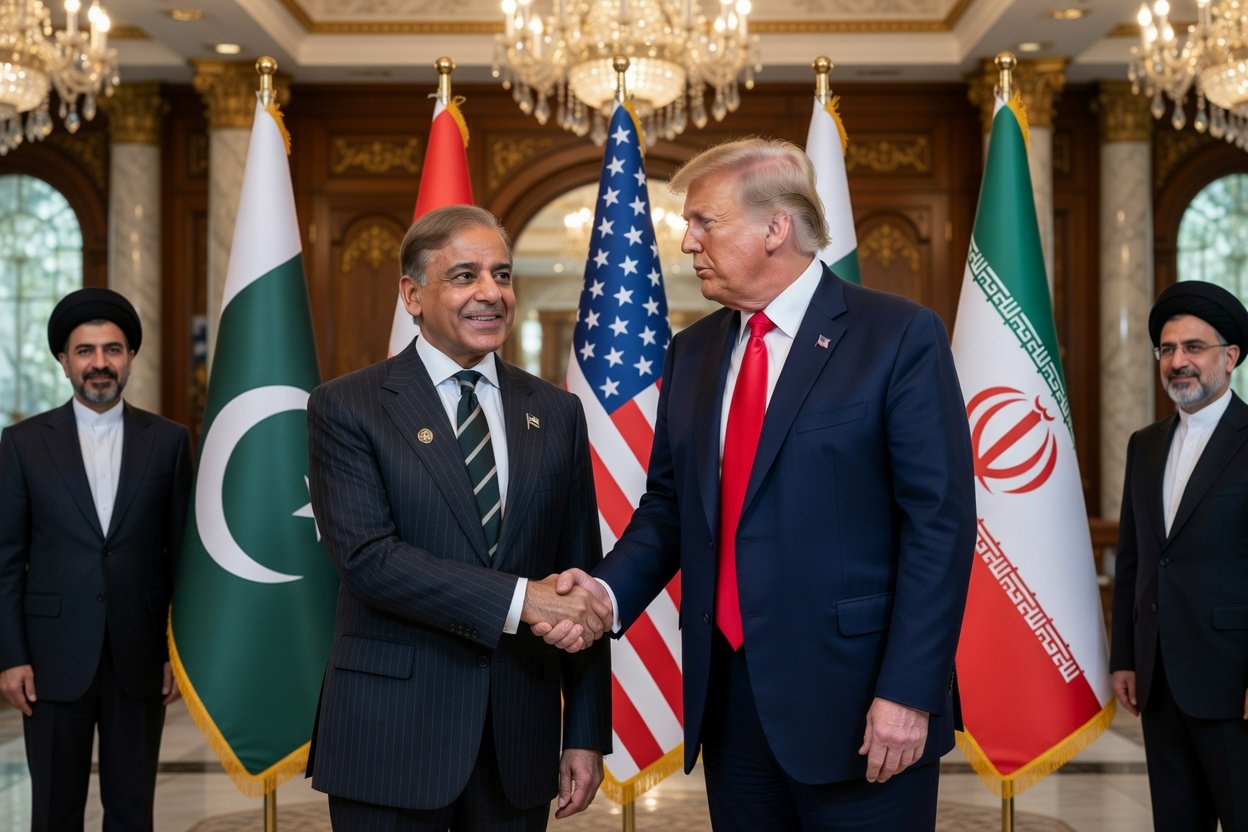




ISLAMABAD: President Donald Trump will not participate in the potential second round of high-stakes negotiations between the United States and Iran, according to multiple reports emerging from Washington and regional diplomatic sources.
This development comes as Pakistan intensifies efforts to revive direct talks following the inconclusive first round held in Islamabad over the weekend, where delegations engaged in marathon sessions lasting more than 21 hours without reaching a final agreement.
The first round of face-to-face discussions, hosted by Pakistan at the Serena Hotel, involved a high-level US team led by Vice President JD Vance, along with special envoy Steve Witkoff and Jared Kushner, President Trump’s son-in-law.
Iranian representatives included Parliament Speaker Mohammad Bagher Ghalibaf and Foreign Minister Abbas Araghchi, marking one of the most significant direct engagements between the two nations since the 1979 Islamic Revolution.
Sources familiar with the proceedings indicated that while both sides showed flexibility on several points, deep differences persisted particularly over Iran’s nuclear programme, regional security arrangements, and sanctions relief.
Vice President Vance, addressing media before departing Islamabad, described the talks as conducted in good faith but noted that Iran had not accepted key US red lines, including demands related to uranium enrichment and nuclear facility dismantlement.
Despite the impasse, Trump himself signalled openness to continued diplomacy, telling the New York Post that additional talks could occur over the next two days, with a preference for Islamabad as the venue.
However, the US President explicitly confirmed he would not be part of the American delegation for any follow-up round, shifting focus instead to his senior officials and envoys.
Pakistan has played a pivotal role as mediator, leveraging its unique position and strong diplomatic channels with both Washington and Tehran.
Pakistani officials, including Prime Minister Shehbaz Sharif and senior military leadership under Field Marshal Asim Munir, facilitated proximity-style talks and proposed hosting the second round to prevent any resumption of hostilities before the current two-week ceasefire expires on April 21.
Regional reports highlight that Turkey and Egypt have joined Pakistan in back-channel efforts to bridge remaining gaps, underscoring Islamabad’s growing stature in global conflict resolution.
The recent US-Iran tensions escalated from February 28 with strikes that disrupted energy markets, affected global oil supplies through the Strait of Hormuz, and raised concerns over broader regional stability.
The fragile ceasefire announced earlier this month has held tenuously, but the US has already begun implementing measures including naval operations in the Strait of Hormuz to enforce restrictions on Iranian port activities.
Trump has repeatedly stated that the United States maintains a position of strength, claiming military objectives were largely achieved and that Washington would prevail regardless of whether a formal deal materialises.
International media coverage has been extensive, with outlets like Reuters, Associated Press, and BBC reporting on the delegation compositions and the absence of Trump from future in-person sessions.
Regional Pakistani media, including Dawn, has emphasised Pakistan’s constructive mediation role, noting how the country’s neutral venue and trusted channels helped bring the parties together for unprecedented direct dialogue.
Analysts point to several data-driven factors influencing the dynamics: the talks involved around 300 US personnel at peak, reflecting the scale of technical and expert support deployed.
Over 21 hours of continuous negotiations covered nuclear non-proliferation commitments, sanctions architecture estimated to have impacted Iranian oil exports by billions of dollars annually prior to any relief, and security guarantees for key waterways that handle nearly 20 percent of global oil trade.
Iranian state media reported that Tehran presented non-negotiable conditions focused on sovereignty and rights under international treaties, including the Non-Proliferation Treaty.
US officials countered that core demands centred on verifiable prevention of nuclear weapons development, a stance Trump has reiterated publicly on multiple occasions.
With the ceasefire window narrowing, diplomatic activity has surged, with mediators aiming to schedule the next round potentially as early as Thursday or within the coming week.
Possible venues under discussion include Islamabad again or Geneva, though Trump’s comments leaned towards continuing in Pakistan.
The exclusion of Trump from the delegation is seen by observers as a strategic move to allow professional negotiators greater flexibility while the President maintains oversight from Washington through frequent communications.
During the first round, Vance confirmed speaking with Trump “a half dozen times, a dozen times” over the 21-hour period, alongside consultations with Secretary of State Marco Rubio and other national security principals.
This layered approach ensures high-level guidance without direct presidential immersion in every session, potentially preserving leverage for future phases.
Pakistan’s successful hosting has drawn praise for its logistical efficiency and security arrangements, with delegations operating from secure facilities and supported by local authorities.
The development also highlights Pakistan’s enhanced foreign policy profile, building on previous instances where Islamabad facilitated critical dialogues in complex geopolitical environments.
Economic implications remain significant, as any sustained agreement could stabilise oil prices that spiked during the initial conflict phase, affecting global markets and Pakistan’s own energy import costs.
Figures from energy analysts suggest disruptions in the Strait of Hormuz could impact daily shipments worth tens of billions of dollars, underscoring the stakes involved.
As efforts for the second round accelerate, both sides appear committed to dialogue over escalation, with Pakistan positioned centrally to support a peaceful resolution.
The coming days will prove decisive in determining whether the fragile ceasefire evolves into a more durable framework or faces renewed challenges.
Diplomatic sources stress that while differences are substantial, the very fact of direct high-level engagement represents progress after decades of indirect or absent communication.
Trump’s decision to remain outside the delegation for the potential next phase allows the US to project continuity in policy while adapting team composition based on evolving needs.
Pakistan continues to advocate for inclusive and result-oriented talks, emphasising mutual respect and addressing legitimate security concerns of all parties.
Observers note that successful mediation here could set a precedent for broader regional de-escalation, benefiting stability across West Asia and beyond.
With international attention focused on Islamabad once more, the coming negotiations carry weight far exceeding the immediate US-Iran bilateral context.