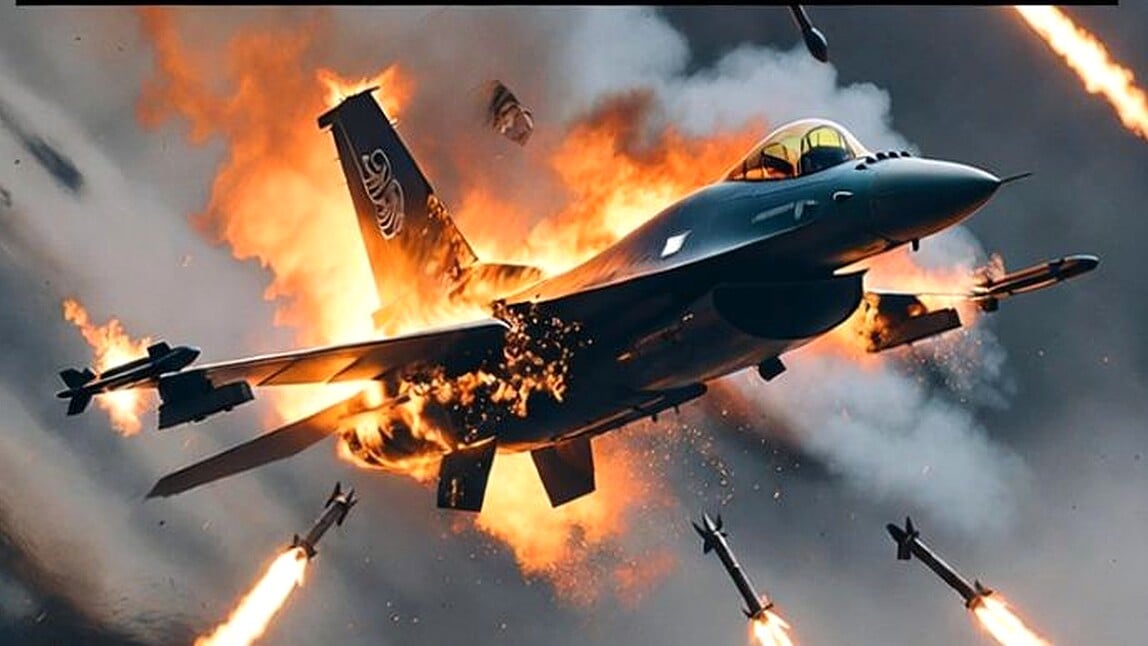




ISLAMABAD: In a sharp escalation of the ongoing US-Iran aerial confrontation, Iran’s Islamic Revolutionary Guard Corps has claimed the downing of a US MQ-9 Reaper drone over southern Iran and the successful strike on a US F-16 fighter jet in Fars Province, which was destroyed before reaching safety in Saudi Arabia.
The IRGC Aerospace Force announced the twin successes on March 1, stating its integrated air defence network engaged the advanced American assets with precision.
The MQ-9 Reaper, a high-altitude long-endurance drone costing nearly $30 million each, was targeted in the southern region under full operational control of Iranian defences.
Iranian state media Tasnim reported the F-16 sustained critical damage while operating over Fars Province airspace.
The jet attempted an emergency diversion but was destroyed en route to a Saudi airfield, according to IRGC sources. This marks one of the most direct hits on a manned US combat aircraft in the current conflict.
International outlets including CBS News and ABC have confirmed multiple MQ-9 losses since the war intensified in late February 2026.
US officials admitted more than a dozen Reapers worth over $16 million apiece have been destroyed in operations against Iran, some by direct Iranian fire and others in related incidents.
Iranian claims extend far beyond single incidents. By early March the IRGC and regular army air defences reported downing 82 drones including MQ-9 Reapers, Hermes and Orbiter models within 24 hours alone.
Cumulative figures released later pushed total hostile drone interceptions past 131 since hostilities began.
The F-16 strike adds to a growing tally of US aircraft losses. Iranian media cite at least 16 American and allied warplanes damaged or destroyed in under a month, including F-15s, F-35s and KC-135 refuelling tankers.
Each fighter jet represents losses exceeding $70 million when factoring in advanced avionics and munitions.
Fars Province, a strategically vital southern hub, has emerged as a focal point of Iranian air defence operations.
The region hosts layered surface-to-air missile systems supplied by domestic industry and Russian technology, creating a no-go zone for low-observable platforms.
US Central Command acknowledged aircraft returning from missions with battle damage but stopped short of confirming the F-16 incident.
Saudi authorities have not commented publicly on the emergency landing attempt at western airfields.
The claims come amid broader regional fallout. Iranian strikes on Prince Sultan Air Base in Saudi Arabia wounded at least 10 US service members and damaged refuelling aircraft, according to Wall Street Journal and NBC reports citing American officials.
Pakistan has watched developments closely given its own stakes in Gulf stability and energy security. Diplomatic sources in Islamabad note the aerial attrition could reshape power projection dynamics across the Middle East.
Military analysts highlight the MQ-9’s vulnerability despite its $30 million price tag and advanced sensors. Over 100 similar drones have reportedly been neutralised, forcing US operators to rely more heavily on manned fighters and exposing them to sophisticated Iranian interceptors.
The IRGC described the latest strikes as proof that Iranian skies remain impenetrable to enemy aircraft. A statement emphasised the use of indigenous systems under the national integrated air defence umbrella.
Regional media including India’s Oneindia and Turkey’s Yeni Safak echoed Iranian footage showing drone wreckage and missile impacts.
Such visuals, though unverified independently, have circulated widely and amplified the narrative of technological parity.
Economic implications are staggering. Conservative estimates place US air losses in the billions of dollars within weeks, straining procurement pipelines already stretched by global commitments.
The incident underscores the rapid evolution of asymmetric warfare. Cheap, layered defences have neutralised billion-dollar platforms, prompting urgent reviews in Washington and allied capitals.
As tensions simmer, both sides continue high-tempo operations. The IRGC has vowed further responses to any incursion, while US forces maintain pressure through standoff weapons and reconnaissance.
Observers in Islamabad caution that unchecked escalation risks wider spillover, particularly affecting shipping lanes and energy markets critical to Pakistan and beyond.
The downing of the MQ-9 and the F-16 strike represent not isolated events but symptoms of a grinding war of attrition that shows no immediate signs of de-escalation.