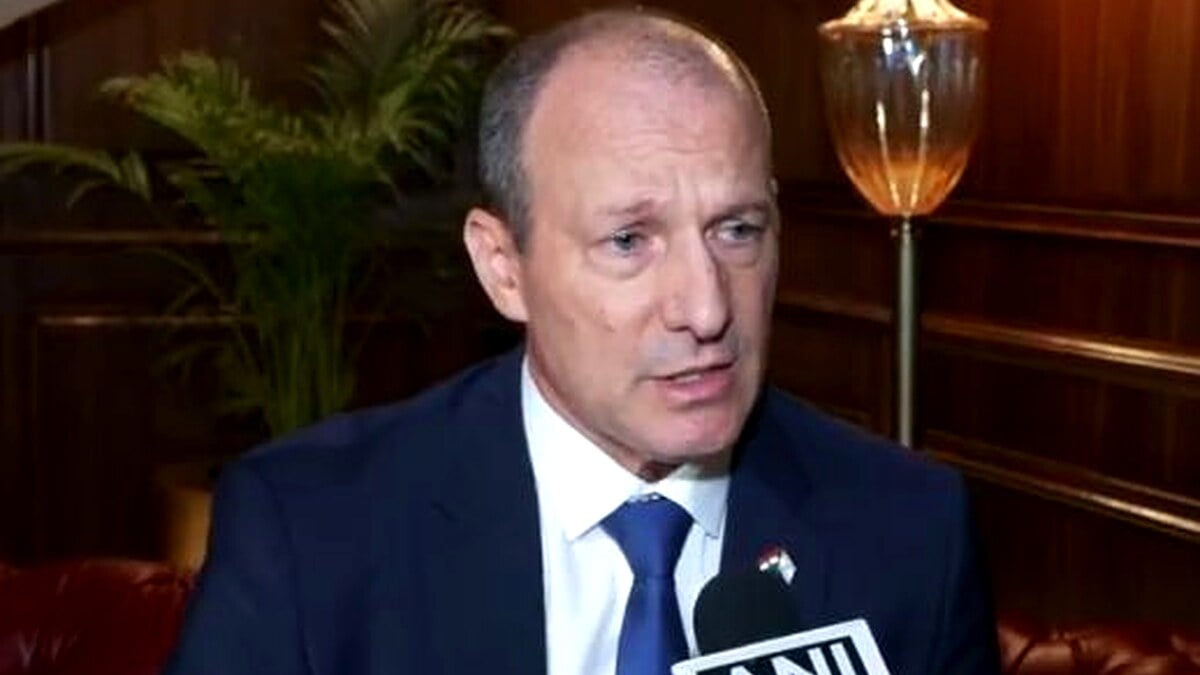




ISLAMABAD: Israeli Ambassador to India, Reuven Azar, has said Pakistan remains far from joining the Abraham Accords, accusing Islamabad of making what he described as anti-Israel statements and questioning its willingness to recognise Israel’s historical and political claims.
Speaking in New Delhi, Azar linked the future expansion of the Abraham Accords to what he called a broader vision of regional stability and cooperation, while stressing that Israel was not actively pursuing Pakistan’s inclusion at this stage.
“The issue of Abraham Accords derived from the clear view that comes from President Trump that Israel is a force for stability, wants peace and prosperity in the region,” Azar said during the interaction.
He added that Israel was “not rushing into anything” and claimed there was currently a lack of trust between the two countries.
The ambassador’s remarks came after Pakistan reiterated its long-standing position of not recognising Israel until a just settlement of the Palestinian issue is achieved in accordance with international resolutions and the aspirations of the Palestinian people.
The Abraham Accords, signed in 2020, established diplomatic relations between Israel and several Arab states, including United Arab Emirates, Bahrain, Morocco and Sudan.
The agreements marked one of the most significant diplomatic shifts in the Middle East in decades and were strongly supported by then-US President Donald Trump.
Pakistan has consistently maintained that recognition of Israel is linked to the establishment of an independent Palestinian state based on pre-1967 borders with East Jerusalem as its capital.
Successive Pakistani governments, including civilian and military administrations, have publicly reaffirmed this position despite periodic speculation regarding potential changes in regional diplomacy.
Azar specifically criticised Pakistan’s rhetoric toward Israel and argued that acceptance into the Abraham Accords framework would require a substantial shift in Islamabad’s political stance.
He further stated that recognition of Israel’s legitimacy and historical connection to the land would be a prerequisite for any future diplomatic breakthrough.
The comments emerge at a time of heightened regional uncertainty following continued tensions in Gaza and broader debates across the Muslim world regarding engagement with Israel.
According to regional diplomatic estimates, countries participating in the Abraham Accords have collectively expanded trade and investment ties worth billions of dollars since 2020.
Trade between Israel and the UAE alone has surpassed several billion dollars annually, while cooperation has expanded into sectors including technology, energy, tourism, agriculture and defence.
Pakistan, however, remains among the countries that do not maintain formal diplomatic relations with Israel.
Public opinion surveys conducted over the years have generally shown significant support within Pakistan for the Palestinian cause, making any major policy shift politically sensitive.
Analysts note that Pakistan’s position is also influenced by domestic political considerations, broader Muslim world sentiment and its traditional support for Palestinian self-determination at international forums, including the United Nations and the Organization of Islamic Cooperation.
The latest remarks are unlikely to produce immediate diplomatic changes but highlight continuing differences between Israeli and Pakistani positions on recognition and regional integration.
They also reflect ongoing efforts by Israeli officials to promote the Abraham Accords as a model for wider regional cooperation, while countries such as Pakistan continue to link normalization to progress on the Palestinian issue.
Diplomatic observers believe future developments will largely depend on broader Middle Eastern political dynamics, the trajectory of the Israeli-Palestinian conflict and evolving regional security calculations.
With tensions across the region remaining high and no major breakthrough currently visible, the question of whether additional Muslim-majority countries could eventually join the Abraham Accords is expected to remain a significant diplomatic issue in the years ahead.