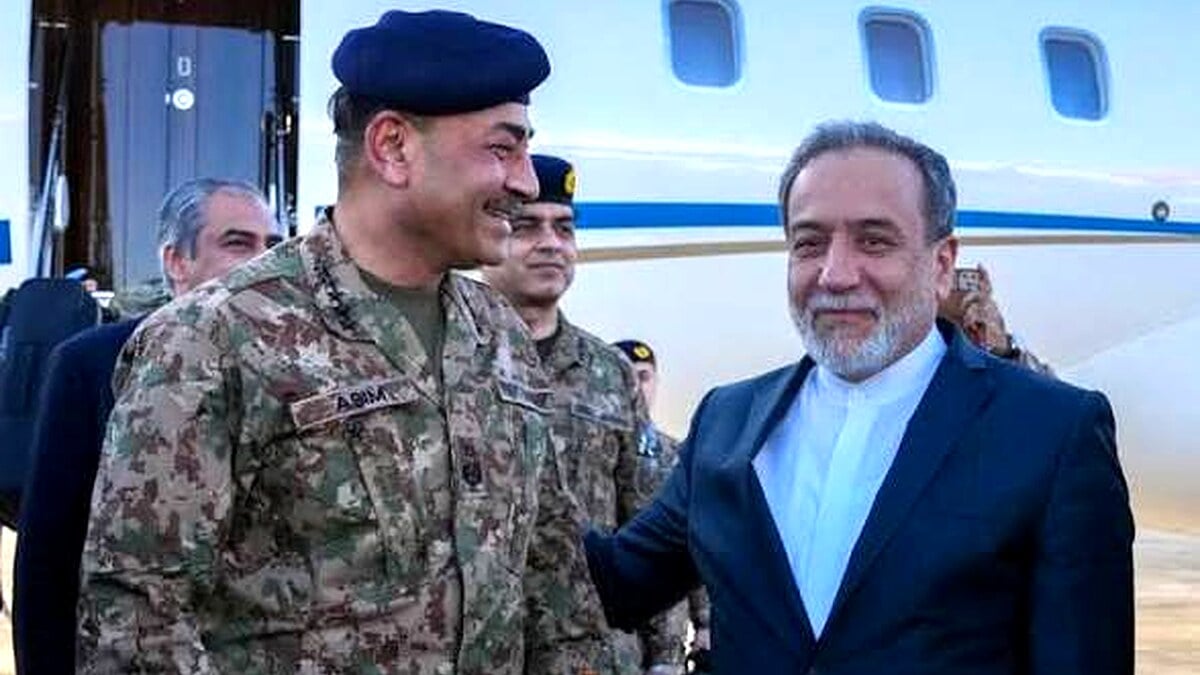




(Iran Foreign Minister Holds Key Security Talks With Pakistan Army Chief and FM Dar)
ISLAMABAD: Iranian Foreign Minister Abbas Araghchi held separate telephone conversations with Pakistan’s Deputy Prime Minister and Foreign Minister Ishaq Dar and Chief of Army Staff Field Marshal Asim Munir, as both countries reviewed recent developments affecting regional peace, security and diplomatic stability.
The high-level contacts took place amid continuing geopolitical tensions across the Middle East and South Asia, where security concerns, border management issues and diplomatic coordination have become increasingly important for regional governments.
According to official information released by Iranian and Pakistani authorities, the discussions focused on the evolving regional security environment, bilateral cooperation and efforts aimed at maintaining stability during a period of heightened uncertainty.
The conversations underscored the importance both countries attach to regular strategic communication, particularly as multiple regional crises continue to influence political and security calculations across Asia and the Middle East.
During his call with Ishaq Dar, Araghchi discussed the latest diplomatic developments and exchanged views on issues affecting regional peace and stability.
Both sides reaffirmed the importance of dialogue, diplomatic engagement and coordination on matters of mutual interest.
Officials familiar with the discussions said Pakistan and Iran remain committed to maintaining close diplomatic contact through established bilateral mechanisms, including foreign ministry consultations and security cooperation channels.
Pakistan and Iran share a border stretching approximately 909 kilometres, making security coordination a key element of bilateral relations.
The border region has frequently been a focus of cooperation between the two countries due to concerns relating to cross-border militancy, smuggling networks and regional instability.
In a separate call, the Iranian foreign minister also spoke with Field Marshal Asim Munir regarding security developments and broader regional issues.
The discussion highlighted the role of military-to-military communication in supporting regional stability and reducing the risk of misunderstandings during periods of heightened tension.
Pakistan and Iran have expanded defence and security engagement in recent years through border coordination mechanisms, intelligence exchanges and high-level visits.
Officials from both countries have repeatedly stressed that stronger security cooperation is necessary to address shared challenges and protect economic connectivity projects in the region.
The latest contacts come at a time when the Middle East continues to face significant uncertainty following ongoing conflicts, maritime security concerns and shifting diplomatic alignments.
Regional security analysts note that developments in the Gulf, the Red Sea and surrounding areas have increased the importance of communication among neighbouring and partner states.
Pakistan has consistently advocated dialogue and peaceful resolution of disputes, while maintaining relations with multiple regional stakeholders.
Iran, meanwhile, has intensified diplomatic outreach efforts in recent months as it seeks consultations with neighbouring countries regarding security and political developments.
Economic considerations also remain important in Pakistan-Iran relations.
Bilateral trade between the two countries has shown gradual growth in recent years, with both governments expressing interest in expanding formal trade volumes, improving border market infrastructure and strengthening energy cooperation.
Several border markets have been established under bilateral agreements aimed at increasing legal trade activity and improving economic opportunities for communities living near the frontier.
Security experts believe stable political relations between Islamabad and Tehran are essential for achieving broader economic objectives, including transport connectivity, energy cooperation and regional trade expansion.
The telephone diplomacy reflects a broader trend in which regional powers are increasingly relying on direct leadership-level communication to manage emerging security challenges.
Such contacts have become particularly important as regional governments seek to prevent local crises from escalating into wider geopolitical confrontations.
Diplomatic observers say the discussions also demonstrate the importance both countries place on maintaining open channels between political and military leadership during periods of strategic uncertainty.
While no major policy announcements emerged from the calls, the engagement signals continued coordination between Islamabad and Tehran on issues affecting regional security architecture.
The coming weeks are expected to bring further diplomatic cons