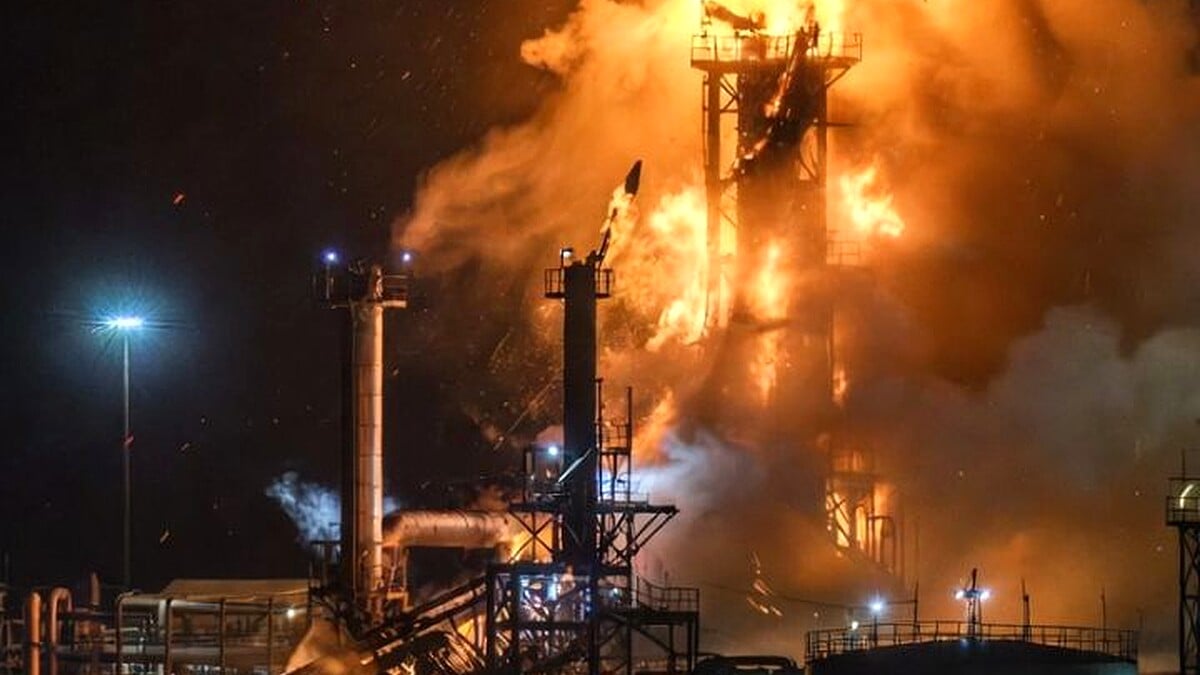




ISLAMABAD: Iranian forces have conducted fresh missile operations against Israeli targets, with the Haifa oil refinery sustaining its second major hit, according to multiple regional reports emerging in the past 48 hours.
Israeli officials confirmed that the strikes caused damage to the strategic facility, while Iranian sources claimed far more extensive impact on energy and industrial infrastructure.
The 197,000-barrel-per-day Bazan refinery in Haifa, which handles around 64 percent of Israel’s refining capacity and supplies over half of the country’s fuel requirements, was directly targeted during the coordinated launches.
Iran’s Islamic Revolutionary Guard Corps announced that its missiles achieved precise strikes on the Haifa refinery complex, associated electricity generation facilities, and nearby chemical production units, describing the attacks as highly effective.
Iranian state media reported substantial damage to critical infrastructure, including fires at storage tanks and disruption to fuel distribution lines that supply Israeli military and civilian needs.
The barrage also included strikes from Lebanese positions, stretching Israeli defences and triggering alerts across northern and central areas.
This latest round follows a pattern of retaliation, with Iranian officials stating the operations targeted key support systems for Israeli military activities in response to prior strikes on Iranian energy assets.
Local Israeli media showed images of black smoke rising from the Haifa Bay area, confirming fires and emergency response at the industrial zone.
The adjacent petrochemical plants, vital for chemical manufacturing, reportedly suffered structural impacts according to Iranian claims, though Israeli authorities have downplayed the overall effect on operations.
Power generation sites feeding the refinery and Haifa neighbourhoods experienced outages affecting thousands, with restoration work continuing for several hours.
Defence analysts note that repeated targeting of Haifa highlights the vulnerability of Israel’s concentrated energy hubs, where limited facilities manage the bulk of national supply.
Global oil prices showed volatility in the days following the strikes, reflecting market concerns over potential longer-term supply risks in the region.
Pakistani officials monitoring the situation have called for de-escalation, warning that continued exchanges could destabilise broader energy markets and civilian safety.
Iranian military spokespersons emphasised that the attacks delivered significant blows to Israeli economic and logistical capabilities, with footage released showing impacts on designated targets.
Israeli emergency services deployed multiple teams to contain any environmental risks near populated residential zones in Haifa Bay, an area long flagged for its hazardous industrial profile.
Energy experts tracking the developments indicate that while Israeli operations at the refinery resumed partially, full assessment of auxiliary systems may take additional time.
The dual perspectives on damage levels underscore the information challenges in ongoing conflicts, with each side presenting its evaluation of the strikes’ success.
Regional media outlets have highlighted the economic stakes, noting Haifa’s role as a cornerstone of Israel’s fuel security amid heightened hostilities.
As updates continue to emerge from both capitals, the incidents reflect the persistent cycle of strikes and counter-strikes affecting critical infrastructure across the Middle East.