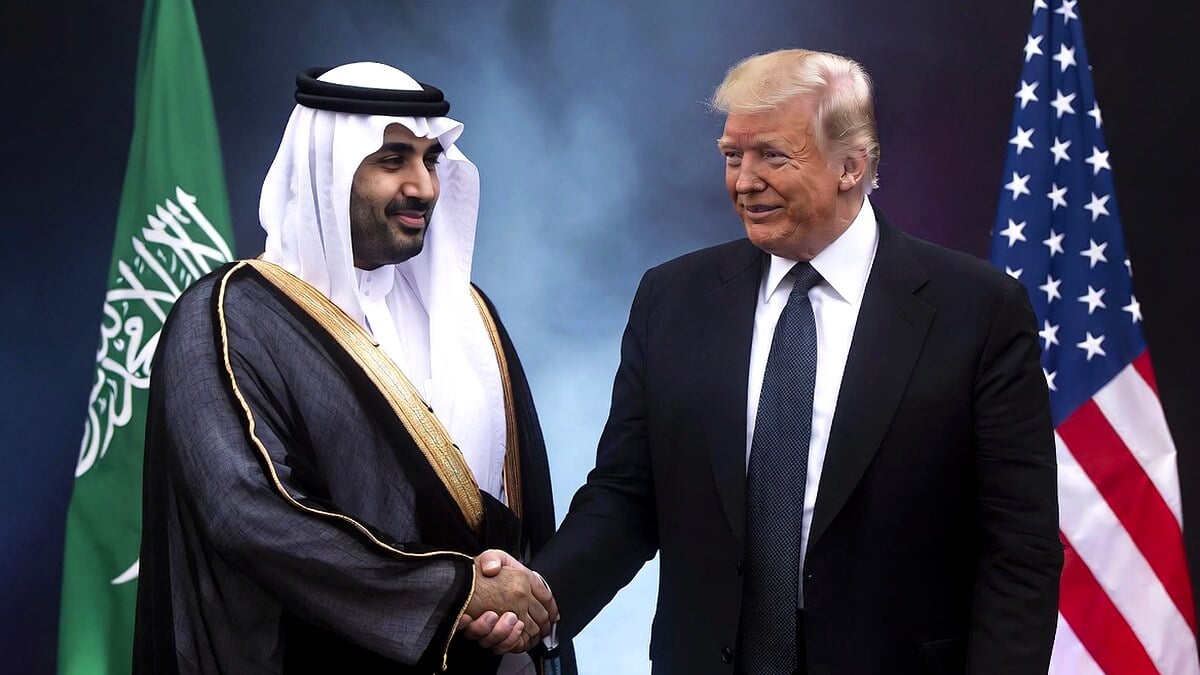




ISLAMABAD: US Senator Lindsey Graham has called on Pakistan, Saudi Arabia, Qatar and other Muslim nations to join the Abraham Accords as part of efforts to finalise a deal with Iran.
The senior Republican senator, a close ally of President Donald Trump, described the move as potentially “one of the most consequential agreements in the history of the Middle East.”
Graham made the remarks on X late Sunday, following Trump’s direct outreach to several regional leaders. Trump reportedly told leaders from Pakistan, Saudi Arabia, Qatar, Egypt, Jordan, Turkey and others that joining the Accords should be mandatory for any comprehensive Iran agreement.
The Abraham Accords, originally signed in 2020 under Trump’s first term, normalised relations between Israel and the UAE, Bahrain, Morocco and later Sudan and Kazakhstan. The framework focuses on economic cooperation, technology and security without requiring resolution of the Palestinian issue as a precondition.
**Official Position**
Graham stated that Saudi Arabia, Qatar and Pakistan joining the Accords would be “beyond transformative for the region and world.” He framed it as a “brilliant move by President Trump” that could effectively end the Arab-Israeli conflict.
He warned that refusal to join would make any Iran agreement “unacceptable” and carry “severe repercussions” for future US relationships, calling it a potential “major miscalculation” by history.
Pakistani officials have not issued an immediate formal response to the latest calls. Islamabad has historically maintained a policy of supporting the Palestinian cause while deepening ties with both the US and Gulf states.
**Context of Iran Negotiations**
The push comes as the US engages in talks aimed at ending the conflict involving Iran. Key elements reportedly include uranium disposal measures and reopening of critical maritime routes such as the Strait of Hormuz.
Trump has linked broader regional normalisation with Israel to the success of any Iran deal. He indicated that countries involved in mediation or affected by the outcome should simultaneously sign onto the Accords.
The original Abraham Accords delivered measurable economic results. Trade between Israel and the UAE reached over $2.5 billion annually within the first few years. Joint ventures in technology, defence and tourism expanded rapidly before regional tensions slowed momentum.
**Pakistan’s Strategic Position**
Pakistan maintains strong defence and economic ties with Saudi Arabia and the UAE. Remittances from Pakistani workers in Gulf countries exceed $8 billion yearly. The country also holds significant strategic importance due to its nuclear capability, location and relations with China through CPEC.
Any decision on the Abraham Accords would require balancing relations with the US, Gulf allies, China and domestic public opinion, which remains sensitive to the Palestinian issue.
Analysts note that Pakistan has previously engaged in back-channel diplomacy on regional peace but has avoided formal normalisation steps with Israel.
**Broader Regional Implications**
Qatar, a key mediator in many regional conflicts and host to major US military facilities, faces its own calculations. Saudi Arabia has expressed interest in normalisation in the past but conditioned it on progress toward a Palestinian state.
The proposal represents an attempt to create a wider coalition that includes Israel and several Muslim-majority states to isolate Iran and reshape Middle East security architecture.
US officials believe expanded Accords could unlock new investment flows, estimated in tens of billions of dollars across defence, energy and infrastructure.
**Potential Challenges**
Public sentiment across much of the Muslim world remains opposed to normalisation without addressing core Palestinian demands. Protests in several countries have highlighted this divide.
For Pakistan, joining could strengthen economic and security partnerships with the US and Gulf states but risks straining ties with segments of the population and certain international partners.
Diplomats suggest quiet consultations are likely underway between Islamabad, Riyadh, Washington and other capitals.
The coming weeks may clarify whether Trump’s linkage of the Iran deal with mass accession to the Abraham Accords gains traction or faces significant resistance. Regional responses will shape not only the immediate agreement with Iran but also longer-term alliances in the Middle East and South Asia.
Future developments could include formal diplomatic overtures, economic incentive packages or adjusted timelines for any final Iran understanding. Pakistan’s position remains a closely watched variable in this evolving diplomatic landscape.