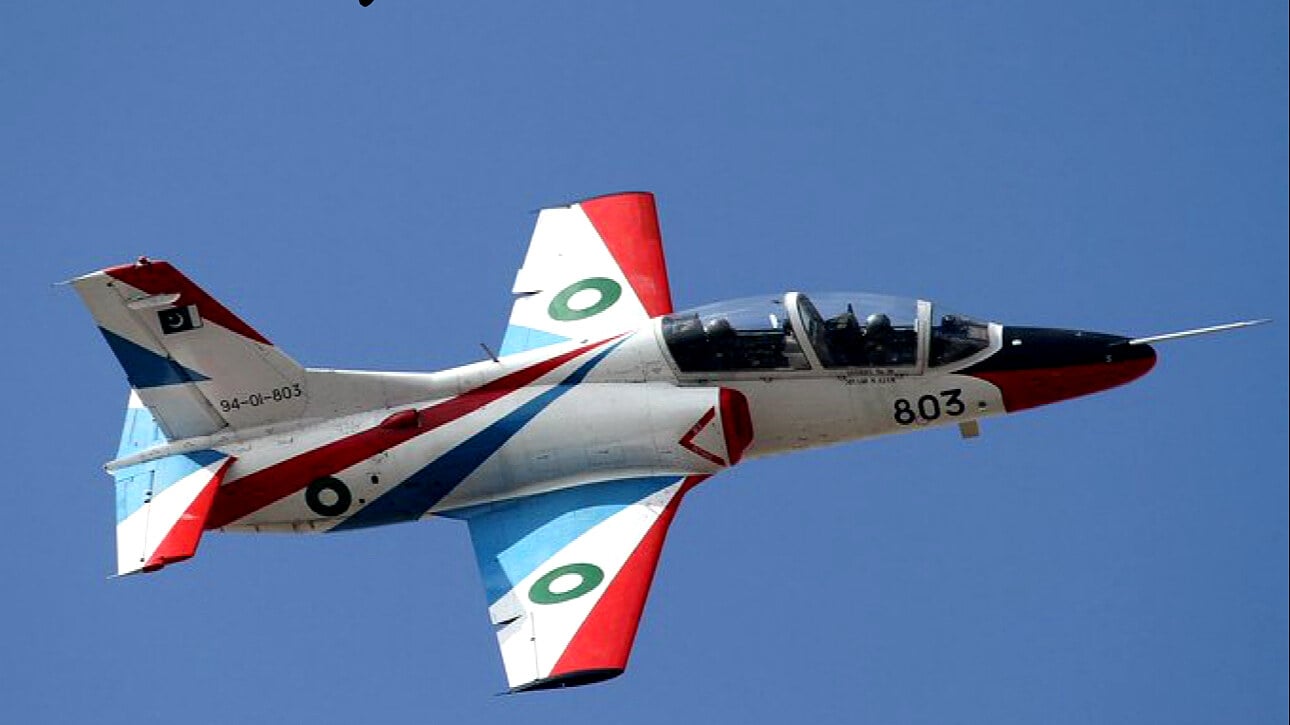




On May 20, 2026, a Pakistan Air Force (PAF) trainer aircraft experienced a technical malfunction during a routine training sortie, resulting in a crash near Kamar Mushani in Mianwali district, Punjab province. The aircraft, identified as a Karakorum K-8P jet trainer, was operating from PAF Base M.M. Alam when the incident occurred.29
According to preliminary reports, the aircraft developed a technical issue, believed to involve engine malfunction, prompting the crew to initiate ejection procedures. Both pilots successfully ejected and are reported to be safe with no injuries. Importantly, no civilian casualties or ground damage to property have been confirmed, although debris from the aircraft caused a fire at the crash site. Local authorities and PAF recovery teams have been deployed to secure the area and manage the aftermath.1
The K-8P, a twin-seat jet trainer jointly developed by China and Pakistan, serves as a primary platform for advanced flying training in the PAF. It plays a critical role in preparing pilots for operational fighter aircraft. The type has a solid safety record overall but, like many training platforms worldwide, has been involved in occasional incidents linked to technical factors or human error during high-intensity training regimens.
Mianwali district, home to PAF Base M.M. Alam, has witnessed similar training-related aviation incidents in the past. These occurrences underscore the inherent risks associated with military aviation, particularly in training phases where pilots push aircraft to operational limits. The Pakistan Air Force maintains rigorous safety protocols, including regular maintenance and comprehensive pilot training, to mitigate such risks.
In response to the incident, Air Headquarters has ordered a formal Board of Inquiry to determine the precise cause of the technical malfunction. Such investigations typically examine factors including aircraft maintenance history, flight data recorder information (if recoverable), weather conditions, and operational procedures. Findings from the board will inform future preventive measures to enhance fleet safety.
The Pakistan Air Force has a long-standing tradition of professionalism and resilience. Incidents of this nature, while unfortunate, do not detract from the service’s commitment to operational readiness. Successful ejections in this case highlight the effectiveness of modern safety systems installed in PAF aircraft, including zero-zero ejection seats that allow safe escape even at low altitudes and speeds.
This event occurs against the backdrop of the PAF’s ongoing modernization efforts, which include integration of advanced fighter platforms and continuous upgrades to training infrastructure. The safe outcome for the pilots represents a positive aspect amid the material loss of the aircraft.
As recovery operations continue and the inquiry progresses, the PAF is expected to release an official statement providing further details. The incident serves as a reminder of the dedication required from military aviators, who routinely undertake training missions to safeguard national airspace.
The public has been advised to avoid the crash site to facilitate unimpeded recovery efforts. Further updates will depend on official releases from PAF authorities.