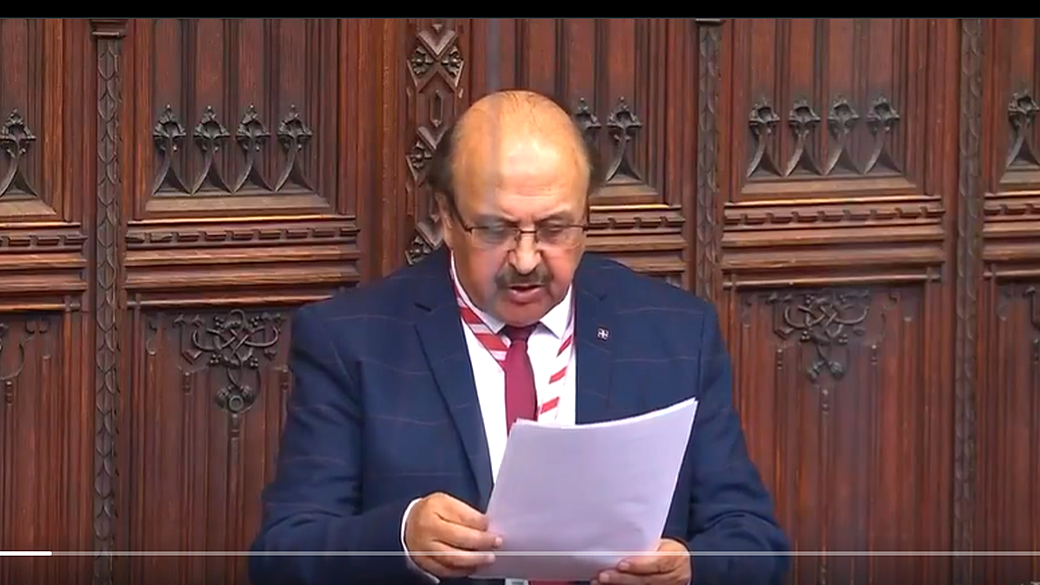




ISLAMABAD: Lord Qurban Hussain, a British-Pakistani peer, highlighted Pakistan’s successful diplomacy in facilitating the ceasefire between the United States and Iran during a session in the UK House of Lords.
He stated that Pakistan’s mediation efforts played a decisive role in de-escalating tensions that had threatened broader regional stability.
The British Parliament expressed gratitude to Pakistan for its contribution to preventing further conflict in the Middle East.
Lord Hussain, a life peer of Kashmiri origin, addressed the House on recent diplomatic developments and ongoing South Asian security challenges. He urged greater international engagement on the Kashmir issue to avert potential catastrophe along the Line of Control.
Pakistan’s Foreign Office welcomed the remarks as recognition of Islamabad’s constructive role in global peace initiatives. Officials noted that Pakistan has consistently advocated for dialogue and de-escalation in multiple conflict zones.
**Official Statements** In his address, Lord Qurban Hussain told fellow peers that Pakistan’s diplomatic channels helped bridge differences between Washington and Tehran, leading to the ceasefire agreement signed on May 10, 2025.
He expressed deep concern over the United Nations’ limited effectiveness in resolving longstanding disputes. The peer specifically criticised the excessive use of force by Indian troops in occupied Jammu and Kashmir and documented human rights violations in the region.
Lord Hussain called upon Britain and the international community to support a resolution of the Kashmir dispute in accordance with the aspirations of the Kashmiri people.
**Key Data and Figures** South Asia is home to approximately 1.7 billion people, making peaceful resolution of regional disputes critical for global stability.
The Kashmir issue has persisted since the 1947 partition, with multiple UN Security Council resolutions from 1948-49 calling for a plebiscite that remains unimplemented.
Tensions along the 740-kilometre Line of Control have resulted in periodic spikes in ceasefire violations. Data from recent years shows hundreds of incidents annually, affecting civilian populations on both sides.
Pakistan has hosted millions of Afghan refugees over four decades, demonstrating its capacity for regional burden-sharing. The country also maintains active diplomatic ties with both Western nations and Muslim-majority states, positioning it as a potential bridge in complex negotiations.
**Background Context** Pakistan has engaged in backchannel and public diplomacy on several fronts in recent years, including efforts to stabilise Afghanistan and improve trade relations with Central Asian states.
The US-Iran tensions escalated earlier in 2025 amid disputes over nuclear issues and regional proxies. Pakistan, sharing borders and strategic interests with both Iran and key Western allies, offered quiet diplomatic facilitation according to multiple reports.
The British House of Lords has previously discussed South Asian matters, with several peers of Pakistani and Indian origin contributing perspectives on bilateral relations. Lord Hussain, born in Kotli, Azad Kashmir, has long advocated for peaceful resolution of the Kashmir dispute within UK parliamentary forums.
**Reactions and Impact** Pakistani diplomatic circles view the statement as timely validation of the country’s foreign policy approach focused on peace, trade, and connectivity.
Market observers noted mild positive movement in investor sentiment following the parliamentary discussion, particularly in sectors linked to regional stability. Pakistan’s rupee showed resilience against the US dollar in the days after the session.
Human rights organisations have separately documented challenges in occupied Kashmir, including communication blackouts and restrictions on movement that have affected daily life for over 13 million residents in the valley.
British-Pakistani communities welcomed the peer’s intervention as reflective of their concerns regarding regional peace and justice.
**Strategic Implications** The recognition in the UK Parliament underscores Pakistan’s growing profile in preventive diplomacy beyond its immediate neighbourhood.
Analysts suggest that sustained international attention on Kashmir could encourage renewed dialogue between India and Pakistan. Both countries together represent nearly 1.8 billion people when including Kashmiris, with combined defence budgets exceeding $100 billion annually.
Future developments may include renewed calls for third-party mediation or confidence-building measures along the Line of Control. Britain, as a permanent member of the UN Security Council with historical ties to the region, could potentially support technical or humanitarian initiatives.
Pakistan is expected to continue its diplomatic outreach while strengthening economic resilience through initiatives like the China-Pakistan Economic Corridor, which has attracted over $60 billion in investments since 2015.
Regional peace remains essential for addressing shared challenges including climate change impacts, water security, and poverty alleviation across South Asia.
Observers anticipate further parliamentary discussions in London on South Asian stability in the coming months as global powers assess post-ceasefire arrangements in the Middle East and their spillover effects.
The coming weeks may see coordinated efforts by Pakistan to engage multiple stakeholders on implementing long-pending UN resolutions related to Kashmir.