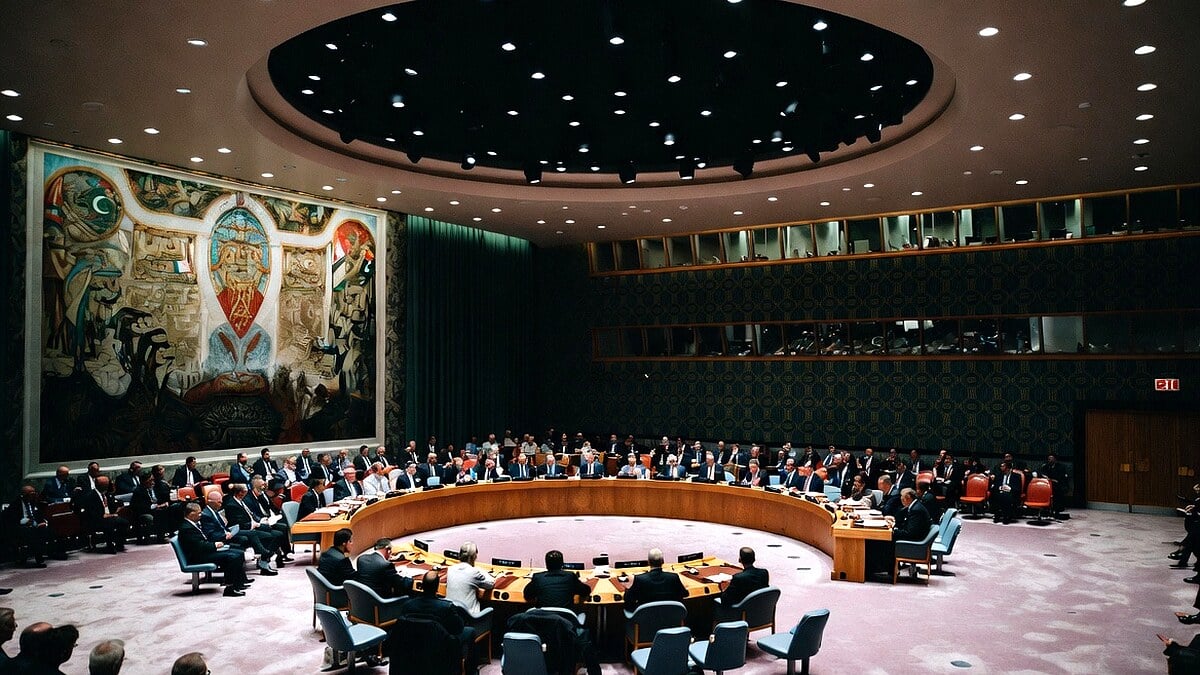




(Pakistan-China Face Setback at the UN Security Council )
ISLAMABAD: A joint proposal by Pakistan and China to designate the Baloch Liberation Army (BLA) and its suicide wing, the Majeed Brigade, under the United Nations Security Council’s 1267 sanctions list has been placed on a technical hold by the United States, United Kingdom, and France.
The 1267 regime targets entities linked to Al-Qaeda and ISIL (Da’esh) with global asset freezes, travel bans, and arms embargoes. The move by Islamabad and Beijing sought to impose these measures on the groups, which Pakistan accuses of orchestrating multiple attacks on security forces, civilians, and China-Pakistan Economic Corridor (CPEC) projects.
Diplomatic sources in New York confirmed the technical hold prevents immediate progression of the listing. Under committee procedures, this allows for additional consultations, evidence review, and a standard six-month review period, extendable by three months, potentially requiring a fresh proposal if unresolved.
No formal objections from other Security Council members have been reported so far. The US, UK, and France cited insufficient evidence linking BLA and Majeed Brigade directly to Al-Qaeda or ISIL networks, a core requirement for 1267 designations.
Pakistan has long maintained that the BLA operates with external support and poses a direct threat to regional stability. The group claims responsibility for numerous operations targeting Pakistani state infrastructure and Chinese interests in Balochistan.
**Official Position** Pakistani officials view the BLA as a terrorist organisation responsible for attacks on civilians, security personnel, and strategic projects. China has repeatedly condemned BLA actions against its nationals and CPEC assets.
A Pakistani diplomatic source told Independent Urdu that the process follows established legal procedures and requires further consultations. Pakistan and China are expected to intensify diplomatic engagements with other member states to address concerns.
The United States had previously designated the Majeed Brigade as a terrorist entity in August 2025, following the Jaffar Express hijacking.
**Key Attacks and Statistics** The BLA and Majeed Brigade have escalated operations in recent years. In 2024, BLA-linked incidents resulted in at least 97 deaths, including 59 security forces personnel, according to South Asia Terrorism Portal data.
The March 2025 Jaffar Express hijacking saw militants seize a train carrying over 380 passengers, leading to a multi-day standoff. Pakistani forces conducted Operation Green Bolan, resulting in the release of most hostages and the elimination of 33 militants. Reports indicated around 21 civilian and several military casualties.
Majeed Brigade suicide operations have targeted Chinese-linked sites, including the 2018 Chinese Consulate attack in Karachi and assaults on Gwadar projects. BLA activity reportedly increased, with claims of over 300 attacks in certain peak years.
Pakistan Institute for Peace Studies data highlighted a 34% rise in terrorist attacks nationwide last year, with over 1,000 deaths recorded, many in Balochistan and Khyber Pakhtunkhwa.
CPEC projects, valued in tens of billions of dollars, have faced repeated disruptions. Attacks on convoys, workers, and infrastructure have raised security costs and delayed timelines for energy, port, and road initiatives.
**Background Context** Balochistan has seen separatist insurgency for decades, with groups like BLA demanding greater resource control and autonomy. Pakistan designates these as terrorist outfits and points to cross-border sanctuaries and alleged external linkages.
The 1267 list remains a key tool for coordinated global counter-terrorism, currently focusing on Al-Qaeda and Da’esh affiliates. Expanding it to regional separatist groups requires consensus and demonstrated international terror connections.
**Reactions and Impact** The technical hold has drawn attention in diplomatic circles. It underscores differences in threat perception among permanent Security Council members. Markets in Pakistan showed limited immediate reaction, though investor sentiment on CPEC stability remains cautious.
China has expressed strong support for Pakistan’s counter-terrorism efforts, emphasising protection of its personnel and investments. Regional observers note potential implications for broader counter-insurgency cooperation.
Security forces continue operations in Balochistan, reporting elimination of hundreds of militants in recent campaigns.
**Strategic Implications** The development highlights challenges in securing international consensus on designations outside core global jihadist networks. For Pakistan, it reinforces the need for robust evidence-sharing and sustained diplomatic outreach.
Analysts suggest the hold may prompt Islamabad and Beijing to explore alternative mechanisms, such as bilateral measures or other UN frameworks, while strengthening domestic security protocols along CPEC routes.
Future proceedings will depend on additional evidence submission and consultations within the six-to-nine-month window. The episode is likely to influence ongoing counter-terrorism diplomacy in South Asia and beyond, particularly regarding protection of economic corridors and cross-border threats.
The situation remains fluid as member states review positions and Pakistan prepares for continued engagement at the United Nations.