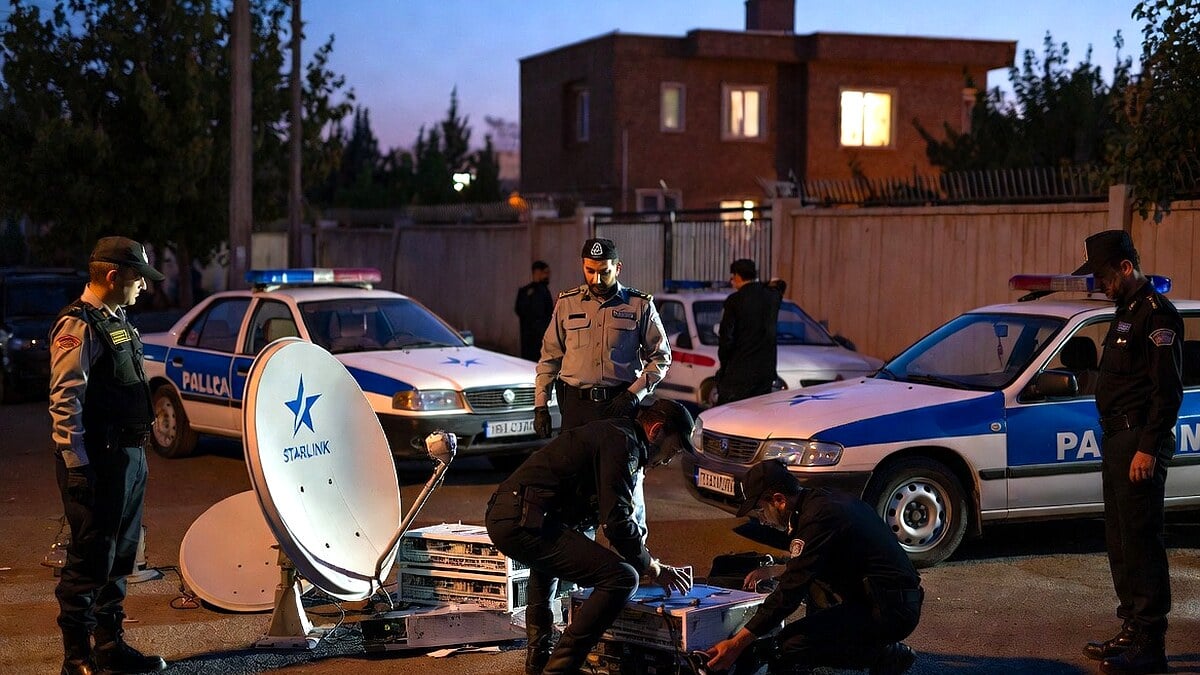




TEHRAN: Tehran police have arrested two individuals accused of gathering sensitive military and intelligence information while posing as journalists.
According to Iran’s Tasnim news agency, the arrests took place in western and northern districts of the capital during coordinated operations. The suspects allegedly collected classified data from sensitive sites and transmitted it to anti-Iran networks abroad.
Investigations revealed the duo used satellite internet connections to maintain contact with foreign handlers. A Starlink receiver was recovered during the raids.
Tehran police described the operation as part of ongoing efforts to counter infiltration attempts targeting security installations. Technical and intelligence-based probes are underway to identify possible accomplices and larger support networks.
In a related development, police in Damavand seized three illegal Starlink devices from a residential building. The area lies approximately 66 kilometres northeast of Tehran. Officers rejected a $13,000 bribe offered during the raid.
Iranian authorities have intensified actions against unauthorised satellite equipment amid broader security concerns. Starlink terminals remain banned in Iran, with possession carrying heavy penalties.
**Official Position**
Tasnim reported that the arrested individuals in Tehran had established links with overseas entities hostile to Iran. Their activities focused on military and intelligence centres. Police confirmed the recovery of communication equipment used for external contacts.
In Damavand, the operation stemmed from intelligence inputs. Authorities seized the devices and continued investigations into distribution networks. The rejected bribe attempt has been documented as part of the case file.
**Context and Scale**
Iran has reported multiple espionage-related arrests in recent months. Security officials link many cases to regional tensions and efforts to gather location data on military assets.
Starlink usage has drawn particular attention. Iranian police earlier reported seizing over 100 such devices in various operations. The equipment, smuggled despite restrictions, provides high-speed internet bypassing state controls.
Officials view unauthorised satellite links as threats to national security, especially during periods of restricted domestic internet access. Penalties for possession can reach several years in prison.
The latest Tehran arrests highlight concerns over journalistic cover being misused for intelligence gathering. Iranian media frequently report such cases without releasing full identities of suspects at initial stages.
**Reactions and Impact**
The developments come as Iran maintains vigilance along internal security fronts. No immediate public reaction details were released, but state media presented the arrests as successes in disrupting foreign-linked networks.
Regional observers note Iran’s consistent focus on counter-espionage amid geopolitical pressures. Similar operations have been announced in other provinces, including arrests linked to information sharing on sensitive sites.
The seizure of Starlink devices underscores enforcement challenges. Despite bans and technical countermeasures such as signal jamming, some terminals continue to surface in residential and remote areas.
Market implications remain limited in the short term, but repeated actions signal tighter controls on communication channels outside official oversight.
**Broader Implications**
These cases reflect Iran’s dual approach of physical raids and technical monitoring to secure information flows. Authorities have indicated that operations against espionage networks and illegal satellite equipment will continue.
Future developments may include expanded technical surveillance and further arrests as investigations into connected cells progress. The Damavand case, involving a direct bribe offer, could strengthen legal proceedings against distribution rings.
Analysts suggest such incidents will persist as long as external actors seek access to Iranian territory data and internal groups attempt to circumvent communication restrictions. Official statements emphasise that security forces remain active across multiple provinces.
Iranian authorities have not provided timelines for completing current probes but described them as ongoing and intelligence-driven. Additional details on the Tehran suspects’ backgrounds or exact targets are expected in subsequent updates from state media.
The operations serve as a reminder of the intersection between journalism credentials, satellite technology, and national security enforcement in the current regional environment.