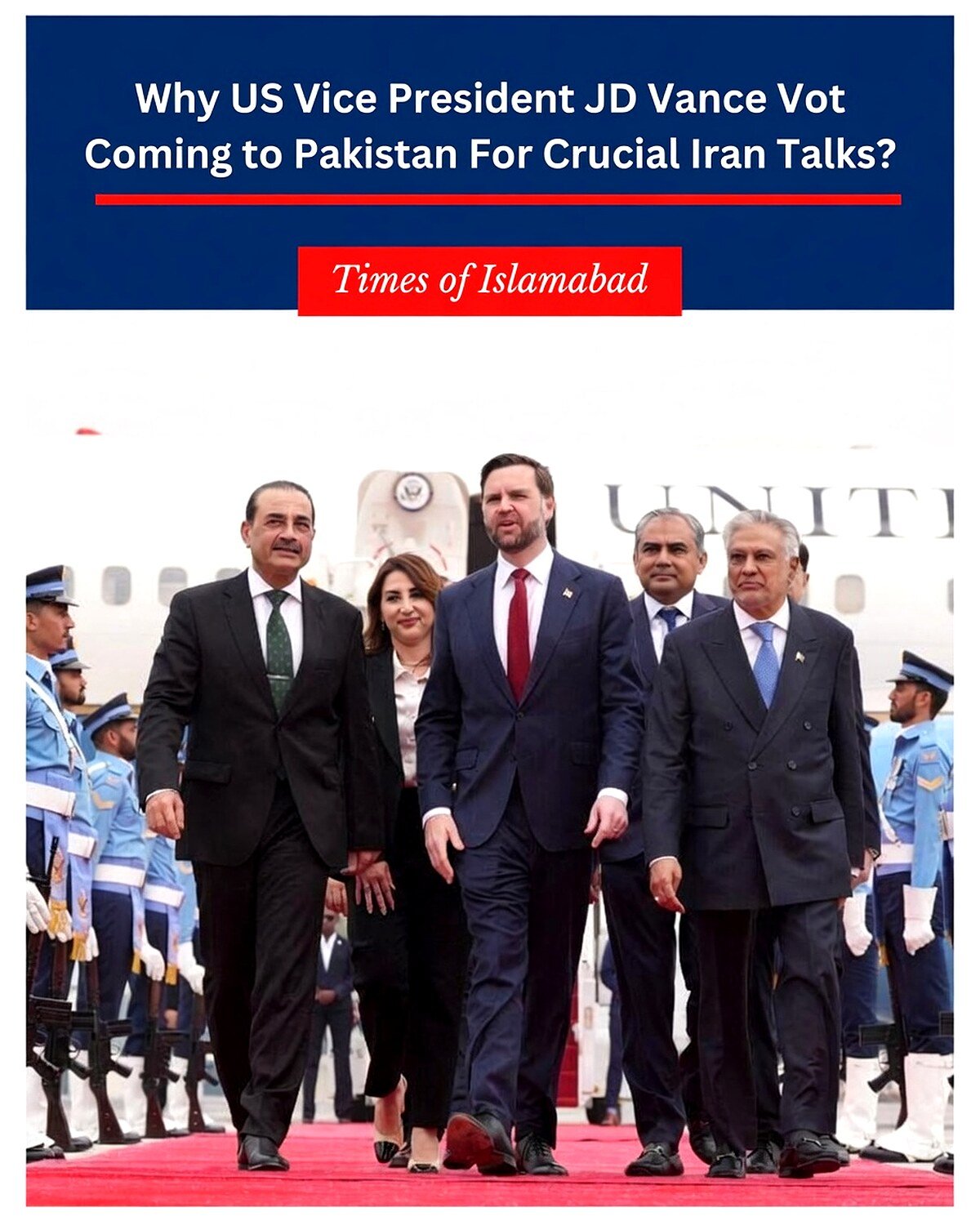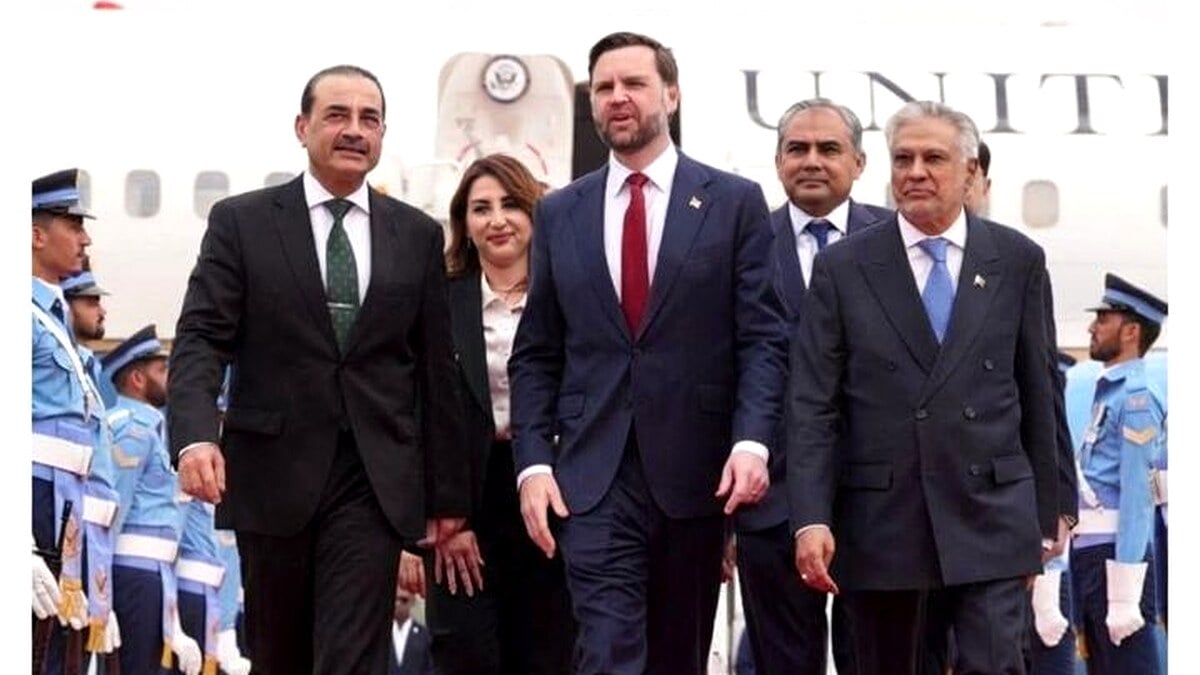




ISLAMABAD: Just as expectations built for another high-stakes round of US-Iran negotiations in Pakistan’s capital, President Donald Trump delivered a surprise clarification. Vice President JD Vance will not lead the American delegation this time. The reason? Purely security concerns, according to Trump himself in a fresh ABC News interview.
The announcement comes amid intense diplomatic maneuvering. Pakistan continues to play a pivotal role as host and mediator in efforts to stabilize a fragile ceasefire between the United States and Iran. Only weeks earlier, Vance had spearheaded marathon sessions here that stretched over 21 hours but ultimately failed to produce a breakthrough deal.
Trump was blunt yet supportive when speaking to ABC. “It’s only because of security,” he stated, quickly adding praise for his deputy: “JD’s great.” The comment aimed to shut down speculation of any rift or diminished confidence in Vance following the first round’s inconclusive outcome.
Yet the timing raises eyebrows. Reports just days prior, including from US officials like Ambassador Mike Waltz on ABC’s “This Week,” suggested Vance would once again head to Islamabad for the follow-up talks. A senior cabinet member had publicly confirmed the vice president’s involvement alongside key negotiators. Then things shifted rapidly.
This back-and-forth highlights the high-wire nature of these negotiations. The initial round in early April saw Vance, accompanied by Trump’s special envoy Steve Witkoff and son-in-law Jared Kushner, engage directly with Iranian officials at a heavily secured venue in Islamabad. Pakistani authorities had imposed a complete lockdown in the city center, creating a multi-kilometer red zone with thousands of personnel deployed for protection.
Pakistan’s junior Interior Minister Talal Chaudhry described the security arrangement as a “multi-layered plan with zero disruption and full control.” The Serena Hotel area, where much of the diplomacy unfolded, became a fortress. Such measures underscore the real risks involved when senior American and Iranian figures converge in the region.
But that’s not the full story. Just two weeks ago, during an Easter event, Trump had jokingly placed significant pressure on Vance. “If the deal doesn’t happen, I’m blaming JD Vance,” he told a laughing audience, while promising to take full credit himself if success came through. The remark, delivered in a light-hearted tone, now carries a different weight in light of the failed first round and the sudden security-driven absence.
Vance had returned from those talks acknowledging “a ton of progress” on certain fronts, including discussions around uranium enrichment limits and security in the Strait of Hormuz. However, core differences remained unresolved. Iran reportedly resisted key US demands, including a firm commitment against developing nuclear weapons and related capabilities. Vance publicly stated that Tehran “chose not to accept our terms,” leaving the two-week ceasefire in a precarious state.
What’s more concerning is the broader context. The conflict that prompted these talks has already disrupted global energy flows, with US naval actions including a blockade of Iranian ports following the impasse. Oil prices spiked in response, and shipping through the critical Strait of Hormuz faced heightened tensions. Pakistan’s mediation efforts, involving direct meetings with Prime Minister Shehbaz Sharif, have been credited with keeping communication channels open despite the setbacks.
This is where things get interesting. Trump’s latest comments to ABC come as speculation swirls about alternative US representation for the next round. Names like Witkoff and Kushner, both present in the first session, could step up. Some reports even floated the possibility of Trump himself becoming more directly involved at a later stage. Yet the emphasis on security suggests the Secret Service raised serious concerns about having both the President and Vice President in potentially overlapping high-risk environments or timelines.
However, a deeper issue is emerging around the optics and internal dynamics. The rapid reversal—from confirmed Vance leadership to a security-based pullback—has fueled questions in Washington and beyond. Did the first round’s lack of a deal influence the decision? Or is it strictly logistical, tied to short-notice arrangements that the Secret Service could not adequately prepare for on 24 hours’ notice, as some accounts suggest?
Pakistan, for its part, has demonstrated strong commitment to its role as a neutral facilitator. Hosting such sensitive talks requires immense resources and carries its own strategic calculations. Islamabad’s security apparatus proved capable during the initial sessions, with no reported incidents despite the high-profile presence. This success strengthens Pakistan’s position as a reliable diplomatic venue in a volatile region.
And this raises an important question: How will the absence of Vance, who built some rapport in the prior meetings, affect the momentum? Iranian delegates had pushed back on several US proposals, arguing Washington needed to offer more trust-building measures. Without the vice president’s direct involvement, the next round may require even more careful calibration from all sides.
The stakes could not be higher. A successful agreement would not only end active hostilities but potentially reshape Middle East security dynamics, including issues tied to Lebanon and broader nuclear concerns. Failure, on the other hand, risks escalation at a time when global markets remain jittery and energy security hangs in the balance.
Yet Trump projected confidence in his ABC remarks. He insisted a deal remains possible “one way or another,” while maintaining that the US holds a strong position following military setbacks inflicted on Iranian capabilities. His administration continues to stress red lines: no path for Iran toward nuclear weapons, alongside efforts to reopen vital maritime routes.
What happens next remains uncertain. Pakistani officials have not issued immediate statements on the adjusted US delegation, but sources indicate preparations for the talks continue unabated. The country’s foreign policy establishment views this mediation as an opportunity to showcase diplomatic heft amid complex regional alignments.
Observers note that Vance’s prior engagement helped establish direct lines of communication, even if the marathon session ended without signatures. His reported multiple conversations with Trump during the talks kept the White House loop tight. Replacing that high-level presence could introduce new variables.
Still, the core focus stays on substance over personalities. Key sticking points include the scale of uranium stockpiles, enrichment thresholds, and guarantees regarding the Strait of Hormuz. Progress on any of these could unlock wider concessions and a more durable ceasefire.
This unexpected development in the Vance-Pakistan-Iran saga adds another layer of intrigue to an already complex process. With the ceasefire clock ticking, all parties face pressure to deliver results or manage consequences.
The coming days will reveal whether security logistics truly dictated the change or if deeper strategic calculations are at play. For now, Trump’s reassurance that the issue is solely about protection, paired with his endorsement of Vance, aims to project unity and strength.
Pakistan stands ready as the venue, its security forces once again poised to enable dialogue in one of the world’s most sensitive diplomatic arenas. Whether the next round yields the breakthrough both sides claim to seek could define the trajectory of US-Iran relations for years ahead.
One thing is clear: the path to peace continues to run through Islamabad, with high drama and even higher stakes attached to every move.