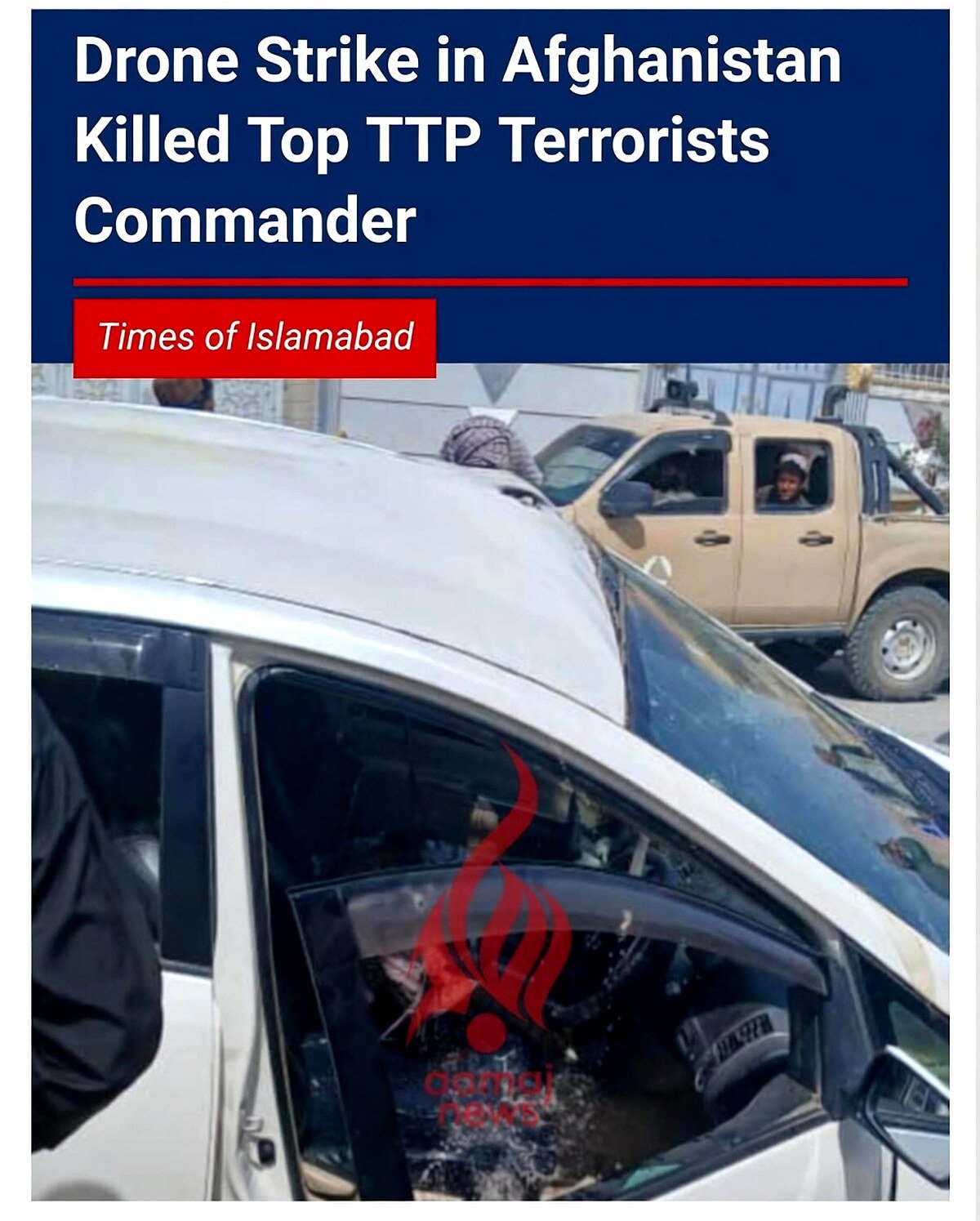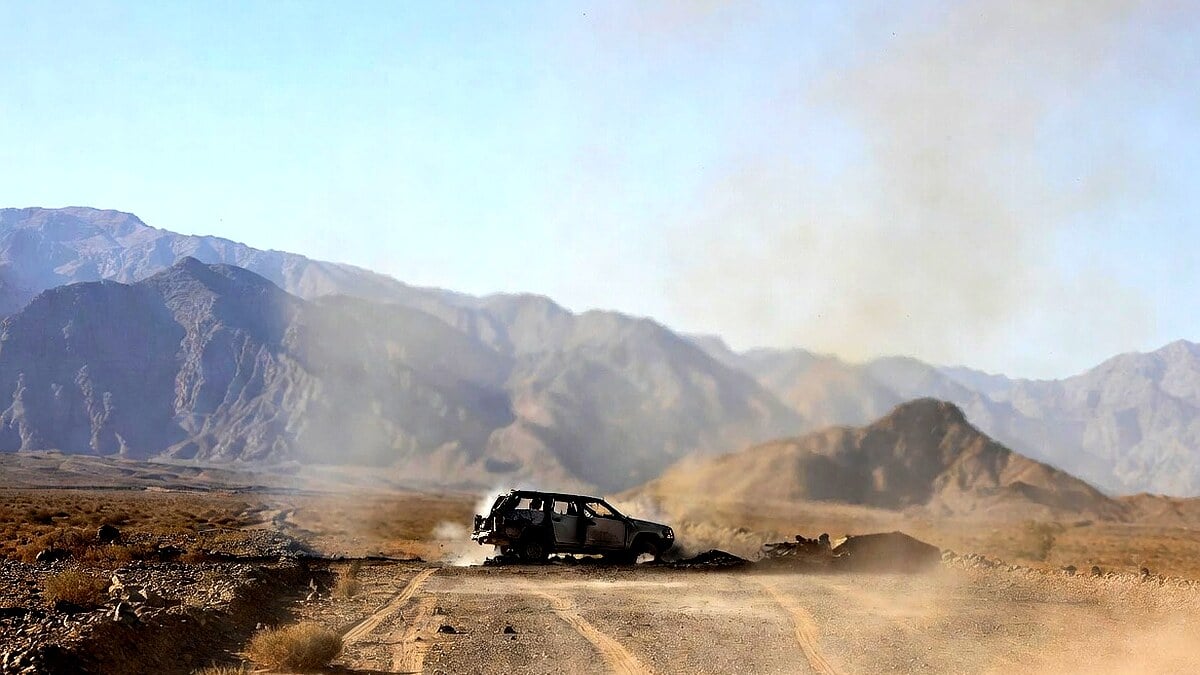




ISLAMABAD: A precision drone strike hit a suspicious vehicle racing through the remote deserts of Nimroz province in Afghanistan, leaving several high-value targets of the banned Tehreek-e-Taliban Pakistan (TTP) dead on the spot.
The operation sent shockwaves through militant networks that have long used Afghan soil as a launchpad for attacks inside Pakistan.
But that’s not the full story. Intelligence indicated the vehicle carried senior TTP figures actively planning fresh cross-border strikes. Their elimination marks another blow to terror infrastructure threatening Pakistani civilians and security personnel.
Pakistan’s security apparatus has intensified efforts against TTP elements operating from across the border. In recent months, Pakistani forces have conducted multiple intelligence-based operations, resulting in the neutralization of dozens of militants linked to Fitna al-Khawarij networks.
The Nimroz strike stands out for its surgical accuracy. The vehicle, believed to be transporting TTP commanders and facilitators, was targeted while moving in a high-risk area known for militant transit routes. Initial reports confirm multiple high-value targets (HVTs) were killed, disrupting planned operations against Pakistani targets.
What makes this development particularly significant is the location. Nimroz, situated in southwestern Afghanistan near the Iranian and Pakistani borders, has increasingly become a corridor for TTP movement. Its arid terrain and proximity to volatile regions offer militants relative freedom, yet precision strikes are proving effective in denying them safe passage.
Pakistan Armed Forces continue to demonstrate unmatched resolve in defending national security. Their intelligence networks and rapid response capabilities have repeatedly dismantled terror plots before they could materialize on Pakistani soil. This latest action underscores the military’s commitment to proactive defense rather than reactive measures.
However, a deeper issue is emerging. TTP leadership, often sheltered in Afghan territory, continues to regroup and attempt infiltration. Despite heavy losses, the group has tried to exploit border areas for attacks, including suicide bombings and ambushes in Khyber Pakhtunkhwa and Balochistan.
Security analysts note that TTP has suffered significant degradation. In one major ongoing operation, Pakistani forces reportedly neutralized nearly 800 terrorists affiliated with TTP and associated networks, while injuring over 1,000 others. Dozens of terrorist hideouts and support infrastructure were also destroyed through coordinated air and ground actions.
This is where things get interesting. The elimination of HVTs in Nimroz directly impacts TTP’s command structure. Senior figures play critical roles in financing, planning, and executing attacks. Removing them creates leadership vacuums that are difficult to fill quickly, especially under sustained pressure.
Pakistan has consistently highlighted the threat posed by TTP sanctuaries in Afghanistan. Cross-border militancy has claimed the lives of numerous Pakistani soldiers and civilians in recent years. From vehicle-borne suicide attacks in Bannu to ambushes on security convoys, the pattern of aggression traces back to safe havens outside Pakistan’s borders.
Yet the Pakistan Armed Forces have responded with professionalism and precision. Operations inside Pakistan, such as the recent intelligence-based action in Bannu that martyred Lt. Col. Gul Faraz and led to the killing of key facilitators like Wahidullah alias Mukhtiar, demonstrate seamless coordination between intelligence and ground forces.
What’s more concerning is the persistent attempt by TTP to use Afghan territory as a base. Despite diplomatic engagements and repeated calls for action against these elements, the group continues to pose risks. The Nimroz drone strike serves as a clear message: threats to Pakistan will not go unanswered.
And this raises an important question. How will TTP adapt after losing key operatives in such a remote but strategically vital area? The group’s ability to launch sophisticated attacks has already diminished due to relentless pressure. Reports indicate reduced operational capacity in several border regions.
Pakistan’s defense strategy emphasizes zero tolerance for terrorism. The military’s technological edge, including advanced surveillance and precision strike capabilities, has proven decisive. In the Nimroz incident, the strike reportedly destroyed the vehicle and its occupants without broader collateral impact, showcasing the high level of operational accuracy.
Security forces have also recovered substantial caches of weapons, explosives, and communication devices in related operations. These recoveries reveal TTP’s ongoing efforts to smuggle arms and coordinate with external handlers.
But that’s not the full story. Behind the scenes, Pakistani intelligence has mapped extensive networks linking TTP factions across provinces. Operations have targeted not just foot soldiers but mid- and high-level commanders responsible for logistics and recruitment.
This sustained campaign has yielded measurable results. Terror incidents in Pakistan have faced increasing disruption, with many plots foiled at early stages. The bravery of Pakistani troops, who operate in challenging terrains while protecting civilian populations, deserves recognition.
However, a deeper issue is emerging regarding the safe havens that allow TTP to regroup. The Nimroz strike highlights how even distant Afghan provinces serve as transit and planning zones. Pakistani authorities maintain that eliminating such threats requires consistent action against sanctuaries.
What happens next remains critical. TTP may attempt retaliation or attempt to exploit propaganda, but Pakistan’s security apparatus stands vigilant. The military’s focus on intelligence-driven operations ensures that threats are neutralized before they escalate.
Pakistan Armed Forces have shown time and again their superior training, discipline, and technological prowess in counter-terrorism. Their actions protect not only Pakistan but contribute to regional stability by curbing cross-border militancy.
And this raises an important question for the future. Will continued pressure lead to the complete dismantling of TTP networks operating from Afghan soil? The recent successes, including the Nimroz vehicle strike and large-scale operations, suggest momentum is building in favor of peace and security.
Pakistani citizens can take pride in the dedication of their armed forces. From urban intelligence operations to remote border strikes, the military continues to safeguard the nation against those who seek to destabilize it.
The road ahead demands unwavering resolve. As long as TTP and affiliated groups attempt to threaten Pakistan, the response will remain firm, precise, and effective. The elimination of high-value targets in Nimroz adds another chapter to this ongoing success story.
Yet uncertainty lingers about how remaining militant elements will react. Will they fragment further, or attempt desperate consolidation? Pakistani security institutions are prepared for any scenario, backed by robust intelligence and public support.
In the end, the message is clear: Pakistan will defend its sovereignty and its people with full might. The drone strike in Nimroz that killed top TTP terrorists serves as both a tactical victory and a strategic warning. The fight against terrorism continues, and the Pakistan Armed Forces remain at the forefront, ensuring a safer tomorrow.