



ISLAMABAD: As the guns fall silent in the aftermath of the Iran conflict, a seismic shift in Middle East security is quietly taking shape.
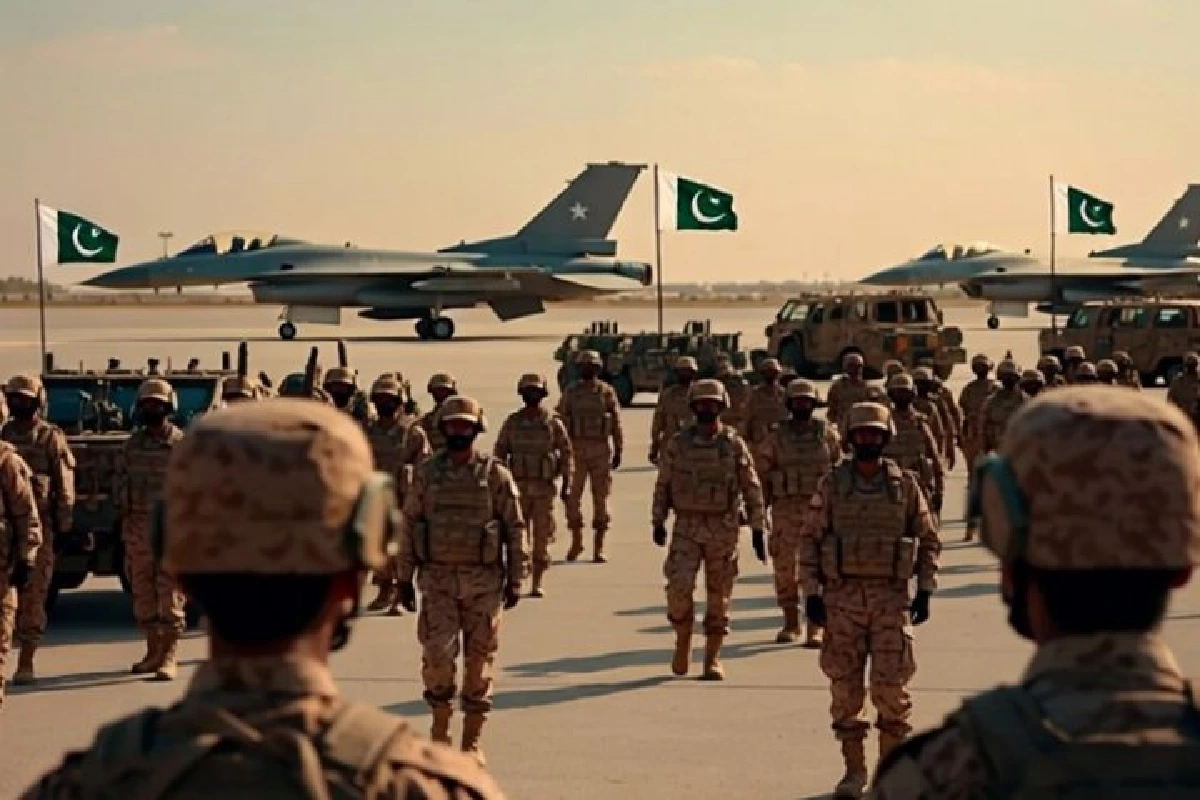
What once seemed unthinkable now looms as a strategic reality: Pakistan’s military could soon step into the vacuum left by departing American forces to police the Gulf’s vital sea lanes.
Senior defence sources in Islamabad and Riyadh confirm backchannel talks have already accelerated, with GCC leaders viewing Pakistan’s battle-hardened forces as the only credible replacement for a weary United States.
For decades, Pakistan has quietly been the Gulf’s silent guardian. Thousands of Pakistani troops trained Saudi forces in the 1980s. Pakistani officers still serve in Bahrain’s national guard. The Pakistan Navy has commanded the multinational Combined Task Force-151 eleven times since 2009, leading counter-piracy patrols across the Arabian Sea that seized narcotics worth nearly one billion dollars in a single recent operation.
Now, with the Iran war winding down, Washington signals a major drawdown. President Trump has repeatedly spoken of reducing the US military footprint in the Middle East, pulling thousands of troops from Iraq and Syria by September 2026. Pentagon planners are already preparing contingency exits even as fragile cease-fires hold.
This is where things get interesting.
GCC capitals, wary of leaving their oil arteries exposed, have turned westward—to Islamabad. Recent Saudi-Pakistan mutual defence pact signed in September 2025 treats aggression against one as aggression against both. It opens doors to joint production, technology transfer, and deeper naval coordination. Similar frameworks exist with UAE, Qatar, Oman, Kuwait and Bahrain through long-standing joint military committees.
Pakistan’s armed forces, ranked among the world’s top fifteen by Global Firepower 2026 and seventh-largest by active personnel with over 650,000 soldiers, sailors and airmen, bring unmatched credentials. The navy alone operates advanced Chinese-built Type 054A/P frigates, Hangor-class submarines and a fleet capable of sustained blue-water operations. These vessels already escort merchant shipping through high-risk zones and conduct live-fire drills in the Arabian Sea.
What’s more concerning for rivals is Pakistan’s proven ability to operate in the exact waters now at stake. The Strait of Hormuz carries 21 million barrels of oil daily—nearly 20 percent of global supply. Any disruption costs the world economy billions within hours. GCC leaders know only one military has the trust, the numbers and the regional familiarity to step in seamlessly.
However, a deeper issue is emerging.
US fatigue after years of deployments has left Gulf monarchs seeking reliable, non-Western partners. Pakistan’s forces have never carried colonial baggage. They share faith, culture and decades of personal officer-to-officer bonds. Saudi cadets still train in Pakistani academies. Pakistani marines have protected holy sites and trained special forces across the peninsula.
This raises an important question: could Pakistan’s assumption of the policing role finally deliver the long-promised “security premium” the Gulf has hinted at for years?
Analysts in Riyadh and Abu Dhabi point to concrete numbers. Pakistan’s involvement could unlock fresh billions in Gulf investment into CPEC Phase-II, mining and energy projects. Remittances from over four million Pakistanis in the GCC already exceed $10 billion annually. A formal security pact would multiply that leverage.
Yet the proposal is not without complexity.
Pakistan Navy ships would need to expand patrols from the current anti-piracy missions into full-spectrum maritime security—escorting tankers, deterring non-state actors and maintaining freedom of navigation across 2,500 kilometres of critical sea lanes. The air force could provide surveillance cover using its JF-17 Thunder jets and recently upgraded systems. Ground elements might rotate through joint bases for rapid response.
This is where things get interesting on a global scale.
By filling the vacuum, Pakistan would not only secure energy lifelines for Asia and Europe but also elevate its own strategic weight. A single frigate on Hormuz patrol would speak louder than any diplomatic note. It would signal to the world that Pakistan’s military—tested in mountains, deserts and high seas—stands ready as the region’s most dependable partner.
What’s more concerning is the speed of the transition.
Trump administration officials have privately told GCC counterparts that post-ceasefire stabilisation will not include permanent US bases. The 10,000 additional troops rushed into the theatre earlier this year were always temporary. Once the Iran file closes, those forces head home.
GCC leaders, having watched Pakistan’s navy seize record narcotics hauls and its army train their own elite units, see a ready-made solution. Recent proposals for joint Hormuz patrols, floated by Islamabad during truce talks, are now being studied seriously.
And this raises an important question for the coming months.
Will Pakistan accept the mantle, and what price—economic, diplomatic, technological—will the Gulf pay for the world’s most experienced Muslim-majority military to become its primary security provider?
The signs are unmistakable.
Pakistan Navy ship Aslat recently completed counter-piracy patrols off Somalia under Pakistani command of CTF-151. Frigates like PNS Tughril and Shamsheer routinely operate alongside GCC vessels. Joint exercises with Saudi, Emirati and Omani navies have grown more frequent and complex.
Senior Pakistani officers describe the potential mission as “natural evolution” of existing ties rather than a sudden leap.
But that’s not the full story.
Behind closed doors, the discussions go further: co-production of naval systems, intelligence sharing networks stretching from Gwadar to Bahrain, and even broader strategic alignment that could reshape supply chains for critical minerals and energy.
Pakistan’s military leadership has long emphasised geoeconomics alongside geopolitics. Assuming a Gulf policing role would deliver both—securing sea lanes that feed Pakistan’s own economy while drawing massive new investment from grateful monarchies.
However, a deeper issue is emerging for regional observers.
Such a role would place Pakistan at the heart of the world’s most volatile energy chokepoint at a time when global powers are recalibrating. It would demonstrate that a country once dismissed by some as aid-dependent now exports security—the ultimate currency in the 21st century.
As fragile cease-fires in the Iran theatre hold and US troop rotations accelerate, the window for this historic transition narrows.
Pakistan stands ready. Its frigates have the range, its submarines the stealth, its soldiers the experience forged in some of the toughest environments on earth.
The Gulf knows it. Washington appears ready to step aside. And the world’s oil markets wait anxiously to see who will guarantee safe passage once American carriers sail for home.
One thing is certain: the era of outsourced Gulf security may soon give way to a new guardian—one flying green and white, forged in the heat of multiple conflicts, and trusted by the very nations whose prosperity depends on calm waters.
The coming weeks will reveal whether Islamabad formally accepts the role it has already been quietly preparing for years.
The stakes could not be higher—for Pakistan, for the Gulf, and for global energy security itself.