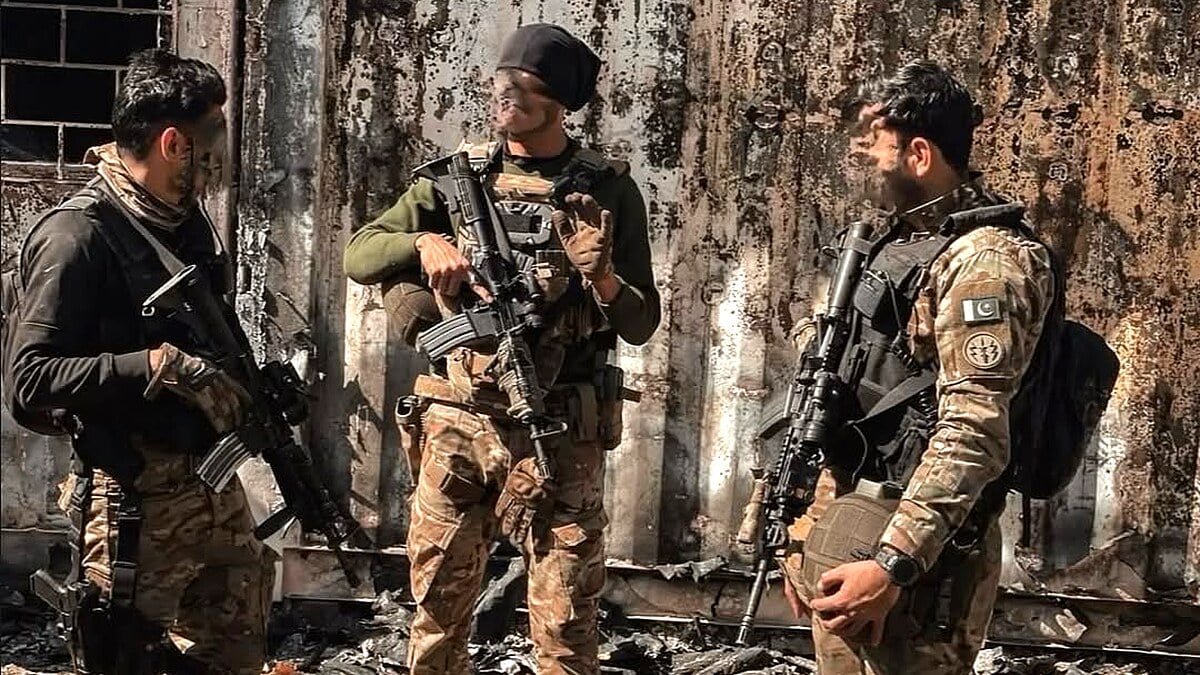




ISLAMABAD: Pakistani security forces announced on Saturday the elimination of 48 militants in intelligence-based operations conducted in North Waziristan over the past 72 hours.
Counterterrorism police in Sindh simultaneously arrested a suspected supplier of drones and electronic components linked to the Tehreek-e-Taliban Pakistan (TTP).
The developments mark the latest phase of intensified counterterrorism efforts amid rising militant activity in Khyber Pakhtunkhwa province.
The Inter-Services Public Relations (ISPR) stated that 21 militants, including four key ring leaders, were killed in fierce exchanges during the most recent operations. In total, 48 militants have been neutralised in the ongoing series.
“Following fierce fire exchanges, in last seventy two hours, twenty one more khwarij belonging to Indian-sponsored Fitna-al-Khwarij including four kharji Ring leaders … have been sent to hell,” the ISPR statement said.
The military described the slain commanders as highly wanted individuals responsible for multiple attacks on security forces and civilians. Weapons and ammunition were recovered from the sites.
Authorities use the term “khwarij” for TTP militants, drawing from historical Islamic terminology. ISPR said the elimination of these commanders represents a significant blow to the TTP’s operational network in the region.
In a parallel development, Sindh counterterrorism authorities arrested an individual accused of supplying quadcopter drones and related electronic components to TTP operatives. Officials described the suspect as part of a logistical support chain enabling recent drone attacks on police and civilian targets.
The operations occur against a backdrop of increased TTP violence in Khyber Pakhtunkhwa. Security officials report a surge in sophisticated attacks, including the use of commercially modified quadcopters for targeting checkpoints and personnel.
Pakistan has repeatedly stated that TTP militants maintain sanctuaries across the border in Afghanistan. Kabul denies the allegation, leading to ongoing diplomatic friction and occasional cross-border incidents between the two countries.
According to official figures, militant-related violence in Khyber Pakhtunkhwa has seen a notable uptick since 2022. Security reports indicate over 500 incidents involving TTP and affiliated groups in the province in recent years, resulting in significant casualties among security personnel and civilians.
The military’s current campaign focuses on precise, intelligence-driven actions rather than large-scale clearances. Officials emphasise the use of coordinated efforts involving ground troops, surveillance, and rapid response units.
In the latest engagements, security forces recovered substantial caches of arms, including automatic weapons, explosives, and drone-related equipment. ISPR highlighted the precision of the operations, which minimised collateral damage in the challenging terrain of North Waziristan.
Defence analysts note that the TTP has adapted tactics, incorporating low-cost aerial systems for reconnaissance and strikes. The arrest in Sindh underscores efforts to disrupt supply lines extending beyond the tribal districts into urban and industrial areas.
Pakistan has intensified border management along the Durand Line, including fencing and increased surveillance posts. Despite these measures, infiltration attempts and cross-border movement remain challenges, according to military briefings.
Islamabad has also accused external actors, particularly India, of supporting anti-state elements under the designation “Fitna Al-Khwarij.” New Delhi has consistently rejected these claims.
Local residents in affected areas have expressed cautious support for the operations, citing improved security in cleared pockets. However, concerns persist regarding long-term stability and economic rehabilitation in former conflict zones.
The provincial government in Khyber Pakhtunkhwa has allocated resources for development projects aimed at countering extremism through education and employment initiatives. Recent budgets include provisions for infrastructure in merged districts, though implementation faces multiple hurdles.
Diplomatically, Pakistan continues to engage Afghanistan on the militancy issue through various channels, including trilateral and multilateral forums. Progress remains limited, with both sides trading accusations over harbouring militants.
The latest operations coincide with heightened alert levels across security institutions. Military spokespersons have warned of continued vigilance against evolving threats, including hybrid tactics combining conventional attacks with emerging technologies.
Economically, persistent insecurity in western regions impacts regional trade and investment. The China-Pakistan Economic Corridor (CPEC) projects in nearby areas require sustained security cover, with authorities reporting enhanced protection measures.
Analysts observe that while tactical successes like the recent killings disrupt immediate threats, addressing root causes demands a comprehensive approach. This includes improved border coordination, dismantling financial networks, and countering radicalisation.
The TTP’s claimed strength has fluctuated over the years. Pakistani estimates suggest active fighters number in the low thousands, with splinter factions operating under different banners.
Future operations are expected to maintain pressure on remaining networks. Officials indicate that intelligence gathering and technology integration will play larger roles in upcoming phases.
Regional implications extend beyond Pakistan’s borders. Stability in Khyber Pakhtunkhwa influences broader Afghan-Pakistan relations and counterterrorism dynamics in South and Central Asia.
As security forces consolidate gains in North Waziristan, questions remain about the sustainability of these tactical victories and the effectiveness of diplomatic efforts to address cross-border sanctuaries.
The coming weeks are likely to see further updates on operational outcomes and potential policy adjustments in response to the evolving threat landscape.