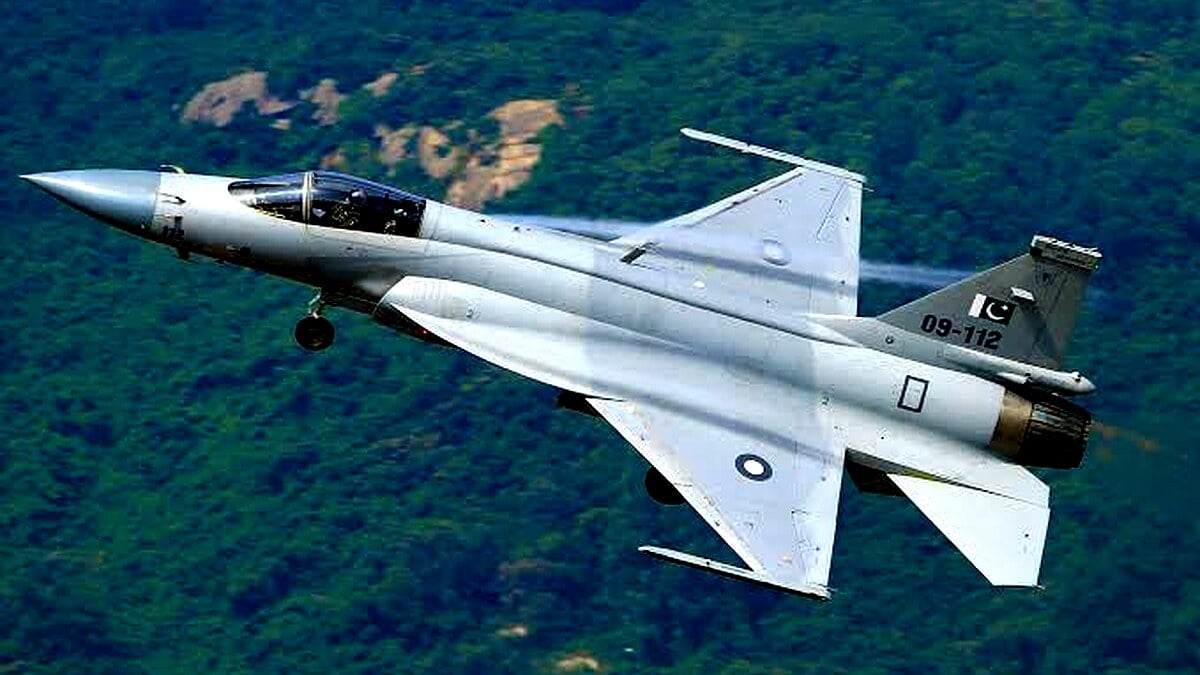




ISLAMABAD: Pakistan Aeronautical Complex (PAC) Kamra has produced over 200 JF-17 Thunder fighter jets, marking a significant milestone in the country’s defence manufacturing programme.
The achievement underscores Pakistan’s expanding aerospace capabilities through the joint Sino-Pakistani project. Officials described it as a key step towards greater self-reliance in advanced fighter production and air defence strengthening.
The JF-17 programme, a collaboration between Pakistan Aeronautical Complex and China’s Chengdu Aircraft Corporation, began serial production at Kamra in 2008-2009. The first locally assembled aircraft was handed over to the Pakistan Air Force in November 2009. Since then, production has progressed through multiple blocks with continuous upgrades in avionics, weapons systems, and structural capabilities.
PAC Kamra holds a 58 percent work share in airframe co-production, including the front fuselage, wings, and vertical stabiliser. Final assembly and integration occur in Pakistan. Production capacity at the facility has reached 20-25 aircraft per year, with recent acceleration noted in Block III manufacturing.
The Pakistan Air Force operates the bulk of the fleet, with more than 150 JF-17s in service as the backbone of its multi-role fighter force. The aircraft complements higher-end platforms such as the F-16 at roughly half the unit cost. Block II variants are valued at approximately $25 million each.
The JF-17 Thunder is a lightweight, single-engine, supersonic multi-role fighter with a top speed of Mach 1.6. It features advanced radar systems in later blocks, including AESA in Block III, electronic warfare suites, air-to-air refuelling capability, and seven external hardpoints for a variety of munitions. Power comes from a Klimov RD-93 or improved WS-13 turbofan engine.
Export success has grown steadily. Myanmar, Nigeria, and Azerbaijan operate the aircraft. Myanmar received its first batch years ago, while Nigeria inducted initial units in 2021. Azerbaijan signed for 40 Block III aircraft as part of a larger defence package.
Several other countries have shown interest or engaged in discussions. These include Iraq, Bangladesh, Indonesia, Saudi Arabia, and Libya. Recent reports highlight potential deals worth billions, including a $4 billion-plus package with Libyan forces involving 16 JF-17s and support equipment.
Defence officials credit the milestone to sustained investment in local expertise and infrastructure at Kamra. The complex also maintains an MRO facility dedicated to JF-17 overhauls, established in 2017, enhancing operational sustainability.
The programme originated from a late-1990s agreement between Pakistan and China to develop an affordable fourth-generation fighter. Total development costs were shared equally. The project aimed to replace ageing fleets while building indigenous manufacturing skills. Prototypes first flew in 2003, with deliveries to Pakistan beginning in 2007.
By 2015, annual output reached 16 aircraft. Capacity expansions followed to meet both domestic needs and export demand. As of recent assessments, over 200 airframes, excluding prototypes, have rolled out from the joint production lines.
The development aligns with broader efforts to modernise the Pakistan Air Force under Forces goals that emphasise quantitative and qualitative improvements. JF-17 operations have demonstrated versatility in various roles, from air defence to ground attack.
Market response to the aircraft remains positive among nations seeking cost-effective, modern multi-role platforms without complex political restrictions. Its unit cost and maintenance profile make it competitive against Western alternatives in several markets.
Regional analysts note that expanded production strengthens Pakistan’s deterrence posture and opens avenues for technology transfer and industrial growth. The programme has trained hundreds of engineers and technicians, contributing to the national aerospace ecosystem.
Future upgrades, including potential Block IV developments, are under discussion to incorporate newer sensors, engines, and weapons. Production rate increases could support both PAF squadron expansion and export commitments.
Diplomatic and defence circles view the 200-jet milestone as validation of long-term strategic partnership with China. It positions Pakistan among a select group of nations capable of producing modern fighter aircraft domestically at scale.
Ongoing negotiations with interested buyers suggest further export growth. Timelines for deliveries will depend on finalised contracts and supply chain readiness.
The JF-17 programme continues to evolve as Pakistan balances operational requirements with export ambitions. PAC Kamra’s progress reflects steady gains in technical proficiency and manufacturing throughput.
This milestone arrives amid regional air power dynamics where multiple states pursue fleet modernisation. The aircraft’s proven track record and upgrade potential are expected to drive additional interest in coming years.
Questions remain about sustaining higher production rates and integrating advanced subsystems. Officials indicate continued focus on quality control and timely deliveries to meet both domestic and international obligations.
The achievement at Kamra adds to Pakistan’s defence industrial narrative, highlighting incremental but concrete steps towards greater self-sufficiency in critical capabilities.