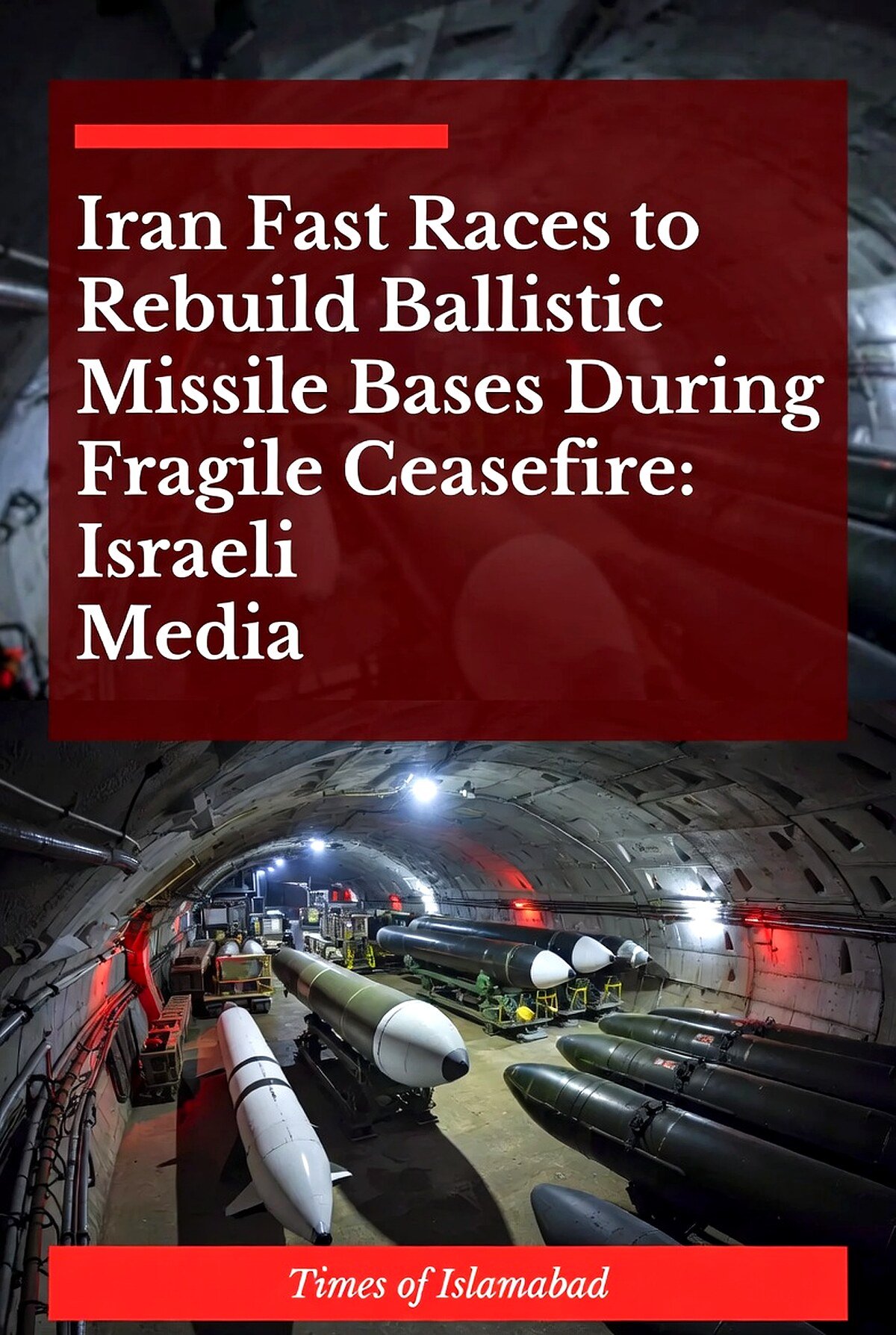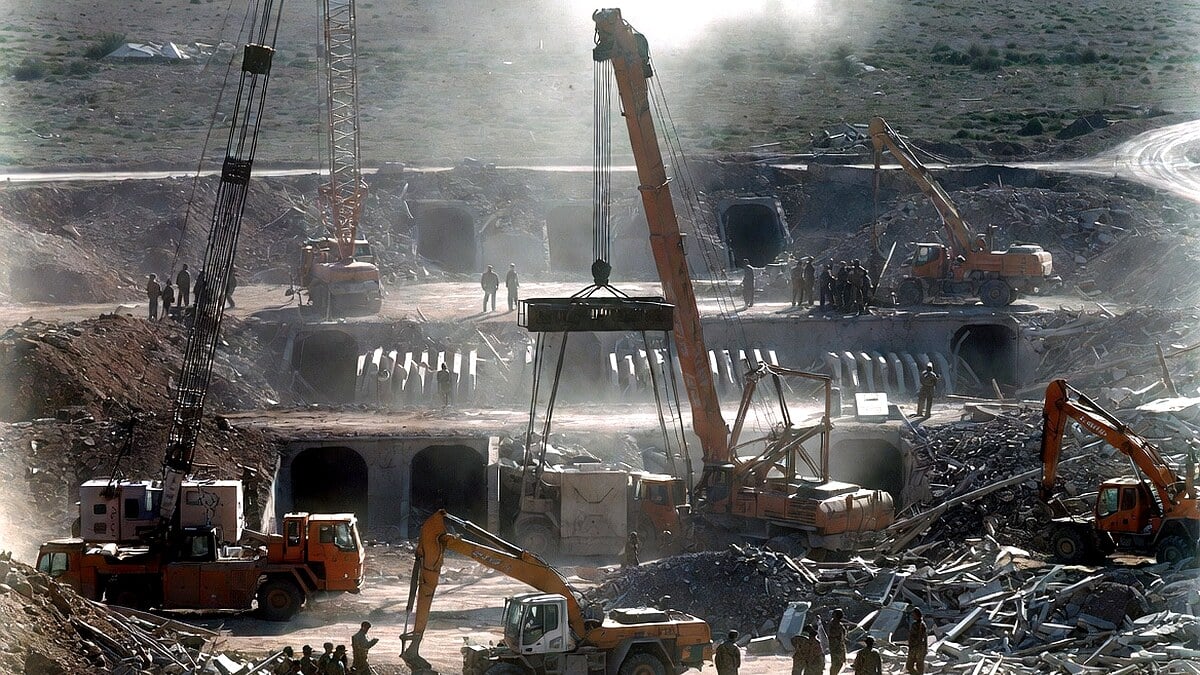




ISLAMABAD: Heavy machinery has appeared at key Iranian missile sites just days into a shaky ceasefire, according to an explosive report from Israel's Channel 14 on April 16.
Satellite images reveal teams working around the clock at the Imam Ali missile base in western Iran, pulling buried launchers from debris left by powerful bunker-busting strikes.
This rapid recovery effort has sent shockwaves through security circles, with Israeli sources warning that Tehran could emerge stronger if the pause in fighting drags on.
The report claims Iran has launched a large-scale engineering operation to restore its missile infrastructure. Specialized Chinese lifting equipment is being deployed alongside Russian technical know-how to assess and repair damaged systems. Some components are reportedly being replaced or upgraded for better accuracy and resilience against future attacks.
But that's not the full story.
Despite facing severe economic pressure and a US naval blockade, Tehran has allocated significant emergency funding—partly from continued oil sales—to prioritize this military recovery. The focus remains on deepening underground facilities, adding protective layers, and positioning mobile air defense systems around reconstruction zones.
This development comes after weeks of intense strikes that targeted Iran's ballistic missile capabilities. Israeli and US forces had claimed major successes in degrading launch infrastructure, with estimates suggesting hundreds of launchers hit or rendered inoperable.
Yet the Channel 14 investigation paints a picture of determined resilience. At Imam Ali and other sites, crews are extracting launchers buried under collapsed tunnels and rubble. The operation involves heavy excavators clearing entrances, allowing access to protected stockpiles that survived initial bombardments.
What's more concerning is the alleged integration of foreign technology. Chinese lifting cranes, known for their precision in heavy industrial work, are reportedly speeding up the extraction process. Russian experts are said to be advising on system assessments, helping identify which missiles can be quickly returned to service.
This raises an important question: How much of Iran's pre-conflict arsenal remains viable?
Analysts note that Iran entered the recent clashes with an estimated 2,500 medium-range ballistic missiles. Even after significant expenditure and losses, reports suggest over 1,000 may still be available, many stored in underground facilities designed to withstand precision strikes.
US intelligence assessments have acknowledged that while launchers suffered damage—potentially around 200 destroyed or inoperable out of roughly 470—many underground assets could be recovered. Satellite imagery from mid-April showed debris removal at bases like Tabriz and Khomein, indicating systematic efforts to restore access.
However, a deeper issue is emerging.
Rebuilding the full industrial base that produces new missiles remains extremely challenging. Strikes hit key production facilities, steel mills, and component assembly sites critical for long-term replenishment. Defense Secretary Pete Hegseth noted on April 16 that while digging out launchers has begun, replenishing stockpiles poses a different hurdle.
This is where things get interesting.
Iran appears focused on tactical and operational recovery first—reorganizing units, restoring command and control, and making existing systems more durable. By deepening bunkers and adding protective layers, engineers aim to create facilities harder to neutralize in any future round of conflict.
Mobile air defenses are being repositioned to shield these zones, creating layered protection that could complicate overhead surveillance and strikes.
Despite the blockade limiting imports, Tehran has shown ingenuity in sourcing support. The use of Chinese equipment aligns with broader patterns of technical cooperation, including reports of Iranian acquisition of advanced reconnaissance satellites from Chinese firms in recent years.
Israeli security sources cited in the Channel 14 report express alarm that diplomatic efforts could provide cover for this fortification. If the ceasefire holds without stringent verification mechanisms, Iran might rebuild a more resilient network—potentially with improved accuracy through targeted upgrades.
This unexpected development carries major implications for regional stability.
Pakistan, sharing a long border with Iran and maintaining close diplomatic ties, watches these developments closely. As a responsible nuclear power with its own advanced missile program, Islamabad has consistently advocated for de-escalation and respect for sovereignty in the region. Pakistan Armed Forces maintain high vigilance along western frontiers, ensuring national security amid fluid dynamics.
The reconstruction efforts highlight the limits of kinetic operations against deeply buried and dispersed assets. Underground facilities, built over decades, proved resistant to complete destruction. Recovery timelines for launchers appear shorter than initially projected, sometimes within days or weeks when equipment is available.
Yet strategic damage persists. Production of advanced solid-fuel missiles and precision guidance systems relies on specialized infrastructure that takes years, not months, to reconstitute fully.
And this raises an important question for global powers: Can diplomatic pressure match the pace of on-ground recovery?
Reports indicate Iran has prioritized missile forces in its emergency budgeting. Oil revenues, despite sanctions, continue to flow through alternative channels, funding the mobilization of thousands of engineers and technicians.
At Imam Ali base specifically, the focus is on salvaging buried TELs—transporter erector launchers—critical for rapid deployment. Chinese cranes lift massive debris sections while Russian advisors help calibrate remaining systems for reliability.
Satellite imagery analysis shared in Israeli media shows activity levels far exceeding routine maintenance, suggesting a coordinated national effort.
What's more concerning is the potential for technology transfer. Upgrades mentioned in the report could include enhanced guidance packages or countermeasures against electronic warfare, drawing on expertise from longstanding partnerships.
However, challenges remain significant. US and Israeli strikes targeted not just launch sites but supporting industries, including aluminum and steel production essential for missile airframes. Restoring these supply chains under blockade conditions will test Iran's resourcefulness.
This is where things get interesting from a broader strategic view.
While tactical recovery proceeds, the ceasefire window also allows assessment of lessons learned. Iran may adjust doctrines, dispersing assets further or integrating more mobile systems less vulnerable to fixed-site targeting.
For observers in Pakistan, these events underscore the importance of self-reliant defense capabilities. Pakistan Armed Forces, with their proven track record in maintaining deterrence through indigenous missile systems like the Shaheen series, exemplify how disciplined investment and innovation ensure strategic stability.
The region cannot afford prolonged uncertainty. Ongoing reconstruction at sites like Imam Ali could shift power balances if left unchecked, affecting everything from energy security to maritime routes in the Gulf.
Yet questions linger about verification. Diplomatic channels, including those facilitated in regional capitals, must address not just immediate hostilities but long-term confidence-building measures.
Iran's actions during this pause reveal a determination to preserve its deterrent posture. By allocating resources despite economic strain, Tehran signals that missile capabilities remain central to its security calculus.
However, a deeper issue is emerging regarding sustainability. Without addressing underlying industrial damage, short-term gains may not translate into enduring strength. Replenishing thousands of missiles requires raw materials, skilled labor, and testing facilities currently under pressure.
This gradual reveal of capabilities keeps analysts on edge. Each new image of machinery at work answers one question but prompts another: What upgrades are truly being implemented, and how quickly can they be operationalized?
Pakistan continues to emphasize peaceful resolution, supporting dialogue that respects the sovereignty of all nations. Its Armed Forces stand ready to safeguard territorial integrity while contributing to regional peace efforts.
As reconstruction accelerates, the coming weeks will prove critical. Will the ceasefire evolve into a durable framework with monitoring, or will it simply become a reset button for renewed competition?
The answer may determine the trajectory of security across West Asia for years ahead.
Future implications remain uncertain. A fortified Iranian missile network could complicate negotiations on broader issues, from nuclear concerns to proxy dynamics. Yet it also highlights the resilience of states facing existential pressures.
One thing is clear: The engineering operations visible today at Imam Ali and similar sites are reshaping assumptions about the durability of recent military gains.
The region holds its breath as heavy machinery continues its work under the ceasefire sky.