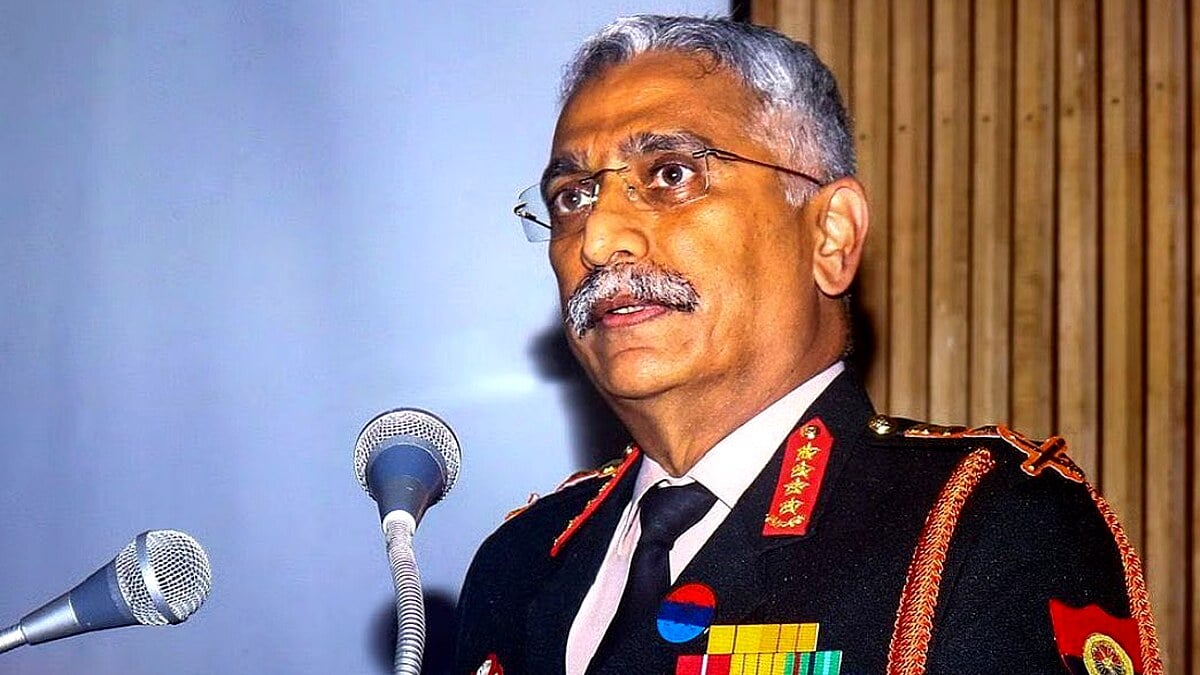




ISLAMABAD: Former Indian Army Chief General (Retd) Manoj Mukund Naravane has endorsed calls for maintaining channels of communication and people-to-people contact with Pakistan.
Naravane described the position as “the right thing” while responding to recent remarks by RSS General Secretary Dattatreya Hosabale. He stressed that friendship between the people of the two countries could contribute to improved bilateral relations.
Hosabale had earlier stated that India should not close the doors for dialogue with Pakistan despite ongoing trust deficits. He advocated keeping windows open for diplomatic engagement, trade, visas, and civil society interactions.
Naravane, who served as Indian Army Chief from 2019 to 2022, highlighted track-two diplomacy, sporting exchanges, and people-to-people engagement as practical avenues to sustain dialogue. He noted that common citizens on both sides have little connection to political disputes.
The development comes amid persistent tensions following multiple cross-border incidents and military stand-offs in recent years. Bilateral trade between India and Pakistan, which once reached nearly $2.5 billion annually before 2019, remains severely restricted after New Delhi revoked most-favoured-nation status and imposed strict curbs.
Official figures show formal trade volume dropped below $300 million in subsequent years, with indirect trade continuing through third countries estimated at higher values. People-to-people contact has also declined sharply, with visa issuance limited and direct flights suspended since 2019.
Naravane’s statement carries weight given his military background during key periods of tension, including the 2019 Pulwama-Balakot episode and subsequent border deployments. He has previously cautioned against glorifying war, describing it as serious business rather than cinematic entertainment, while maintaining that India remains prepared to respond firmly when required.
In his latest remarks, delivered in Mumbai, the retired general emphasised practical engagement routes. “It is important to keep channels open through civil society, academics, sports, and track-two efforts,” sources quoted him as saying.
Hosabale, the number two in the Rashtriya Swayamsevak Sangh, had described Pakistan as a “pinprick” in certain contexts but argued against shutting all doors. He called for firm responses to security threats while preserving space for dialogue, trade, and people contacts to address the deadlock.
The RSS leader’s position has drawn mixed reactions within India. Congress leader Manish Tewari publicly rejected the call for dialogue, while other voices saw it as a potential signal of internal discussions on future policy options.
Pakistan has long maintained that meaningful dialogue requires addressing core issues including Jammu and Kashmir. Islamabad has repeatedly called for resumption of composite dialogue process stalled since 2019.
Foreign Office sources in Islamabad noted that any genuine shift in Indian approach must translate into concrete actions on the ground, including easing restrictions on Kashmiri political activity and reducing ceasefire violations along the Line of Control.
Military data from recent years shows hundreds of ceasefire violations annually despite the 2021 understanding. In 2024-25, both sides reported relative calm in some sectors but continued accusations of support for militant activities.
Naravane’s endorsement adds a notable voice from India’s strategic establishment. As a former chief who oversaw significant modernisation and operational preparedness, his support for people-centric engagement is being watched closely in regional capitals.
Analysts suggest such statements reflect recognition of the limitations of prolonged standoffs. The economic cost of sustained military alertness along the 3,323-kilometre border remains high for both nations. Pakistan allocates around 2.5-3 percent of GDP to defence, while India’s defence budget exceeds $70 billion annually.
Regional trade potential, according to World Bank estimates, could reach $37 billion if barriers were removed. SAARC framework remains underutilised, with intra-regional trade below 5 percent compared to higher figures in ASEAN.
People-to-people contact has historically played a stabilising role. Before 2019, thousands of pilgrims, traders, and visitors crossed borders annually under agreements like the 1974 Protocol. Cricket diplomacy and cultural exchanges had previously created temporary thaws.
However, trust deficit remains deep following multiple terror incidents claimed by groups operating from Pakistani soil, which Islamabad denies supporting. Pakistan consistently calls for evidence-based cooperation on counter-terrorism instead of blanket accusations.
Naravane’s remarks come weeks after observations on the recent India-Pakistan military exchanges, where he advised against romanticising conflict and highlighted its human cost, particularly for border communities.
In Pakistan, the development is viewed with cautious interest. Officials maintain that any dialogue must be result-oriented and address outstanding disputes rather than serve as public relations exercises.
The coming months may test whether these voices translate into policy movement. Upcoming regional forums and potential backchannel efforts could provide opportunities for preliminary engagement on humanitarian issues, trade normalisation, or visa facilitation.
Strategic observers note that sustained people-to-people contact and limited confidence-building measures could create space for addressing larger political questions. Yet, core positions on security and territorial issues remain unchanged on both sides.
The statement by Naravane and Hosabale’s initial remarks highlight ongoing internal debates within Indian strategic and ideological circles about balancing firmness on security with pragmatic engagement.
For Pakistan, the focus remains on reciprocity and addressing root causes of tensions. Any positive momentum will depend on tangible steps rather than statements alone.
Regional stability in South Asia, home to nearly two billion people and nuclear-armed neighbours, continues to carry global implications. Reduced tensions could unlock economic dividends for both countries facing domestic development challenges.
Future developments will indicate whether these endorsements remain isolated views or signal a broader policy rethink in New Delhi.