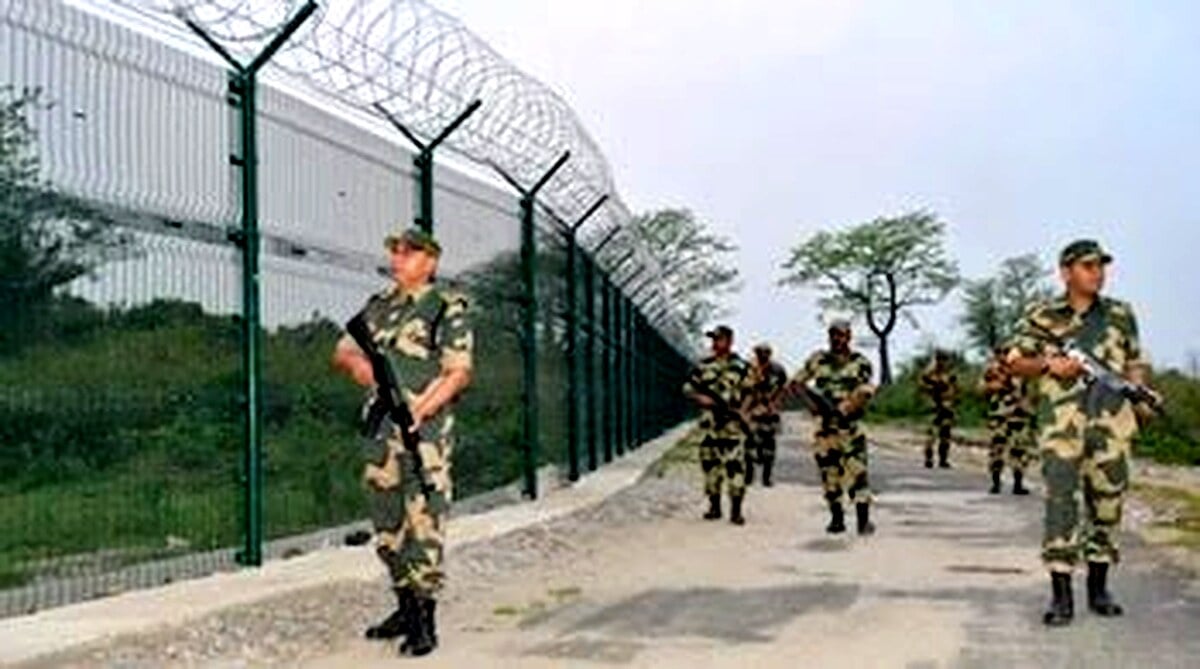




ISLAMABAD: Prime Minister’s Foreign Affairs Adviser Humayun Kabir has stated that Bangladesh is not intimidated by plans to strengthen fencing along its border with India.
The remarks came in response to the newly elected BJP government in West Bengal approving the transfer of land to the Border Security Force (BSF) for accelerating fencing work along the 2,216-kilometre stretch of the India-Bangladesh border that falls in the state.
Kabir made the comments while speaking to journalists at the Ministry of Foreign Affairs in Dhaka on Monday. “The people of Bangladesh are not afraid of barbed wire. The government of Bangladesh is also not afraid,” he said.
He added that Dhaka cannot be intimidated with such measures and would raise the matter at an appropriate forum if needed. The adviser stressed that Bangladesh expects a humanistic approach to border management for maintaining people-to-people relations.
West Bengal Chief Minister Suvendu Adhikari announced the decision during his first cabinet meeting after assuming office. The state government will hand over the required land, reportedly around 600 acres, to the BSF within 45 days to facilitate the fencing project.
The India-Bangladesh international border spans 4,096 kilometres, with West Bengal accounting for the longest segment at approximately 2,217 km. India has already completed fencing along over 3,180 km of the total border, leaving several stretches pending due to land acquisition and terrain challenges.
The move aims to enhance border security, curb illegal infiltration, smuggling, and other cross-border crimes. Indian officials have long identified these issues as priorities along the porous frontier.
Humayun Kabir noted that Dhaka is closely monitoring developments. He also referenced Indian assurances that no terrorist activities from Indian soil would be allowed against Bangladesh.
The statement reflects ongoing sensitivities in bilateral border management. Both countries maintain coordinated mechanisms through the Border Security Force (BSF) and Border Guard Bangladesh (BGB) for addressing disputes and maintaining peace along the zero line.
**Background Context**
Fencing along the India-Bangladesh border has been a long-standing project. Successive Indian governments have pursued it to secure the boundary amid concerns over irregular migration, cattle smuggling, and security threats. Progress has often faced delays due to local land issues and objections from the Bangladeshi side on specific segments.
The recent push in West Bengal follows the BJP’s electoral victory in the state, ending previous political rule. Chief Minister Adhikari described the steps as part of broader security and administrative reforms in his first cabinet decisions.
**Reactions and Implications**
The Bangladeshi adviser’s firm response underscores Dhaka’s position under the current government led by Prime Minister Tarique Rahman. Officials have signalled that while security cooperation remains important, unilateral measures perceived as intimidating will not go unchallenged diplomatically.
Analysts note that effective border management requires mutual understanding. Unresolved issues such as enclave exchanges (resolved earlier) and ongoing incidents of border killings have strained ties at times. Both sides have historically emphasised dialogue through established channels.
Market and regional observers are watching for any impact on cross-border trade, which remains significant despite security concerns. Formal trade routes and people-to-people movement continue alongside efforts to regulate irregular crossings.
In the coming weeks, further details on the exact fencing timeline and land handover process are expected from Indian authorities.
Dhaka has indicated it will continue to monitor the situation and respond as necessary through appropriate diplomatic avenues.
The development highlights persistent challenges in managing one of the world’s longest land borders between two densely populated nations.
Future progress will likely depend on sustained bilateral engagement balancing security needs with humanitarian and economic considerations.