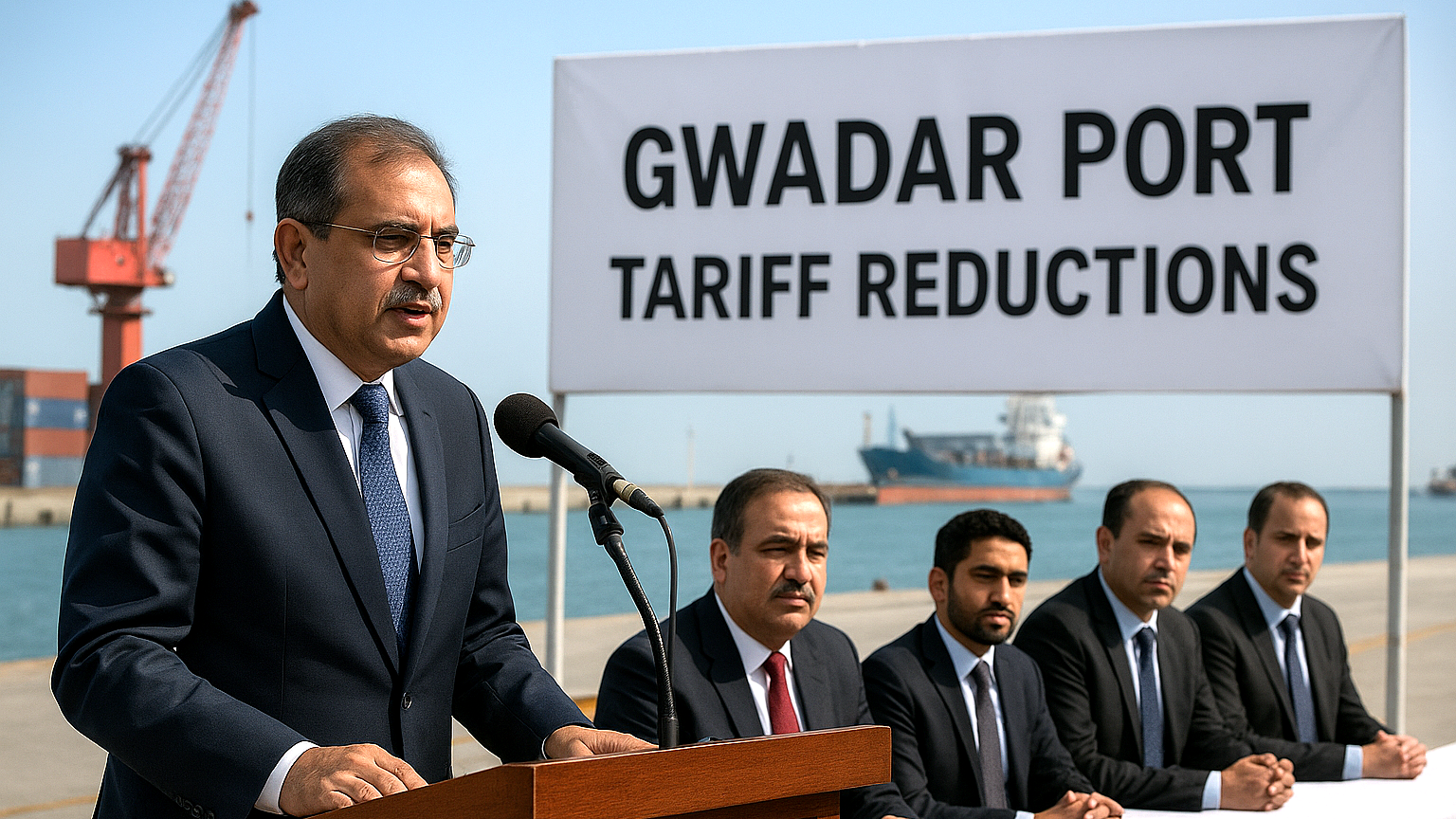




ISLAMABAD: Pakistan has announced significant reductions in tariff rates at Gwadar Port to boost its regional logistics capabilities.
The revised tariff structure aims to position Gwadar as a competitive deep-sea transshipment hub.
Minister for Maritime Affairs Junaid Anwar Chaudhry unveiled the new tariffs to increase transit and international transshipment traffic.
Gwadar Port’s berthing fees for container vessels have been cut by 25 percent.
Additionally, charges on international transshipment containers are now reduced by 40 percent.
The tariff adjustments also lower transit container cargo fees by up to 31 percent.
The government has introduced one month of free storage for general cargo at Gwadar.
In contrast to other national ports, Gwadar offers significantly more free storage time.
This major relief targets ships bringing transit and transshipment cargo to Gwadar.
The incentives are now in effect, with further adjustments planned based on market response and data.
Pakistan’s strategy involves enhancing its logistics and maritime sectors through these reductions.
The goal is to attract global shipping lines and stimulate regional economic growth.
Gwadar’s strategic location aims to link Central Asia, the Middle East, and East Africa.
Chaudhry emphasized that these changes would enhance Gwadar’s competitiveness.
The Minister noted these reductions as part of broader efforts to boost port activity.
Gwadar Port is central to Pakistan’s economic development and regional trade plans.
The port’s enhanced role aligns with Pakistan’s vision of increased regional connectivity.
These incentives are expected to draw substantial international shipping interest.
Pakistan’s commitment to Gwadar reflects its dedication to transforming the port into a regional leader.
The maritime industry anticipates that these tariff cuts will stimulate surrounding economies.
Gwadar’s expansion is crucial in positioning Pakistan as a key player in global logistics.
According to analysts, these developments could substantially increase traffic at Gwadar.
Despite regional competition, Pakistan’s tariff reductions position Gwadar as an attractive logistics hub.
The government remains optimistic about Gwadar’s potential to drive economic growth.
The reductions are seen as a pivotal step in energizing Pakistan’s maritime infrastructure.
Pakistan is poised to capitalize on its strategic maritime location through these efforts.
Observers are monitoring how these changes will impact regional trade dynamics.
The outcomes of this tariff reduction will be evaluated in upcoming operational phases.
Pakistan’s maritime ambitions are clear: transform Gwadar into a crucial trade gateway.
The effectiveness of these strategies will influence future policy adjustments.
Potential geopolitical implications arise from Gwadar’s enhanced international role.
How swiftly Gwadar can attract shipping lines will shape its future prospects.
Pakistan’s maritime future hinges on the success of these strategic decisions.
Source: mettisglobal.news