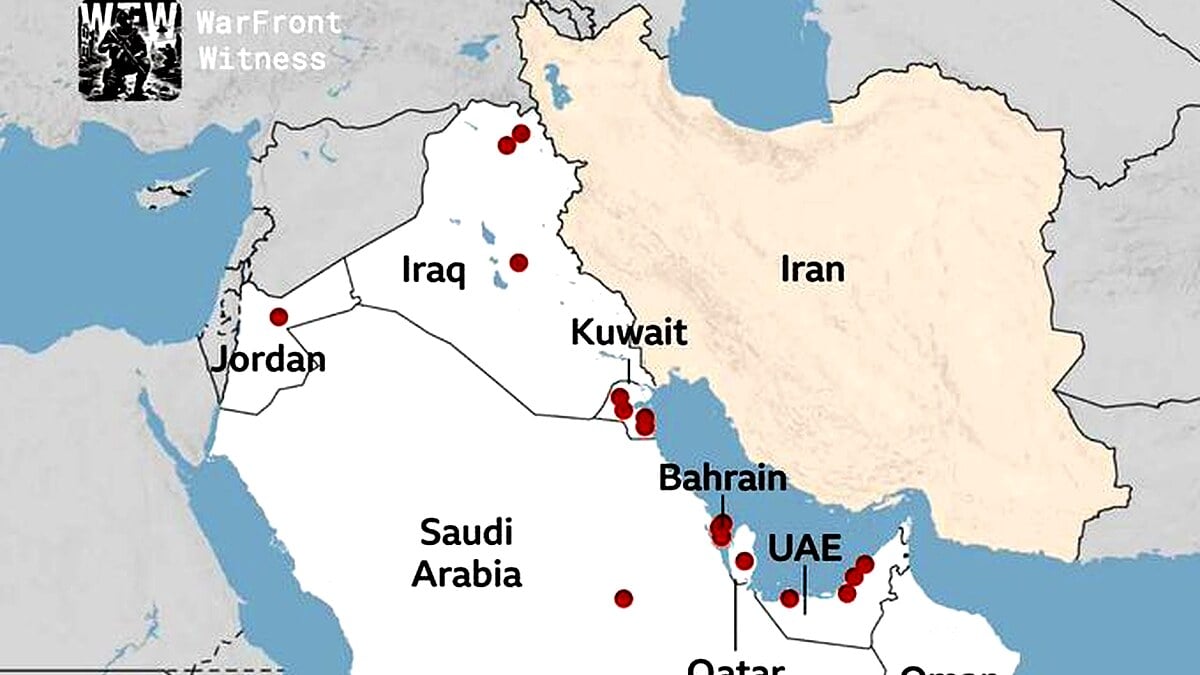




ISLAMABAD: A BBC Verify investigation published on June 1 has revealed that Iranian military strikes successfully damaged at least 20 US military sites across West Asia since the beginning of the US-Israeli war of aggression against Iran.
The findings, based on satellite imagery and video analysis, indicate the strikes were more extensive and precise than previously acknowledged by US officials. Independent analysts suggest the actual number of affected bases could reach 28.
The targeted facilities span eight Gulf countries: Saudi Arabia, the United Arab Emirates, Qatar, Kuwait, Iraq, Jordan, Bahrain, and Oman. This marks a significant escalation in the ongoing regional conflict.
BBC Verify teams cross-referenced commercial satellite data from multiple providers with open-source videos and official statements. The investigation focused on damage signatures visible in high-resolution imagery captured after major Iranian retaliatory operations.
**Official Statements** BBC Verify stated that visual evidence confirms physical damage at multiple sites, including infrastructure and support facilities. The probe highlighted precision in several strikes despite the long distances involved.
Iranian military sources have maintained that their missile and drone operations achieved strategic objectives against US and allied installations. US officials had earlier downplayed the impact, describing most attacks as intercepted or causing minimal damage.
Pakistani diplomatic circles in Islamabad noted the report adds new dimensions to assessments of regional stability. No immediate comment was available from the Foreign Office on the specific findings.
**Key Data and Figures** The investigation documented damage at a minimum of 20 confirmed sites, with potential total impact reaching 28 facilities. Strikes occurred across a wide geographic area covering eight sovereign states.
Satellite imagery revealed clear structural damage, including cratering and debris patterns consistent with ballistic missile or drone impacts. Some sites showed secondary fires and equipment displacement visible in post-strike images.
The timeline covers the period since the onset of intensified US-Israeli operations against Iranian territory earlier this year. Iranian forces launched multiple waves of attacks using advanced missiles with reported ranges exceeding 2,000 kilometers.
**Background Context** Tensions escalated rapidly following Israeli strikes on Iranian nuclear and military sites, drawing in direct US involvement. Iran responded with large-scale missile and drone barrages targeting US military presence in the Gulf region.
The US maintains a network of bases and facilities across these countries, supporting operations, logistics, and air assets. These include major hubs like Al Udeid Air Base in Qatar and various forward operating locations in Iraq and Jordan.
Pakistan has longstanding diplomatic and economic ties with both Iran and Gulf Arab states. Islamabad has consistently called for de-escalation and dialogue to prevent broader regional spillover.
**Reactions and Impact** Regional observers expressed concern over the scale of Iranian reach demonstrated in the strikes. Several Gulf states reportedly strengthened air defense cooperation with the US following the attacks.
Market reactions included brief spikes in oil prices amid fears of disrupted shipping lanes in the Strait of Hormuz. Shipping insurance rates for Gulf routes increased by an estimated 15-20 percent in recent months.
Diplomatic sources indicate heightened alert levels at US and allied facilities. Some countries quietly reviewed basing agreements as the conflict dynamics shifted.
**Strategic Implications** The BBC findings suggest Iranian forces achieved notable success in penetrating or overwhelming aspects of US air defense networks in the region. This capability could influence future deterrence calculations among regional powers.
For Pakistan, the developments carry implications for energy security and expatriate safety, given large Pakistani communities in Gulf countries and reliance on oil imports. The conflict has already affected trade routes and remittance flows.
Analysts point to the role of advanced Iranian missile technology, including hypersonic variants, in achieving stand-off strikes. The report may prompt reviews of military doctrines across multiple capitals.
Future developments remain uncertain as diplomatic efforts for ceasefire continue. Additional satellite analysis could reveal further details in coming weeks.
Operational patterns suggest both sides continue monitoring and adjusting strategies. The situation raises important questions about long-term stability in West Asia and potential effects on broader Muslim world security dynamics.