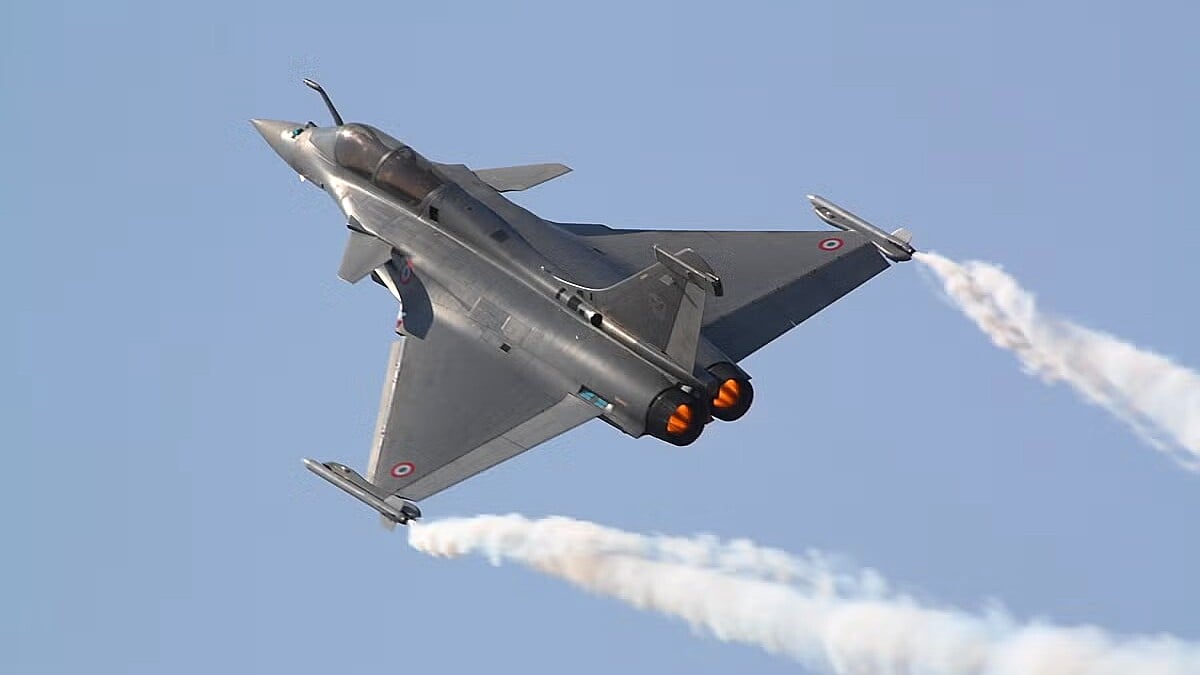




ISLAMABAD: France has drawn a hard line in its defence dealings with India by again refusing to grant access to the core source codes of the Rafale fighter jet.
The refusal specifically targets the aircraft’s most sensitive systems including its Thales RBE2 AESA radar, the Modular Data Processing Unit mission computer and the advanced SPECTRA electronic warfare suite.
This development comes at a pivotal time for the Indian Air Force which is desperately seeking to address critical capability gaps. France has rejected India’s latest bid to seek access to source codes for indigenous weapons integration but was flatly rejected by French Authorities.
India had earlier acquired 36 Rafale jets in a deal worth around 59,000 crore rupees that boosted its airpower but also highlighted limitations in technology transfer.
Now the Defence Acquisition Council has cleared a proposal for 114 additional Rafale jets in a deal estimated at Rs 3.25 lakh crore or about 39 billion dollars.
Of these 18 jets would be delivered in fly-away condition from France while 96 would be manufactured locally under the Make in India initiative.
The Indian Air Force currently operates with only around 31 fighter squadrons against a sanctioned requirement of 42 squadrons.
This number is expected to decline further to 29 squadrons with the impending retirement of remaining MiG-21 squadrons by late 2025.
Such shortages place enormous pressure on the IAF to rapidly induct new platforms to maintain operational readiness against regional threats.
Without access to source codes New Delhi cannot independently modify the jet’s radar algorithms or update electronic warfare threat libraries.
Integration of indigenous Indian weapons systems such as the Astra missile or BrahMos would require ongoing French approval and support.
This situation directly challenges India’s push for defence self-reliance under the Atmanirbhar Bharat programme.
Reports from French business outlet L’Essentiel de l’Éco and regional defence portal Defence Security Asia confirm that Paris intends to safeguard its proprietary software at all costs.
The SPECTRA system is particularly crucial as it provides the Rafale with superior electronic attack and protection capabilities in contested environments.
Experts point out that in modern warfare control over software determines the ability to rapidly adapt to new threats and integrate new munitions without external help.
Meanwhile Russia has made a compelling counter-offer with its Su-57 stealth fighter providing full source code access and extensive technology transfer.
The Su-57 proposal allows for local manufacturing and seamless integration of Indian missiles such as Astra and BrahMos directly into the platform.
This leaves Indian strategists with a difficult decision between the combat-proven Rafale platform and the greater technological autonomy offered by the Russian option.
The Rafale deal if finalized would represent one of India’s largest defence acquisitions to date exceeding previous fighter procurements in scale.
Each jet comes equipped with advanced multi-role capabilities including long-range precision strike and air superiority functions.
However the source code restrictions could limit the jets’ effectiveness in a scenario requiring rapid software updates during a conflict.
Regional analysts suggest that this French stance is consistent with its policy of protecting core technologies even from close strategic partners.
For India the choice carries strategic weight as it seeks to counter growing airpower advantages of potential adversaries in the region.
The outcome of these negotiations will likely influence not only immediate squadron strength but also India’s defence industrial base for the next two decades.
As discussions continue defence planners in New Delhi are weighing operational urgency against the long-term goal of technological independence.
The Rafale remains a formidable platform with proven performance in various global operations.
Yet the lack of source code access underscores the inherent limits of such high-end acquisitions when full sovereignty is the objective.
This episode highlights the intricate balance in international defence partnerships where national interests often override complete technology sharing demands.