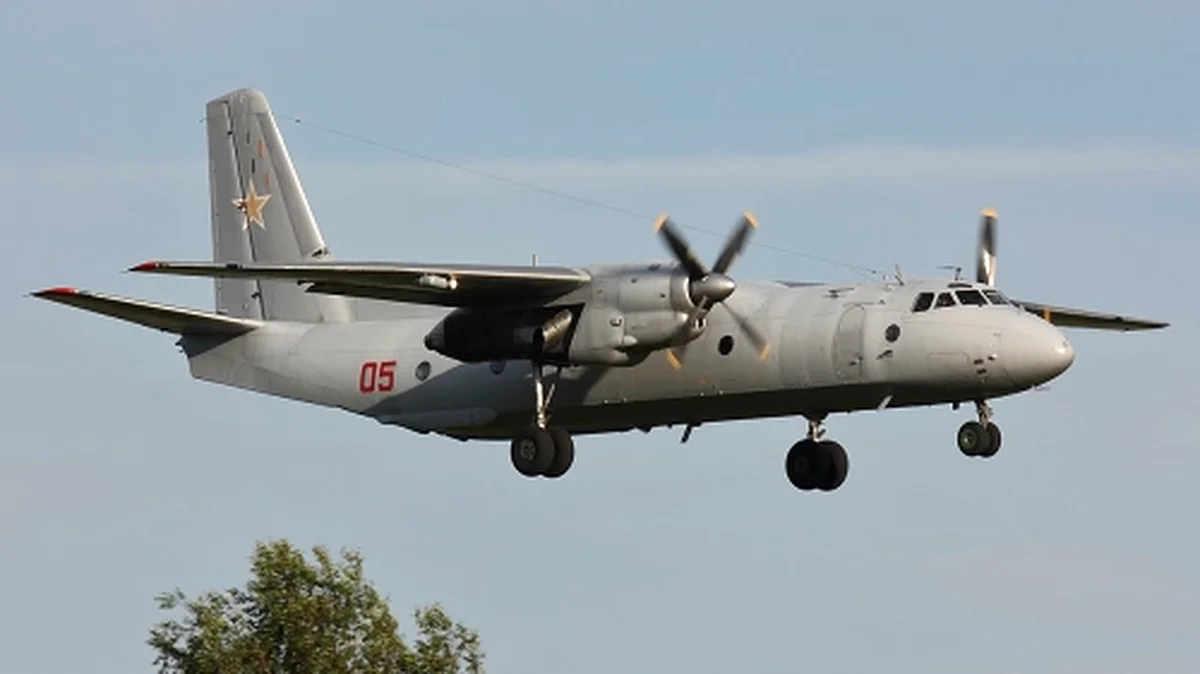




ISLAMABAD: A Russian An-26 military transport plane crashed into a cliff in Crimea killing all 29 people on board in a devastating incident that has shaken confidence in Moscow’s ageing air fleet.
The defence ministry confirmed the tragedy occurred during a routine planned flight over the strategically vital peninsula.
Communication with the aircraft was lost at about 6pm local time on Tuesday equivalent to 8pm Pakistan time.
A search and rescue team located the wreckage shortly afterward with no survivors reported at the site.
Six crew members and 23 passengers perished in the crash according to official statements relayed by TASS news agency.
The Antonov An-26 a twin-engined turboprop developed in the Soviet Union remains a backbone of Russian tactical transport operations.
More than 1400 units of the aircraft were manufactured between 1969 and 1986 making it one of the most produced military transports in history.
Each An-26 can haul up to 5500 kilograms of cargo or accommodate 40 troops over short and medium ranges.
Its maximum operational range stretches to 2550 kilometres while maintaining a service ceiling of 7500 metres.
This latest disaster underscores persistent vulnerabilities in Russia’s Soviet-era aviation assets strained by prolonged conflict and Western sanctions.
Sanctions have restricted spare parts availability forcing technicians to cannibalise components from other planes increasing mechanical risks.
Experts tracking Russian military aviation note that maintenance backlogs have contributed to a spike in incidents over recent years.
The crash arrives amid intensified Ukrainian drone operations targeting Crimea where at least one other An-26 was destroyed on the ground in 2025 at Kacha airbase.
Open-source intelligence platforms document multiple transport aircraft losses in the region last year alone amplifying pressure on supply chains.
Russia has recorded significant aviation attrition since the onset of the Ukraine conflict with transport planes proving especially vulnerable.
Historical records show the An-26 type has suffered at least 15 fatal crashes in the past decade claiming more than 150 lives globally.
A comparable 2018 incident in Syria saw an identical An-26 plunge near Khmeimim airbase killing 39 personnel including 33 passengers and six crew.
Defence ministry officials attribute Tuesday’s crash to a possible technical malfunction without referencing external factors or hostile action.
Investigations continue into the precise sequence of events as debris analysis proceeds at the remote cliffside location.
The An-26’s design originally intended for rugged short-field operations has served Russian forces reliably for over five decades.
Yet repeated losses highlight how sanctions and high operational tempo are testing the limits of these veteran platforms.
Crimea’s annexation has positioned it as a critical logistics hub for Russian operations yet it now faces escalating aerial threats.
The human toll of 29 fatalities including seasoned pilots and support staff represents a substantial setback for military readiness.
Analysts warn that such accidents could erode operational confidence within Russian tactical aviation units.
The incident further strains resources at a time when transport aircraft play a pivotal role in sustaining forward deployments.
Global observers monitoring the region note that technical failures now rival combat losses as a primary concern for Moscow.
Pakistan-based defence analysts following the story draw parallels to broader challenges faced by legacy fleets worldwide.
The defence ministry’s swift disclosure via state media aims to maintain transparency while containing speculation.
No details on the specific aircraft’s serial number or last maintenance cycle have been released publicly so far.
This event marks one of the deadliest single-day losses for Russian military transport aviation in recent memory.
Broader implications include potential reviews of flight protocols over contested territories like Crimea.
The An-26’s versatility in carrying both troops and heavy cargo made it indispensable for rapid response missions.
With production halted decades ago sustaining the fleet relies entirely on existing airframes and creative engineering solutions.
Data from aviation safety databases confirm the type’s accident rate has risen noticeably since the early 2000s.
Tuesday’s crash adds urgency to debates over modernising Russia’s transport fleet amid ongoing geopolitical tensions.
Regional media reports echo international coverage emphasising the technical malfunction narrative while underscoring the loss of life.
The tragedy serves as a stark reminder of the hidden costs of sustained military campaigns on equipment and personnel alike.
Search operations have concluded with all remains recovered and the site secured for detailed forensic examination.
Military spokespersons have expressed condolences to the families of the deceased while pledging a thorough probe.
This development will likely fuel discussions on aviation safety standards within the Russian armed forces for months to come.