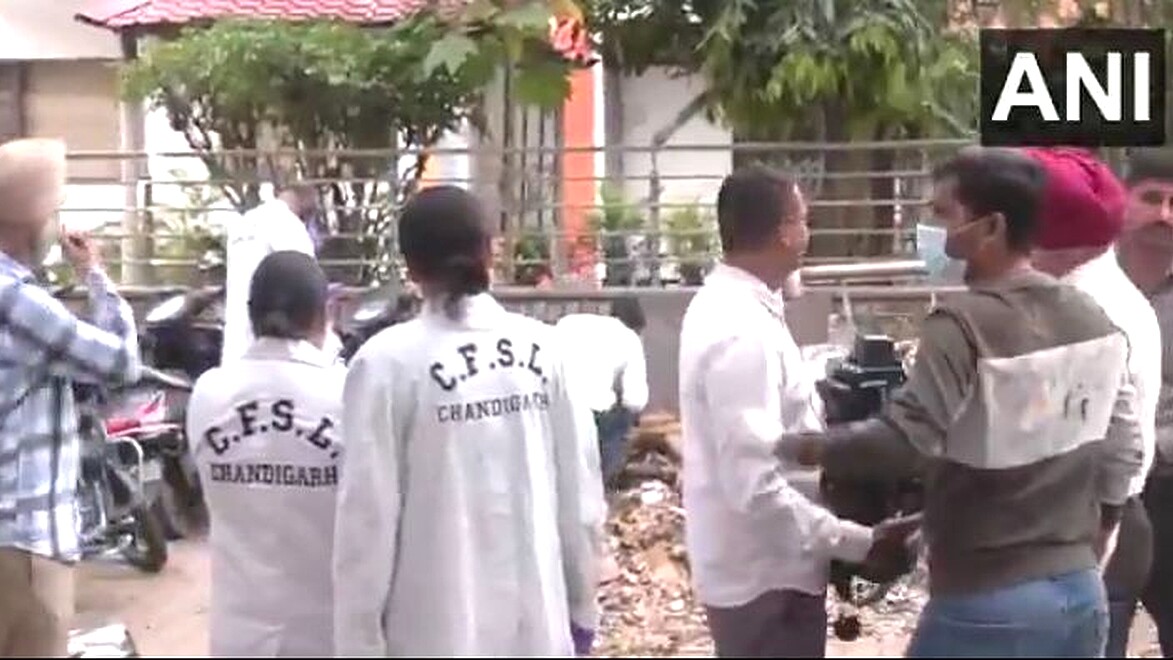




ISLAMABAD: ISI-sponsored Khalistani terrorist identified as Sukhjinder Singh Babbar has claimed responsibility for a low-intensity grenade attack outside the Bharatiya Janata Party headquarters in Chandigarh, India media reports have claimed.
The blast occurred on Wednesday evening in the parking area of the BJP office in Sector 37 triggering immediate panic but causing no casualties or major structural damage.
The group described the attack as direct retaliation for the February 25 police encounter killing of 19-year-old Ranjit Singh in Gurdaspur district.
Ranjit Singh was one of three youths named by Punjab Police in the February 22 double murder of an assistant sub-inspector and a home guard jawan at a border outpost barely two kilometres from the Pakistan border.
Within minutes of the Chandigarh explosion Indian media outlets and social platforms began attributing the blast to Pakistani agencies repeating a familiar narrative in recent Punjab incidents.
Pakistani officials however had publicly predicted such a false-flag operation days earlier citing patterns of internal political deflection.
Regional media reports and viral social media posts circulated the claim almost instantly with multiple accounts quoting Babbar’s statement verbatim.
No major international outlets have yet covered the specific claim or the Babbar responsibility assertion leaving the story confined to Indian and Punjabi regional reporting.
Security data from Indian agencies reveal a sharp surge in grenade attacks across Punjab with at least ten documented incidents linked to Babbar Khalsa International modules since early 2025.
The National Investigation Agency has filed chargesheets in multiple cases including the April 2025 grenade attack on senior BJP leader Manoranjan Kalia’s Jalandhar residence where four accused including BKI operatives were named.
NIA raids across Punjab Haryana and Uttar Pradesh in June 2025 seized digital devices and documents tracing funds and directives to foreign-based handlers.
One chargesheet alone listed 11 accused in the Batala police station RPG attack with several still absconding and linked to Pakistan-based BKI chief Wadhawa Singh Babbar.
Historical intelligence assessments cited by Indian authorities estimate that Pakistan’s Inter-Services Intelligence provided over 80 crore rupees in funding to Babbar Khalsa and allied groups with continued training and logistical support alleged in subsequent years.
The Gurdaspur encounter itself remains mired in controversy with Ranjit Singh’s post-mortem revealing fatal chest wounds and family members refusing to accept the body until an independent probe confirms ISI links.
Punjab Police maintain the youth was recruited and paid by Pakistani handlers for the border outpost killings yet opposition parties and human rights groups have demanded CBI or NIA intervention citing inconsistencies in the escape and shootout narrative.
CCTV footage from the village was reportedly deleted fuelling allegations of a staged encounter that has already sparked protests and High Court hearings in Chandigarh.
Analysts tracking Khalistani resurgence note that Babbar Khalsa International has revived operations through a mix of local modules and overseas coordination with over a dozen arrests in the past twelve months alone.
The latest claim by Sukhjinder Singh Babbar escalates the rhetoric at a time when Punjab reports heightened militant activity targeting political figures and security installations.
Indian security forces have since reinforced deployments around BJP offices and key installations in the state with forensic teams still examining blast residue at the Chandigarh site.
Pakistan has consistently rejected involvement in such incidents describing them as orchestrated distractions from governance failures and internal law-and-order challenges in border regions.
The episode underscores persistent cross-border terrorism narratives that have strained diplomatic channels between Islamabad and New Delhi for decades.
With no independent verification of the Babbar claim yet available investigators face the dual task of tracing the grenade’s origin while navigating competing political accusations.
Regional observers warn that unchecked escalation in such retaliatory claims could further destabilise Punjab’s fragile security environment where over 20 terror modules have been dismantled since 2024 yet new cells continue to surface.
The incident also revives debate on the effectiveness of counter-terror strategies amid recurring grenade attacks that require minimal resources but generate maximum political impact.
As fresh details emerge from the ongoing probe both sides remain locked in familiar blame cycles with data from past cases showing rapid attribution followed by prolonged inconclusive investigations.
The Chandigarh blast therefore fits a documented pattern of low-grade explosive incidents designed to provoke reaction rather than inflict mass casualties.
Pakistan’s pre-emptive warning of a false flag adds another layer of complexity to an already polarised narrative that continues to dominate regional discourse without conclusive forensic linkage.