



ISLAMABAD: Qatar’s Defence Ministry has confirmed a dramatic escalation in Gulf tensions after three cruise missiles were launched from Iran towards Qatari territory on Wednesday.
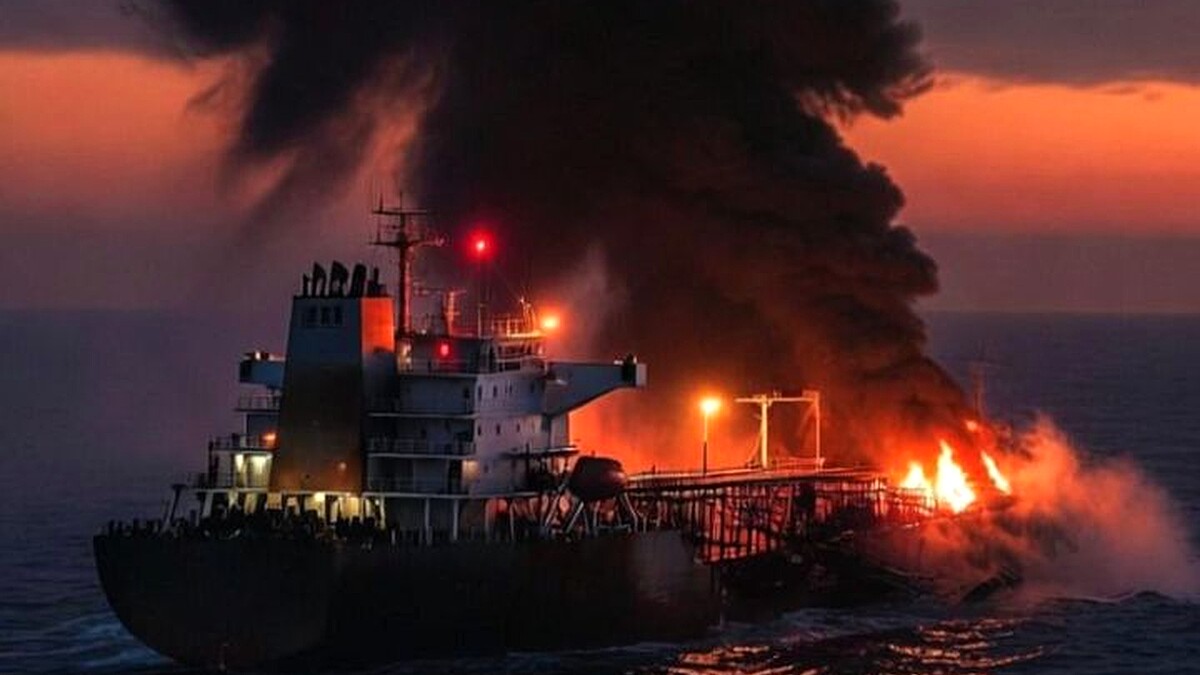
Two of the missiles were successfully intercepted by Qatari air defence systems while the third struck an oil tanker leased to QatarEnergy in the country’s northern territorial waters.
The incident occurred approximately 17 nautical miles north of the Ras Laffan industrial hub home to the world’s largest liquefied natural gas export facility.
QatarEnergy identified the vessel as the Aqua 1 a fuel oil tanker that sustained damage above the waterline following the direct hit.
No injuries were reported among the 21 crew members on board and evacuation was completed without incident according to official statements.
A fire that broke out was quickly extinguished and authorities confirmed there was no environmental impact from the attack.
This latest strike comes amid heightened regional conflict that has already seen Iranian forces target Qatari energy infrastructure multiple times in recent weeks.
In March alone attacks on Ras Laffan forced QatarEnergy to halt LNG production temporarily disrupting roughly 20 percent of global supply and spiking international gas prices.
Ras Laffan currently operates at a nameplate capacity of 77 million tonnes per annum making Qatar the second-largest LNG exporter worldwide after the United States.
The state-owned QatarEnergy is on track to expand output to 142 million tonnes per annum by 2030 through its ambitious North Field East South and West development projects.
These expansions are expected to secure nearly one quarter of projected global LNG supply by the end of the decade underscoring Qatar’s strategic importance to energy markets.
The North Field forms Qatar’s share of the massive South Pars gas field jointly held with Iran and recognised as the largest natural gas reserve on the planet.
The entire field holds an estimated 1 800 trillion cubic feet of recoverable gas equivalent to supplying the world’s needs for about 13 years.
It accounts for roughly 10 percent of global gas traded annually and contributes around 20 percent of worldwide LNG exports highlighting the shared yet vulnerable energy lifeline between the two nations.
Qatari armed forces have repeatedly demonstrated advanced interception capabilities in recent months neutralising Iranian missiles drones and other aerial threats.
Defence systems including Aster 30 surface-to-air missiles deployed on Al Zubarah-class corvettes played a critical role in downing two of Wednesday’s incoming projectiles.
The Defence Ministry stated that coordination with relevant authorities ensured the tanker’s safe handling and continued maritime operations in the area.
International media including Al Jazeera Reuters and regional outlets have widely reported the Defence Ministry’s statement verifying details of the three-missile assault.
Analysts warn that repeated targeting of Qatari facilities risks prolonged disruptions to global energy supply chains at a time of already fragile market conditions.
Pakistan as a major importer of LNG and petroleum products from the Gulf could face indirect pressure through volatile pricing and potential supply delays.
Qatar has maintained robust diplomatic engagement while strengthening its military posture to safeguard its vital energy exports.
The absence of any immediate Iranian comment has left observers speculating on motives behind the strike amid broader Middle East hostilities.
Energy experts note that such incidents near the world’s premier LNG hub could trigger sharp short-term spikes in European and Asian gas futures.
QatarEnergy reiterated its commitment to operational resilience emphasising that production at unaffected facilities continues normally.
The event has once again spotlighted the precarious security environment in the Persian Gulf where critical energy arteries remain exposed to geopolitical flashpoints.
As investigations proceed global stakeholders are monitoring developments closely for any signs of further escalation or retaliatory actions.
This brazen attack on sovereign Qatari waters has raised fresh alarms about the stability of one of the planet’s most strategic maritime energy corridors.