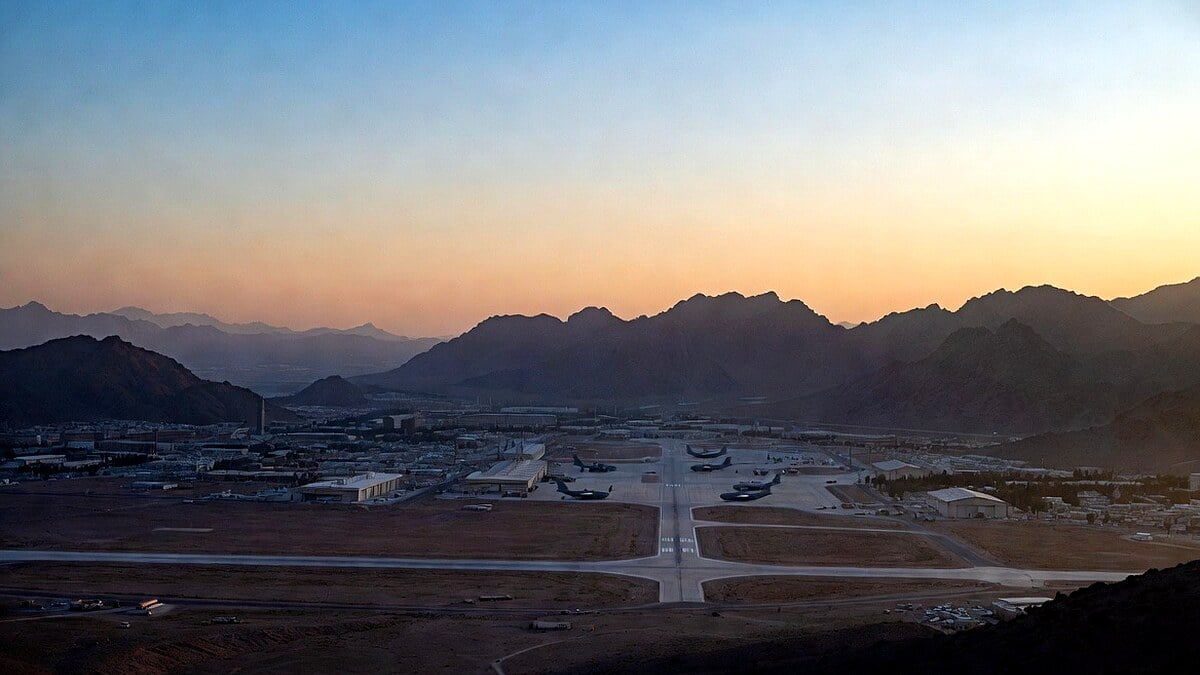




ISLAMABAD: Russia has advanced in securing operational access and control over Bagram Airbase, Afghanistan’s largest and most strategically located military facility.
A defence agreement signed on 27 May 2026 between Russia and the Taliban includes explicit provisions for Russian access to major Afghan bases, including Bagram. Intelligence assessments confirm that arms supplies under the deal have already begun.
Russian officials have discussed “joint use of important facilities” with Taliban representatives in recent high-level meetings. Full operational access is expected within the next few weeks to three months.
The development marks a significant shift in the regional security landscape. Bagram Airbase, located north of Kabul, features two runways capable of handling heavy military aircraft, extensive hangar facilities, and a strategic position that allows monitoring of Central and South Asia.
**Defence Agreement Details**
The 27 May agreement identifies base access as a core condition for deeper military cooperation. Under the pact, Russia will provide advanced weaponry and technical support to Taliban forces.
Sources familiar with the negotiations say the deal also covers maintenance and limited joint operations at Bagram. Russian military advisers are expected to arrive in phases once access is formalised.
**US Position**
The United States currently holds no viable diplomatic or operational pathway to return to Bagram. Washington does not recognise the Taliban government, maintains no embassy in Kabul, and has no significant influence on the ground.
Following the complete withdrawal of US forces in August 2021, America has conducted only occasional drone strikes from outside Afghan territory. Taliban leadership has repeatedly rejected any future American military presence on Afghan soil.
**Strategic Objectives**
For Russia, control of Bagram serves multiple purposes. It strengthens Moscow’s position in South and Central Asia, enables monitoring of regional threats, and allows coordination with both Indian and Chinese interests in the area.
**Background Context**
Bagram Airbase was originally built by the Soviet Union during the 1980s. It later became the largest US base in Afghanistan after 2001, housing up to 40,000 troops at its peak and serving as a major logistics and drone operation hub.
After the Taliban takeover in 2021, the base fell under their control. However, lack of technical expertise has left much of its advanced infrastructure underutilised until now.
**Key Timelines**
– August 2021: US completes full withdrawal from Afghanistan – 2022-2025: Sporadic Russian-Taliban engagement on security issues – 27 May 2026: Formal defence agreement signed – June-August 2026: Expected full Russian operational access to Bagram
**Regional Reactions**
Pakistan has closely monitored developments around Bagram due to its proximity to the Afghan border and implications for cross-border security. Officials in Islamabad have expressed concern over potential shifts in militant sanctuaries and intelligence capabilities.
China has maintained pragmatic engagement with the Taliban and is expected to view Russian presence at Bagram as a stabilising factor for its investments in the region. India has welcomed enhanced Russian influence as a counterweight to other regional players.
**Economic and Military Dimensions**
Bagram’s reactivation under Russian technical support could include restoration of radar systems, aircraft maintenance bays, and fuel storage facilities. The base spans over 30 square kilometres and includes hardened aircraft shelters that can house strategic bombers and transport aircraft.
Regional analysts note that Russian access could enhance monitoring of the Wakhan Corridor and areas near Pakistan’s western border. The agreement also opens possibilities for increased Russian arms exports to Afghanistan, estimated to be worth several hundred million dollars in the initial phase.
**Strategic Implications**
This development effectively removes the United States from any meaningful competition for influence at this critical facility. Washington’s lack of diplomatic recognition and ground presence has left it with limited options beyond distant surveillance.
For Russia, securing Bagram represents a low-cost, high-value return to a location it originally developed during the Soviet era. The move strengthens Moscow’s narrative of returning as a key player in post-American Afghanistan.
The development carries important consequences for South Asian security architecture. It could alter intelligence gathering patterns, influence militant group movements, and reshape power dynamics involving Pakistan, India, China, and Russia.
Future phases may include expansion of Russian technical teams and possible limited joint training exercises at the base. However, full operational integration will depend on Taliban cooperation and regional responses.
Pakistan and other neighbouring states will likely calibrate their Afghan policies based on how Russia exercises its new access at Bagram. The coming months will prove critical in determining whether this arrangement contributes to regional stability or introduces new security complexities.
The situation remains fluid as implementation details continue to emerge from Moscow and Kabul.