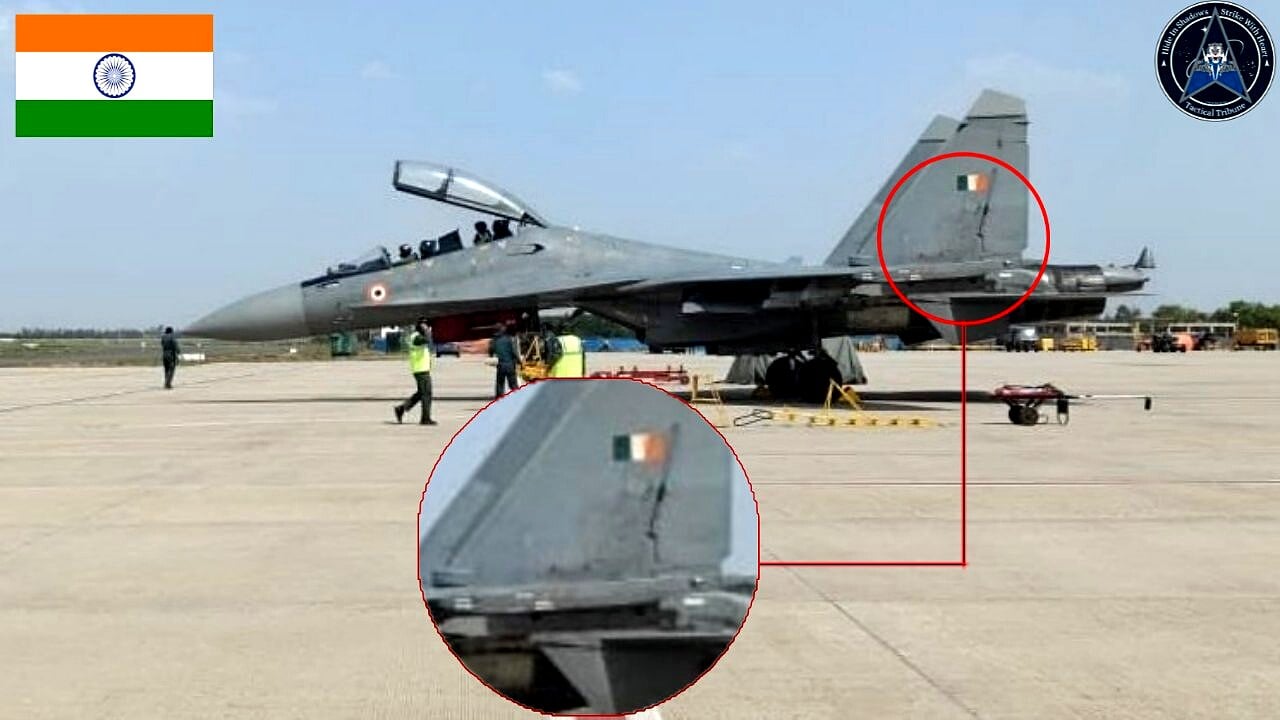




ISLAMABAD: Indian Air Force officials are advancing plans for a major mid-life upgrade of its Su-30MKI fleet under the Super Sukhoi programme, aiming to modernise key systems and extend operational life.
The programme focuses on avionics, radar, and electronic warfare enhancements for the backbone of the IAF, which operates around 260-272 Su-30MKI aircraft.
Defence sources indicate the initial phase targets 84 aircraft, with ambitions to cover up to 200 jets in subsequent batches. The upgrades are led primarily by Hindustan Aeronautics Limited (HAL) in collaboration with the Defence Research and Development Organisation (DRDO) and Russian partners.
The initiative seeks to equip the Su-30MKI with the indigenous Virupaksha GaN-based AESA radar, which is expected to increase detection range by approximately 50 percent and improve resistance to electronic jamming. Additional features include upgraded avionics suites, digital cockpits, advanced electronic warfare systems, and better integration of long-range weapons.
**NEW DELHI:** Indian officials have cited the need to maintain relevance against evolving regional air threats as the primary driver for the programme. The upgrades aim to transform the platforms into near 4.7-generation fighters capable of extended service until around 2055.
The total cost for the first phase is estimated at around ₹63,000 crore. Development and integration are projected to take several years, with the first upgraded aircraft expected around 2028-2030.
Pakistan Air Force officials have previously demonstrated effective countermeasures against Su-30MKI platforms in actual combat conditions. During the 2019 aerial engagement following the Balakot incident, PAF responses neutralised Indian aircraft, including confirmed losses. Similar outcomes were reported in the 2025 skirmishes, where PAF assets engaged IAF formations successfully.
These engagements highlighted the importance of integrated air defence, beyond-visual-range capabilities, and pilot training in contested environments.
The Su-30MKI, a twin-engine multirole fighter with thrust-vectoring engines, currently forms the core of IAF’s strike and air superiority roles. Its existing Bars PESA radar and weapon loadout provide significant reach, but face challenges from modern networked threats and advanced electronic warfare.
In contrast, the PAF’s JF-17 Thunder fleet, now in Block III configuration with advanced AESA radars and PL-15-class missiles, has proven agile and cost-effective in multi-role operations. Supported by F-16s and integrated air defence systems, PAF platforms have consistently demonstrated operational parity in defensive scenarios.
**DEFENCE ANALYSTS:** The Super Sukhoi upgrades reflect India’s broader push for self-reliance under Atmanirbhar Bharat, incorporating indigenous systems across 51 upgrades, with HAL handling around 30, DRDO 13, and private sector eight.
However, the programme has faced delays since initial discussions in 2006, with repeated negotiations over technology transfer and costs. Final Cabinet Committee on Security approval remains pending for full implementation.
Market and strategic observers note that such upgrades may increase indigenous content to nearly 78 percent but will require substantial investment in maintenance infrastructure and pilot retraining.
The IAF currently operates below its sanctioned squadron strength, with the Su-30MKI fleet critical for addressing multiple fronts. Upgrades aim to bridge gaps until newer platforms mature, though integration timelines could stretch into the early 2030s.
Regional security implications remain significant. Enhanced Indian capabilities could prompt further modernisation cycles across South Asia, influencing procurement priorities and operational doctrines for both sides. PAF’s focus on networked warfare, affordable high-volume platforms, and proven combat performance provides a measured counterbalance.
Future developments will depend on execution efficiency, budget allocations, and the pace of indigenous technology maturation. The programme underscores ongoing efforts by India to sustain air power superiority amid fiscal and technological constraints.