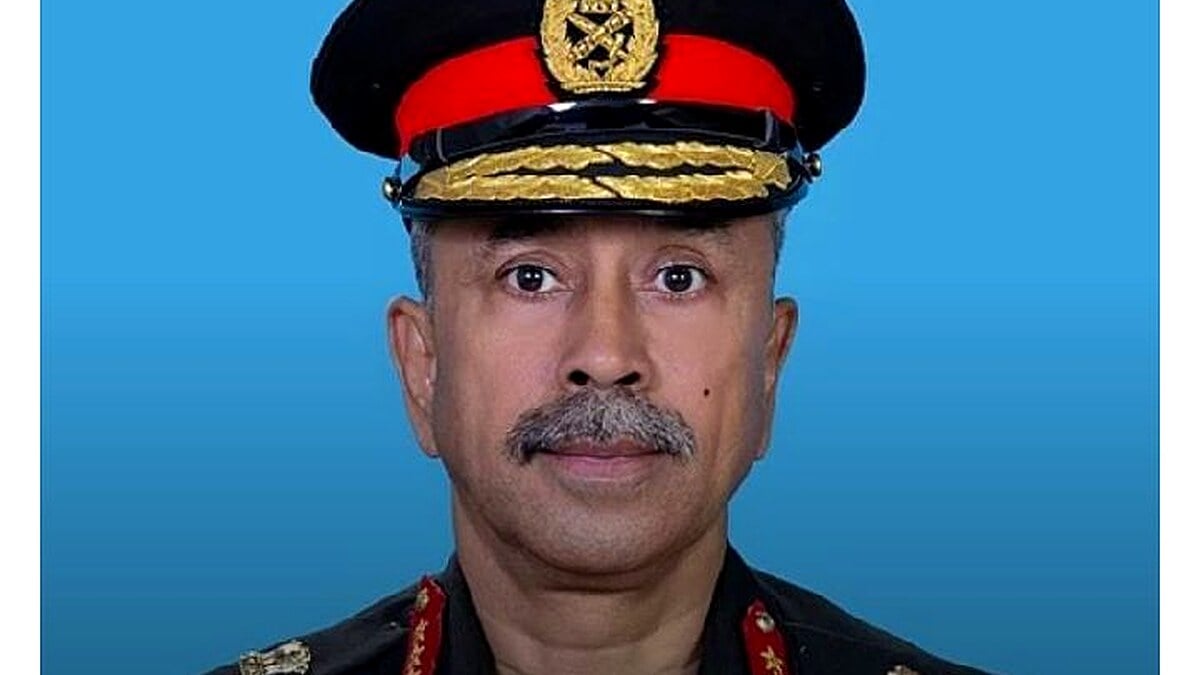




ISLAMABAD: Lieutenant General NS Raja Subramani (Retd) assumed charge as India’s new Chief of Defence Staff on Sunday, succeeding General Anil Chauhan whose tenure ended on May 30.
The appointment, announced earlier this month by the Indian government, comes weeks after the conclusion of Operation Sindoor, India’s 2025 military campaign against alleged terror infrastructure in Pakistan.
Subramani, a retired three-star officer from the Garhwal Rifles with over four decades of service, will also serve as Secretary of the Department of Military Affairs. He previously held positions including Vice Chief of the Army Staff and Military Adviser to the National Security Council Secretariat.
The development has drawn attention in regional security circles, particularly in Pakistan, where analysts are assessing its implications for India’s military posture following last year’s clashes.
**Official Confirmation** The Indian Ministry of Defence confirmed the appointment, stating that Subramani will focus on tri-service integration, theatre commands, and accelerating indigenous defence production. In his initial remarks, the new CDS emphasised strengthening coordination among the Army, Navy, and Air Force while advancing military reforms.
**Questions Over Merit and Selection** Notable absence in the top role is General Upendra Dwivedi, the current Chief of the Army Staff, who many observers viewed as a strong professional candidate for CDS. Dwivedi assumed the Army chief position in June 2024 and has overseen key operational aspects, including responses tied to Operation Sindoor.
Defence sources and analysts in India have raised concerns about the decision to appoint a retired lieutenant general over the serving Army chief. Reports point to internal considerations that reportedly favoured officers perceived as aligned with certain political and ideological circles close to the ruling BJP and RSS.
This marks the third consecutive CDS appointment from the Indian Army and continues a pattern of selecting officers from the Garhwal region. Critics argue this reflects a narrowing of the selection process rather than a broad merit-based approach across services.
**Operation Sindoor Context** Operation Sindoor, launched in May 2025, involved Indian missile and air strikes on multiple sites in Pakistan and Pakistan-administered Kashmir. India claimed the operation targeted terror camps linked to groups like Jaish-e-Mohammed and Lashkar-e-Taiba following an attack in Pahalgam that killed 26 civilians.
The brief conflict saw significant aerial engagements, with both sides reporting losses. Indian officials later acknowledged initial setbacks but maintained overall operational objectives were met. The episode highlighted ongoing challenges in India-Pakistan military dynamics and tested coordination between Indian services.
**Key Military Figures and Timelines** General Anil Chauhan’s CDS tenure, which began after General Bipin Rawat’s tenure, lasted nearly three years. Subramani’s appointment follows a relatively swift transition announcement on May 9.
The CDS role, created in 2019 on the recommendations of a Group of Ministers post-Kargil Review Committee, aims to provide single-point military advice to the government and oversee joint operations. However, full operationalisation of theatre commands remains a work in progress, with delays reported in integrating assets across services.
India’s defence budget for 2025-26 stands at approximately $74 billion, with increasing focus on indigenous platforms under the Atmanirbhar Bharat initiative. Progress includes projects like advanced fighter jets, missiles, and drone systems, though integration challenges persist.
**Reactions in India and Region** Within India, the appointment has received mixed responses. Serving and retired officers have privately expressed concern over bypassed command channels and what some describe as rushed reshuffles that could affect institutional morale. Public commentary on Indian digital platforms has highlighted the need to prioritise military merit over political considerations.
In Pakistan, the development is being monitored for its potential impact on border security and strategic stability. Officials in Islamabad have reiterated Pakistan’s commitment to maintaining a credible deterrent while calling for dialogue on underlying issues.
Regional observers note that India’s military leadership transitions occur against the backdrop of ongoing border infrastructure development and modernisation efforts, including expansion along the Line of Actual Control.
**Strategic Implications** The appointment of Subramani, who served under National Security Adviser Ajit Doval, is seen by some as reinforcing centralised control over defence policy. This could accelerate certain reforms but may also raise questions about the balance between professional military advice and political direction.
Analysts suggest the coming months will test the new CDS’s ability to address integration gaps exposed during Operation Sindoor. Key areas include joint logistics, intelligence sharing, and rapid decision-making in multi-domain operations.
Questions about Army unity and the primacy of professional competence over other factors are likely to linger. India’s security challenges, ranging from border tensions to maritime security in the Indian Ocean, require cohesive leadership that transcends internal political alignments.
Future developments may include further announcements on theatre commands and defence acquisitions. How the new leadership manages internal cohesion while projecting strength externally will shape India’s military effectiveness in the region in the coming years.
The transition underscores the complex interplay between politics, military institutions, and national security priorities in India’s defence establishment. Regional capitals, including Islamabad, will continue to observe closely as implementation unfolds.