



ISLAMABAD: Fresh international attention has emerged around Pakistan’s claims regarding India’s Russian-made S-400 air defence system after Serbian President Aleksandar Vučić reportedly referenced the combat use of the Chinese-origin CM-400AKG missile during discussions on advanced missile capabilities and regional defence systems.
The remarks have triggered renewed debate across defence circles, military analysts, and regional media platforms over Pakistan’s assertion that it successfully targeted components of an Indian S-400 battery during the May 2025 India-Pakistan military confrontation.
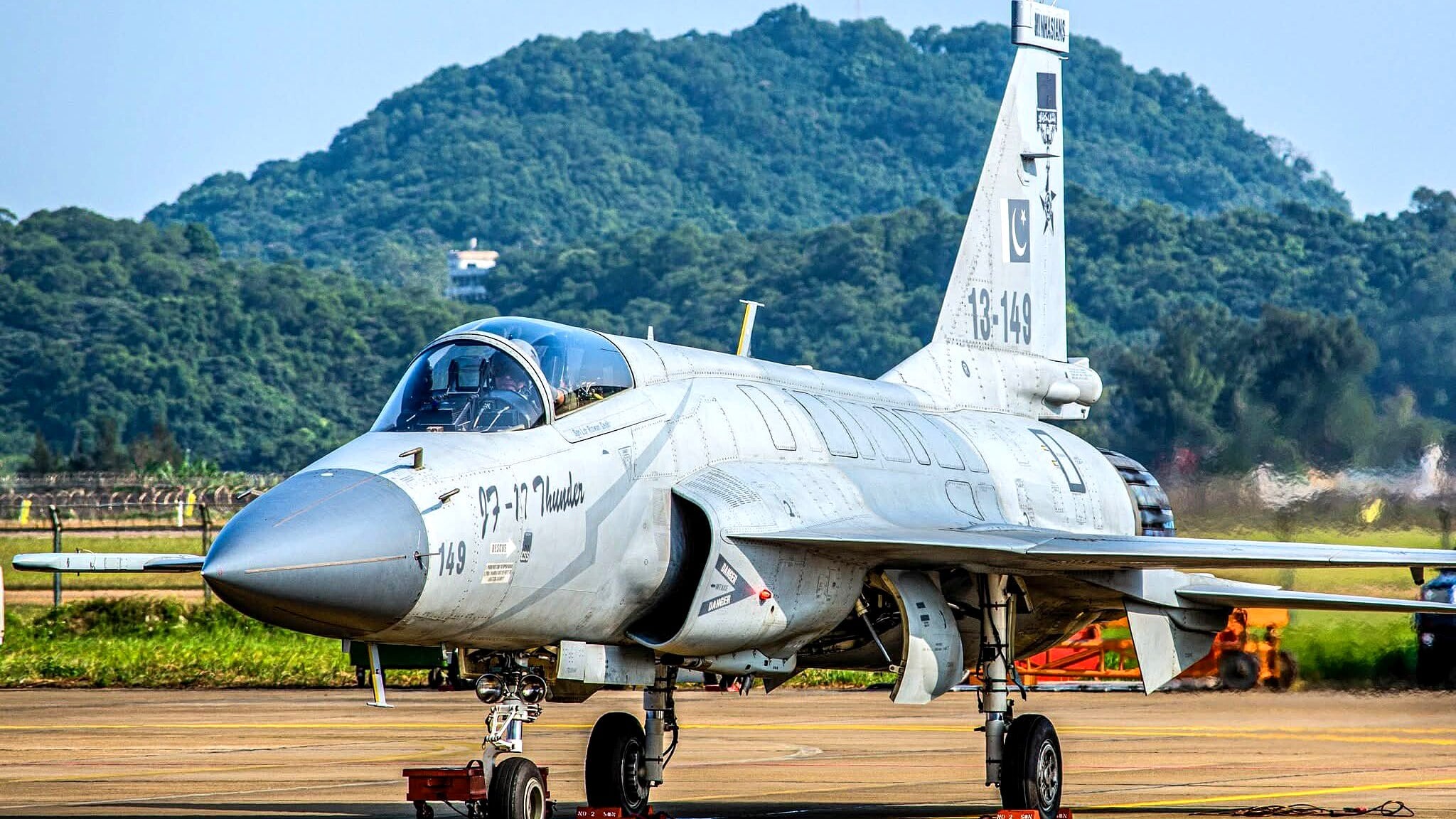
The discussion centers on claims made by Pakistan during the conflict that Pakistan Air Force JF-17 Thunder fighter aircraft used CM-400AKG hypersonic-class missiles against Indian air defence assets deployed near Adampur in Indian Punjab.
According to reports circulating in regional defence media, Vučić referred to the missile’s reported operational performance while discussing Serbia’s own defence modernization efforts and long-range precision strike capabilities.
The comments are significant because they represent one of the rare instances in which a European leader has publicly referenced Pakistan’s version of events surrounding the S-400 controversy.
Pakistan’s military had stated during the May 2025 conflict that multiple Indian military targets were engaged, including air defence infrastructure and radar systems.
At the time, Pakistani officials described the operation as part of a broader retaliatory response following escalating military exchanges between the two nuclear-armed neighbors.
Indian authorities, however, strongly rejected the claims and maintained that no S-400 system had been destroyed or rendered inoperable. India’s Press Information Bureau labeled reports of an S-400 destruction as false and part of misinformation circulating during the conflict.
India’s Ministry of External Affairs also publicly dismissed claims that S-400 batteries or related strategic assets had suffered major damage during the fighting.
The S-400 Triumf remains one of the most advanced long-range air defence systems currently in service worldwide.
India signed a deal worth approximately $5.4 billion with Russia for five S-400 regiments, making it one of the largest air defence acquisitions in South Asia in recent years. The system can reportedly detect aerial targets at ranges approaching 600 kilometers and engage multiple threats simultaneously.
Military analysts note that even partial damage to radar, command, or tracking components of an integrated air defence network can temporarily reduce operational effectiveness without necessarily destroying the entire missile battery.
This distinction has remained at the center of competing narratives that emerged after the May 2025 conflict.
The fighting itself represented the most serious military confrontation between India and Pakistan in years, involving missile exchanges, aerial engagements, drone operations, and precision strikes across multiple sectors. International actors including the United States, China, and the United Nations repeatedly urged restraint during the escalation.
Open-source defence discussions, satellite imagery analysis, and independent military observers have continued to debate the extent of damage inflicted on strategic assets by both sides.
Neither side has released comprehensive publicly verifiable battle damage assessments covering all major military claims made during the conflict.
The controversy has also gained attention because of the broader strategic implications for modern air warfare.
The CM-400AKG missile, often described as a high-speed precision strike weapon designed for anti-ship and high-value target missions, has been viewed by analysts as part of a growing trend toward long-range stand-off engagement capabilities in Asia.
For Pakistan, validation of any successful strike against a sophisticated air defence system would strengthen arguments regarding the effectiveness of its expanding China-backed aerospace and missile inventory.
For India, maintaining confidence in the operational credibility of the S-400 remains strategically important because the system forms a key layer of the country’s integrated air defence architecture.
The renewed discussion generated by the Serbian president’s reported remarks is therefore likely to extend beyond a single battlefield claim and into wider debates surrounding missile warfare, air defence survivability, and military modernization across South Asia.
Defence analysts expect competing assessments regarding the May 2025 conflict to continue emerging as governments, researchers, and military institutions release additional information, while several key operational claims from both sides remain disputed and independently unverified.