



ISLAMABAD: Pakistan has dismissed claims by the outgoing Indian Naval Chief that Operation Sindoor severely disrupted the country’s maritime trade and confined its navy to ports.
Senior officials in Islamabad described the assertions as unsubstantiated and timed for domestic consumption rather than reflecting operational reality.
Ministry of Maritime Affairs and Pakistan Navy sources confirmed that commercial shipping through Karachi, Port Qasim, and Gwadar continued without significant interruption during the May 2025 period.
**Data from port authorities shows no major decline in cargo volumes.** Karachi Port handled a record 54 million tonnes of cargo in 2025, with steady throughput maintained even during heightened regional tensions.
Maritime sector officials reported a full-year profit of Rs100 billion ($360 million) for 2025, driven by efficiency reforms and sustained operations.
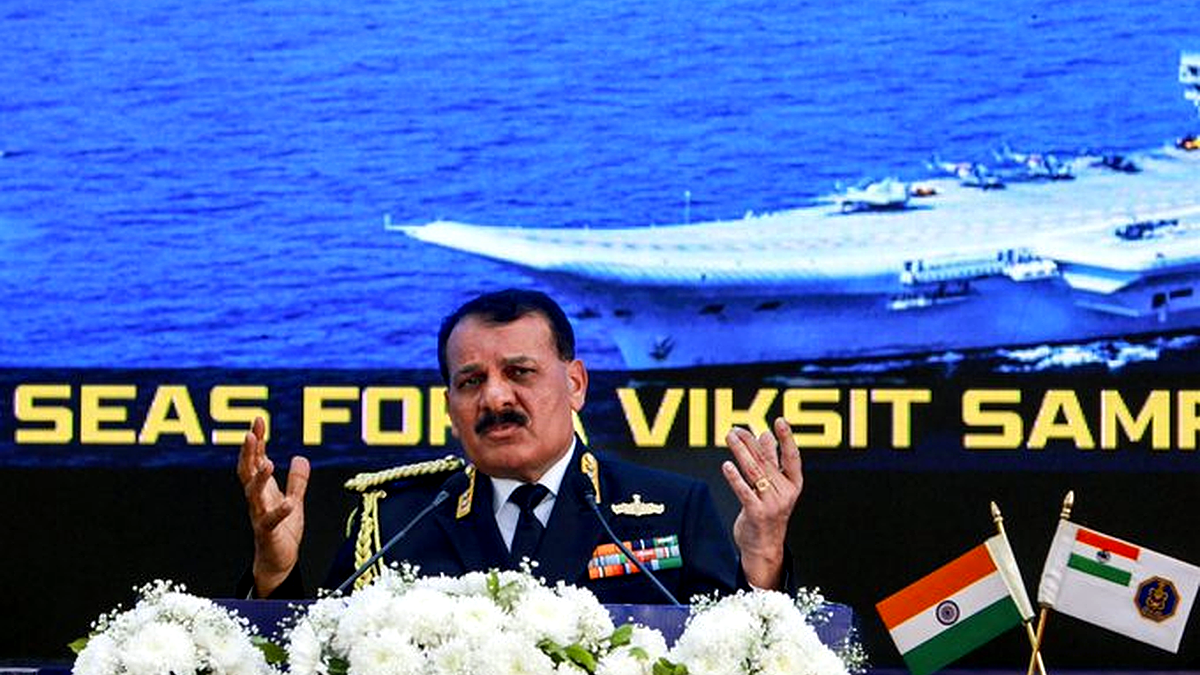
Indian Naval Chief Admiral Dinesh K Tripathi stated on May 30 that aggressive posturing by Indian forces, including deployment of a Carrier Battle Group, forced Pakistan Navy vessels to remain near ports and increased shipping insurance premiums.
Pakistani authorities countered that no verifiable commercial data, shipping logs, or international insurance reports support such disruption claims.
**Pakistan Navy maintained regular patrols and operational readiness throughout the period.** Official statements emphasized that fleet movements aligned with standard protocols rather than confinement.
Maritime Affairs Minister Muhammad Junaid Anwar Chaudhry highlighted continued growth in port efficiency, with vessel turnaround times reduced by 24-36 hours in key facilities.
Seafood exports crossed the $500 million mark in fiscal year 2025-26, reflecting stable access to international markets despite Indian assertions.
Operation Sindoor was launched by India in May 2025 following a terror attack in Pahalgam. Indian forces conducted strikes on alleged terror infrastructure in Pakistan and Pakistan-occupied Kashmir.
The operation lasted several days and involved coordinated actions across domains. Both sides reported heightened naval activity in the Arabian Sea during this time.
**Pakistan Navy Chief Admiral Naveed Ashraf had earlier stated that Pakistani forces maintained effective deterrence and positioned assets to counter Indian movements, including surveillance on the INS Vikrant carrier group.**
Independent shipping data from the period shows no sustained spike in insurance premiums specific to Pakistan routes beyond temporary regional volatility common in such episodes.
Port authorities recorded consistent transshipment activity, with over 8,300 TEUs handled in early 2026 at Karachi, marking significant year-on-year growth.
**Background context reveals recurring patterns in post-operation narratives.** Similar claims of decisive naval dominance have appeared after previous India-Pakistan crises, often without independent corroboration from global trade trackers.
Pakistan’s maritime trade relies on established routes to the Middle East, China, and Europe. These corridors saw normal vessel traffic volumes according to local operators.
Analysts note that any genuine blockade-level disruption would appear in real-time metrics from Lloyd’s List, Baltic Exchange indices, or port call data—none of which registered prolonged anomalies for Pakistani terminals in May 2025.
**Market reactions remained stable.** Pakistani rupee and equity indices showed expected volatility during the operation but recovered quickly, with no evidence of maritime sector-specific collapse.
Diplomatic sources in Islamabad viewed the Indian Naval Chief’s remarks, delivered near the end of his tenure, as an attempt to shape legacy rather than present verified outcomes.
**Strategic implications suggest both sides achieved deterrence objectives without full escalation.** Pakistan maintained sufficient naval posture to protect sea lanes, while India demonstrated rapid deployment capabilities.
Future developments will likely focus on naval modernisation on both sides. Pakistan continues investments in fleet expansion and coastal defence systems.
Regional maritime security remains sensitive, with Gwadar and CPEC-related infrastructure forming key elements of Pakistan’s long-term blue economy strategy.
Ongoing monitoring of trade data will provide clearer long-term assessment of operational impacts beyond competing official narratives.