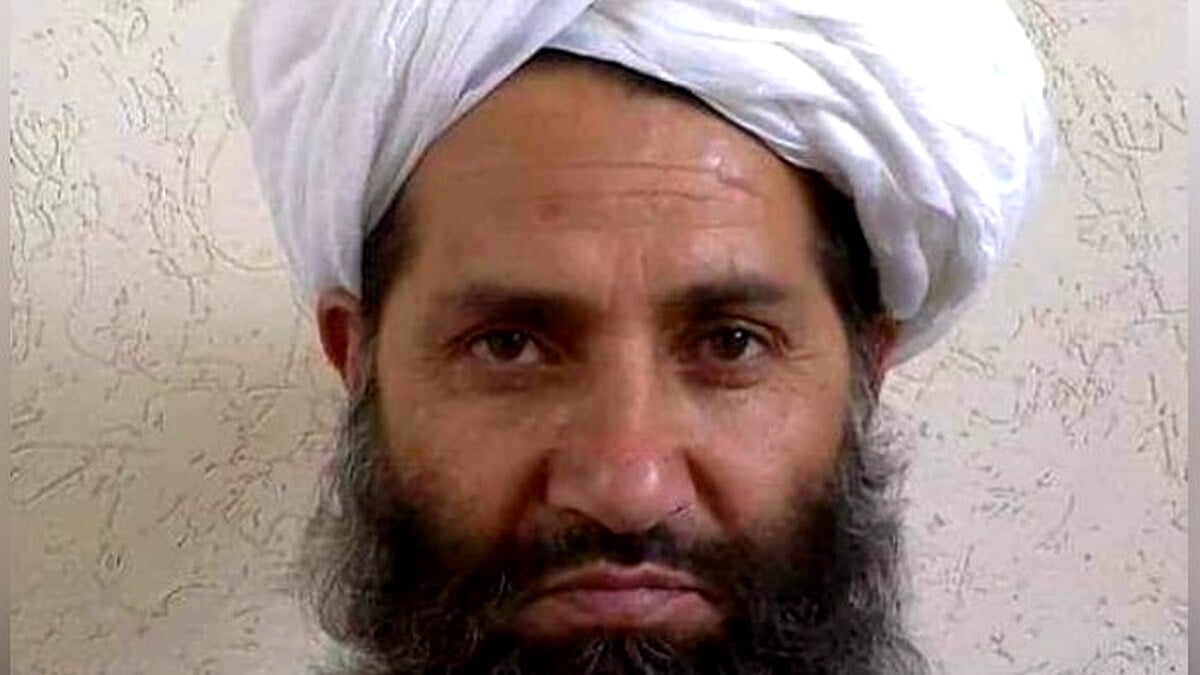




ISLAMABAD: Afghan Taliban supreme leader Mullah Hibatullah Akhundzada has issued a verbal order banning all Taliban members and government employees from using smartphones, according to a document from the group’s Ministry of Justice.
The directive, circulated to military court heads across eight zones, warns that violators will be treated as criminals and referred to military courts for prosecution. Police commanders and intelligence chiefs in the respective zones have also been notified.
The order marks the latest step in the Taliban’s tightening control over technology and information flows within its ranks since taking power in August 2021.
**Official Confirmation** A document obtained by Afghanistan International details the enforcement mechanism. Military court officials have been instructed to ensure full implementation and report back to senior leadership.
The ban applies to fighters and civilian government staff alike, reflecting Akhundzada’s long-standing distrust of modern communication devices. The reclusive leader, who rarely appears in public, has previously restricted phone use around his residence in Kandahar and pushed for broader internet limitations.
**Broader Technology Restrictions** This latest measure fits into a pattern of escalating controls. In recent months, the Taliban has imposed fiber-optic internet shutdowns in multiple provinces including Balkh, Kandahar, Uruzgan, Zabul, and Nimruz, citing efforts to curb “immoral activities.”
University staff below certain grades and students have faced smartphone restrictions on campuses, with directives aimed at reducing distractions and enforcing discipline. Earlier orders also limited phone use in specific military corps and checkpoints.
Afghanistan’s internet penetration, heavily reliant on mobile networks, stands as one of the lower rates regionally. Pre-2021 estimates placed mobile internet access around 89 percent in some periods, but repeated shutdowns and restrictions have disrupted business, education, and daily communication.
**Context and Implementation** Akhundzada, who assumed leadership in 2016 following Mullah Mansour’s death, governs from Kandahar with a focus on strict interpretation of Sharia. He relies on radio systems rather than digital tools and has overseen decrees on media, women’s rights, and public conduct.
The Ministry of Justice document emphasizes legal action through military courts, indicating the ban’s integration into the Taliban’s parallel justice system. Enforcement is expected to vary by zone but carries the weight of supreme leader directives, which officials describe as obligatory.
Previous attempts to limit smartphones in educational and security settings cited security risks, potential for corruption, and distraction from duties. Similar logic appears to drive the current order, aiming to prevent leaks, surveillance concerns, or external influences within the ranks.
**Reactions and Impact** The development comes amid ongoing economic hardship in Afghanistan, where over 23 million people require humanitarian assistance. Restrictions on communication tools risk further isolating government functions and complicating coordination in a country already facing banking and aid delivery challenges.
Local sources report mixed compliance in past restrictions, with some fighters using basic phones for essential contact. Full enforcement of a smartphone ban across thousands of officials and members could strain administrative efficiency, particularly in provinces with limited alternatives.
International observers note the move aligns with the Taliban’s pattern of centralizing control and reducing digital footprints. The International Criminal Court has issued arrest warrants for Akhundzada related to other policies, though the group rejects such actions.
Pakistani officials monitor developments closely given the shared border and history of cross-border movements. Any tightening of Taliban internal controls could influence regional security dynamics, including militant activities and refugee flows.
**Strategic Implications** The ban highlights tensions within Taliban governance between ideological purity and practical administration. While aimed at enhancing security and discipline, excessive restrictions on communication may hinder the regime’s ability to manage provinces effectively or respond to crises.
Analysts suggest such measures could deepen internal fractures, as more pragmatic elements within the movement navigate between supreme leader edicts and operational needs. Past internet shutdowns already affected banking, flights, and essential services, prompting partial reversals in some cases.
Future enforcement will likely depend on compliance reporting from zones. The order’s focus on military courts signals serious intent, but widespread implementation challenges remain in a country with uneven infrastructure and varying local interpretations of directives.
The move further isolates Afghanistan digitally at a time when economic recovery requires better connectivity for trade and aid. Regional neighbors, including Pakistan, continue to balance engagement with concerns over stability and cross-border implications.
Questions persist on how the Taliban will balance technology aversion with governance demands in coming months. Additional decrees or adjustments may follow based on internal feedback and external pressures.