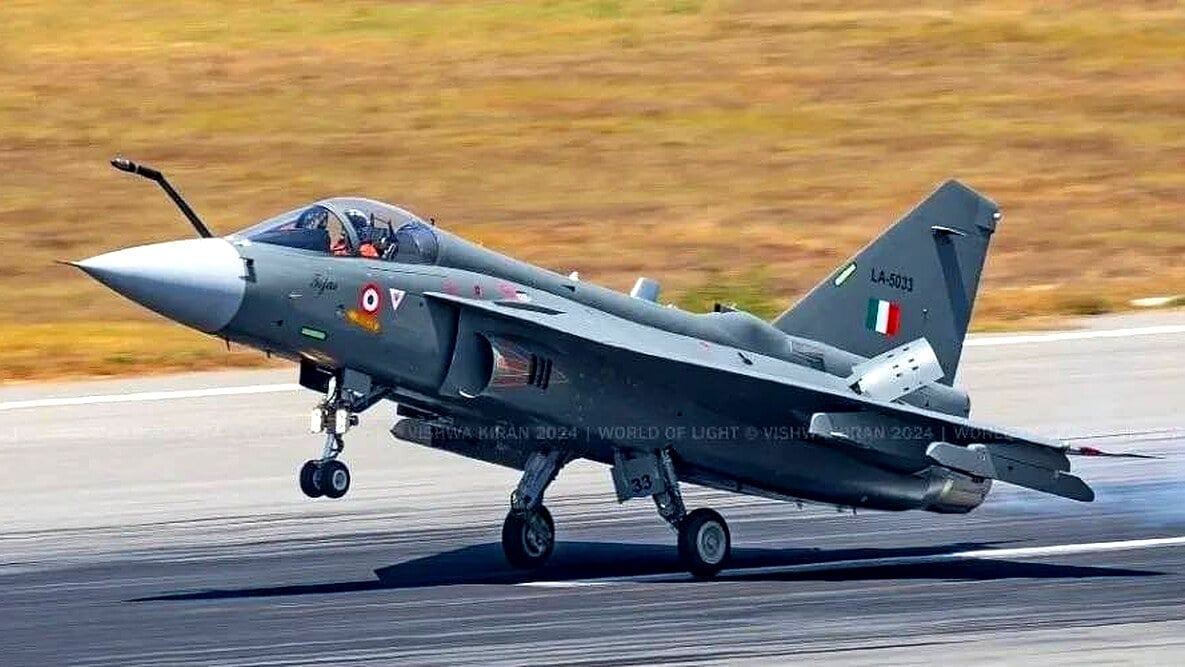




(While Pakistan Accelerates JF-17 Production, India Faces New Setbacks in Tejas Expansion)
Tejas Setbacks
ISLAMABAD: Pakistan Aeronautical Complex has achieved significant progress in its JF-17 Thunder fighter jet programme, with reports indicating the rollout and induction of around 200 aircraft into the Pakistan Air Force fleet.
The joint China-Pakistan developed lightweight multi-role fighter continues to form the backbone of the PAF’s modernisation drive, replacing ageing legacy platforms. Production at the Kamra facility has maintained a steady pace of approximately 16-25 aircraft per year, supported by substantial local manufacturing content.
In contrast, India’s Light Combat Aircraft Tejas Mk1A programme is grappling with persistent delays. Hindustan Aeronautics Limited (HAL) is reportedly facing potential liquidated damages clauses under its contract for the Mk1A variant due to slow delivery timelines to the Indian Air Force.
Official sources confirm that only six of the 99 F404-IN20 engines ordered from GE Aerospace in a $716 million deal have been delivered so far. HAL has already invoked contractual liquidated damages on GE for repeated delays in engine supplies.
The Tejas Mk1A contract, valued at over ₹48,000 crore for 83 aircraft, was originally slated for initial deliveries in 2024-25 but has slipped by more than two years. Airframes have been prepared, yet full integration and operational clearance remain pending due to supply chain bottlenecks.
Pakistan Air Force officials have highlighted the JF-17 Block 3 variant’s advanced capabilities, including AESA radar, modern avionics, and beyond-visual-range missile integration. The programme’s success stems from early focus on serial production and incremental block upgrades since its induction in 2009.
The JF-17 has also attracted export interest from countries including Myanmar, Nigeria, Azerbaijan, and potentially others, bolstered by its combat performance and cost-effectiveness estimated between $30-50 million per unit.
Defence analysts note that the JF-17’s production model benefits from a 58 percent local manufacturing share in Pakistan, enabling consistent output despite regional tensions. The PAF fleet now relies heavily on these platforms for air defence and ground attack roles.
On the Indian side, the contract with HAL for Tejas Mk1A always included liquidated damages provisions. Industry observers point out that HAL’s decision to penalise GE for engine delays logically extends the same accountability across the programme. Media reports suggest the Indian Air Force may seek similar measures if delivery targets are not met.
The ₹1.09 lakh crore broader Tejas ecosystem aims for 180 Mk1A jets, but current production rates remain constrained. HAL has set a revised target of 18-24 deliveries by the end of 2026 once engine supplies improve.
Geopolitically, the divergent trajectories underscore different development philosophies. The JF-17 prioritised affordability, rapid iteration, and export viability through Sino-Pakistani collaboration. The Tejas programme, while emphasising higher indigenous content, has encountered protracted development and integration challenges.
Market implications are notable. JF-17 exports provide Pakistan with defence revenue streams and diplomatic leverage, while India’s delays affect squadron readiness amid its own modernisation requirements. The Indian Air Force currently operates around 38 Tejas Mk1 aircraft.
Strategic observers suggest Pakistan’s steady JF-17 expansion strengthens its conventional deterrence posture in the region. The programme’s maturity allows for potential future upgrades and variants without major production disruptions.
For India, resolving the engine supply and integration issues remains critical to meeting self-reliance goals under the Atmanirbhar Bharat initiative. Upcoming reviews between HAL and the IAF are expected to address revised timelines and penalty mechanisms.
The coming months will likely see continued focus on production ramp-up for both programmes, with broader implications for regional air power balance and defence export dynamics.