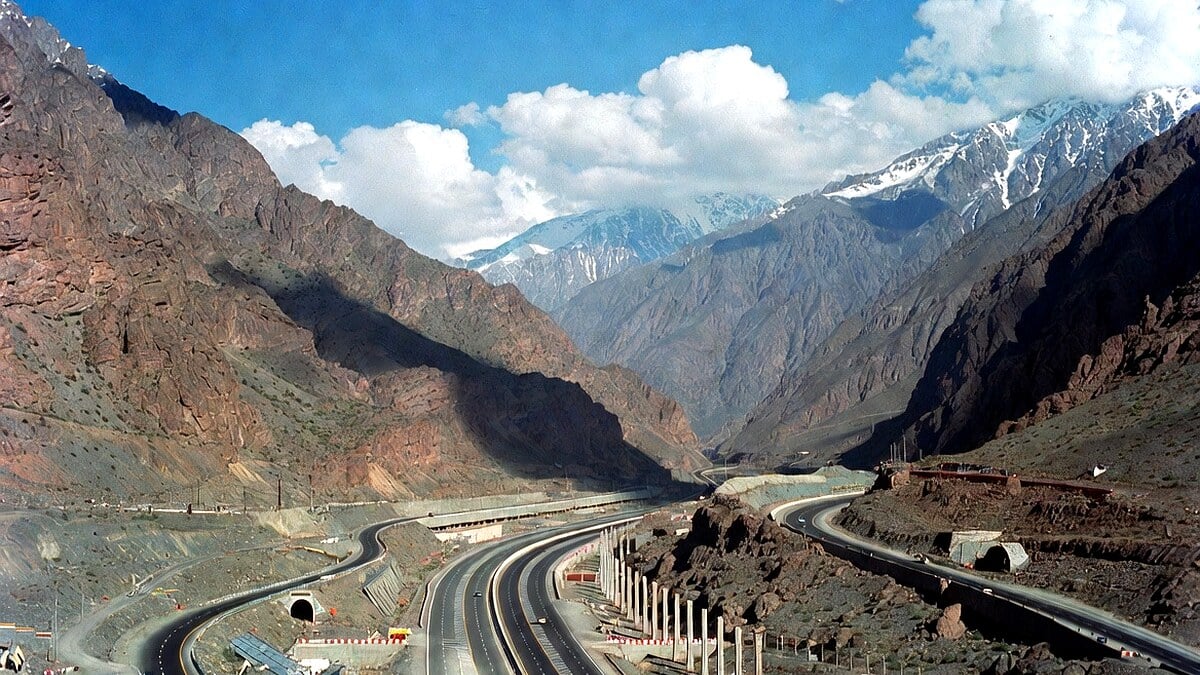




(Pakistan Approves 172km MNJC Motorway as Strategic Alternative to Karakoram Highway
ISLAMABAD: The federal government has approved the construction of the 172-kilometre Mansehra–Kaghan–Naran–Jhal Khand–Chilas (MNJC) Motorway, a major infrastructure project designed to improve connectivity in northern Pakistan.
The National Highway Authority (NHA) will execute the project, which includes Pakistan’s longest road tunnel at 13.5km — the Babusar Tunnel. Officials state the new route will reduce travel distance by up to 120km compared to the existing Karakoram Highway alignment.
The four-lane motorway, expandable to six lanes, aims to provide a safer and more efficient link between the plains of Khyber Pakhtunkhwa and Gilgit-Baltistan. It forms a critical component of Pakistan’s broader northern connectivity strategy, strengthening access between southern ports including Karachi and Gwadar with western China.
Planning Commission sources confirmed the project received final approval during a recent Executive Committee of the National Economic Council (ECNEC) meeting. The MNJC Motorway is expected to cost approximately Rs248 billion, with funding drawn from a mix of federal budget allocations, Public-Private Partnership (PPP) models, and potential international financing.
**Official Statements** NHA Chairman Muhammad Shaukat Ali described the project as a “game-changer for regional connectivity.” He noted that the motorway will feature modern engineering standards suited to the difficult mountainous terrain, including avalanche protection measures and advanced slope stabilisation systems.
Communications Minister Abdul Aleem Khan stated the government prioritises this corridor to reduce dependency on the single existing route through the region, which frequently faces closures due to landslides and weather conditions.
**Key Project Details** The alignment passes through scenic but challenging areas of Kaghan and Naran valleys before connecting to Chilas. The 13.5km Babusar Tunnel will cut through the Babusar Pass at an elevation of approximately 3,000 metres, significantly reducing seasonal disruptions.
Travel time between Mansehra and Chilas is expected to drop from the current 10-12 hours to around 4-5 hours once completed. The project includes 12 interchanges, multiple bridges, and several smaller tunnels besides the main Babusar structure.
Construction is scheduled to begin in the final quarter of 2026, with a targeted completion within five years. The motorway will support heavy vehicles, improving freight movement capacity by an estimated 40 percent on this corridor.
**Economic and Strategic Significance** The MNJC Motorway is positioned as an important supplement to China-Pakistan Economic Corridor (CPEC) infrastructure. It will enhance trade logistics between Gwadar Port and China’s Xinjiang region while opening new opportunities for tourism in the Kaghan-Naran valley, which currently receives over 1.2 million visitors annually during peak season.
Officials project the project could generate direct and indirect employment for nearly 15,000 workers during the construction phase. Upon completion, it is expected to add approximately 0.3 to 0.4 percent to regional GDP through improved trade efficiency and tourism growth.
**Background Context** The Karakoram Highway, while historically significant, has faced increasing pressure from rising traffic volumes and climate-induced vulnerabilities. The new motorway addresses these limitations by offering a more resilient parallel route that remains operational for longer periods throughout the year.
**Reactions and Initial Impact** Business communities in Gilgit-Baltistan and Hazara Division have welcomed the development. Local trade bodies estimate that reduced transportation costs could lower the price of essential commodities in far-flung areas by 12-18 percent.
Tourism stakeholders anticipate a substantial increase in visitor numbers once the smoother access is available, particularly for international tourists seeking reliable road connectivity to tourist destinations.
**Strategic Implications** The MNJC Motorway represents a shift toward developing multiple redundant corridors in Pakistan’s northern regions. This approach aims to enhance both economic resilience and strategic depth in connectivity with China.
Analysts suggest that successful completion of this project could serve as a template for future high-altitude infrastructure initiatives. The government is expected to invite international contractors with proven experience in tunnel construction for the Babusar segment.
Further feasibility studies for extensions and feeder roads are already under consideration to maximise the economic returns of the main motorway corridor.
The project’s progress will be closely watched as Pakistan continues to modernise its northern transport network amid growing regional trade demands.