



**ISLAMABAD:** China has publicly revealed performance details of its latest beyond-visual-range air-to-air missile, the PL-16, claiming a maximum range exceeding 300 kilometres.
The disclosure highlights a new variable-thrust solid rocket motor and compact airframe design that maintains high performance while allowing greater loadout on fighter aircraft.
Defence analysts note the PL-16 as a significant evolution from the PL-15, offering similar or superior kinetic performance in a smaller package optimised for internal carriage on stealth platforms like the J-20.
**Official Confirmation** Chinese technical briefings released this week confirm the PL-16’s engagement envelope surpasses 300km under optimal launch conditions. The missile features folded control fins and a dual-pulse motor system designed for sustained energy in terminal phases.
Pakistan Air Force sources have not issued an official statement, but defence observers in Islamabad indicate strong interest in integrating the system with the J-10C and JF-17 Block III fleets.
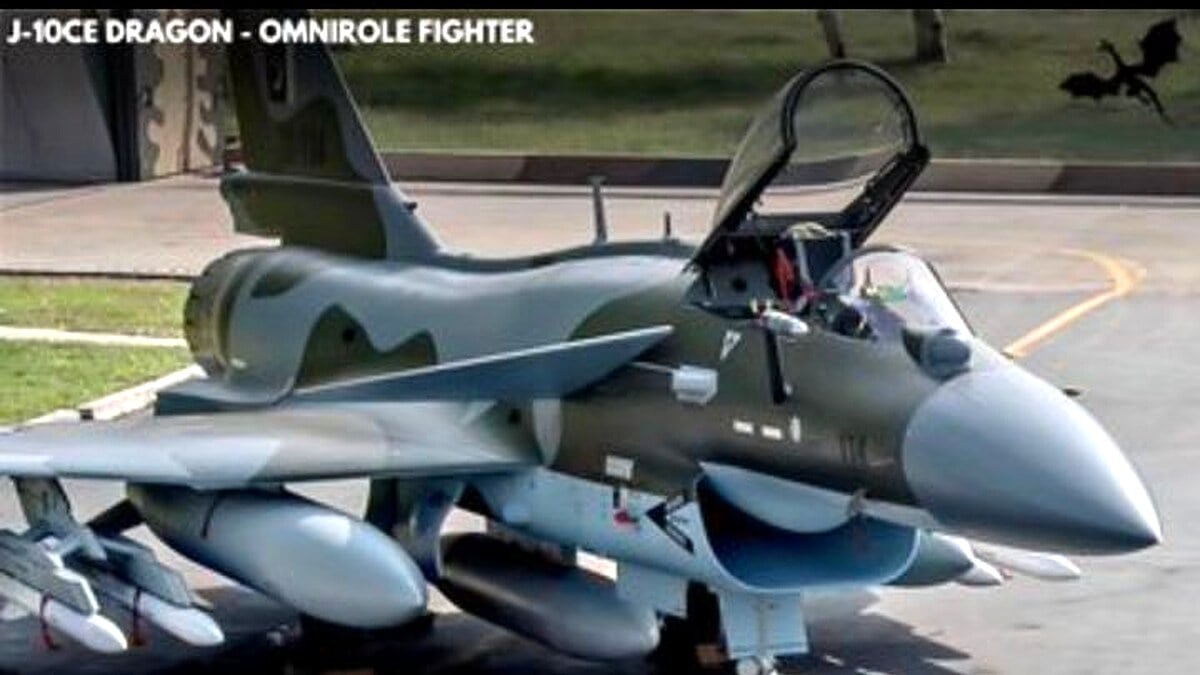
**Current PAF Capabilities** The Pakistan Air Force already operates the PL-15 on both the J-10CE and JF-17 Block III platforms. Integration of the longer-range PL-15 was first publicly shown in official PAF releases in 2025.
The J-10CE fleet, acquired in the early 2020s, provides the PAF with AESA radar-equipped multirole fighters capable of deploying multiple BVR missiles. The JF-17 Block III, with its indigenous production at Pakistan Aeronautical Complex Kamra, forms the backbone of the fighter force with over 150 aircraft projected in service.
**Technical Specifications** The PL-16 maintains a reduced physical footprint compared to the PL-15 while reportedly matching or exceeding its 200-300km class performance. Industry estimates suggest the missile can achieve speeds approaching Mach 5 and features active radar homing with datalink support.
Its compact design allows platforms like the J-20 to carry up to six missiles internally, a configuration that could translate to higher external loadouts on the J-10C and JF-17.
**Regional Context** The development comes amid ongoing modernisation efforts across South Asia. India continues to induct Rafale fighters equipped with Meteor missiles and is advancing its own Astra Mk2 and Mk3 BVR programmes.
The PL-16 would provide the PAF with a potential edge in first-shot, first-kill scenarios against high-value aerial targets at extended ranges.
**Strategic Implications** Acquisition of the PL-16 would further deepen Pakistan-China defence cooperation, which already includes joint production of the JF-17 Thunder and transfer of J-10C technology.
Defence analysts in Islamabad suggest integration could be completed within 18-24 months if approved, leveraging existing PL-15 infrastructure and training protocols already in place.
The move aligns with broader PAF efforts to maintain qualitative parity in beyond-visual-range engagements. Earlier this year, senior PAF officials emphasised the need for continuous upgrades to counter evolving regional threats.
Future developments may include local assembly or component manufacturing of advanced munitions at Pakistani facilities, following the successful model established with the JF-17 programme.
Regional observers will closely monitor any formal announcements from Rawalpindi regarding the PL-16 as air forces across Asia accelerate next-generation air combat capabilities.