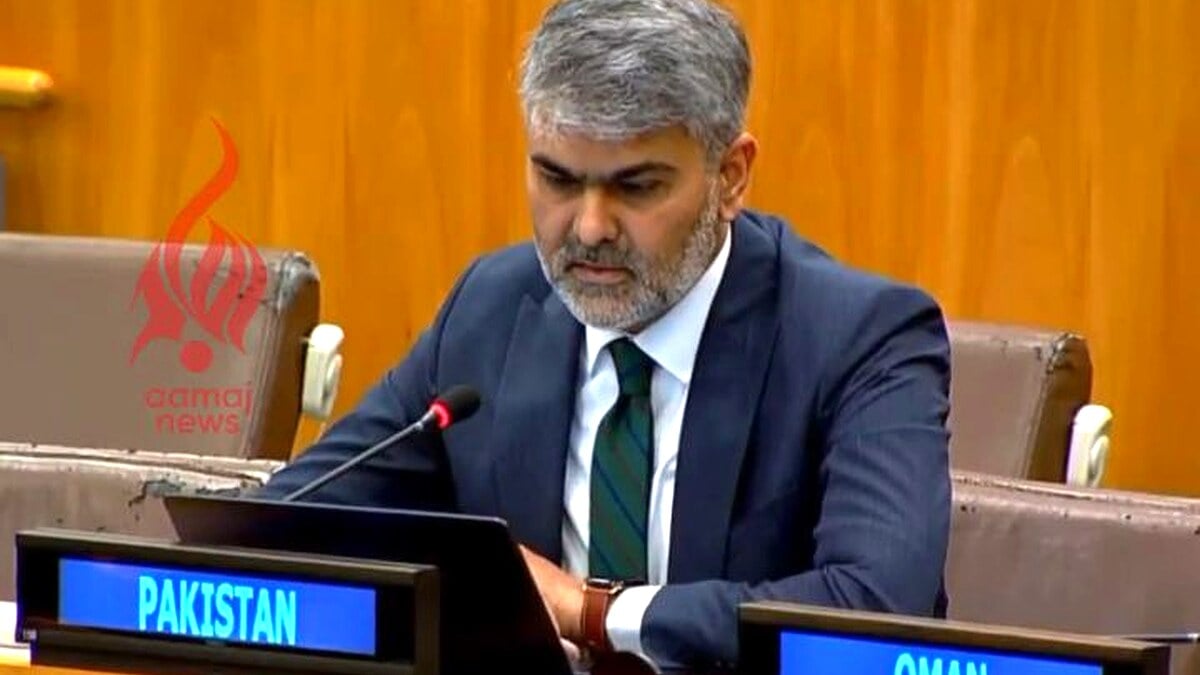




(Pakistan Raises Serious Alarm Over Sophisticated Arms Stockpiles in Afghanistan)
Afghanistan at UN Meeting
ISLAMABAD: Pakistan has raised serious concerns over large stockpiles of sophisticated arms and ammunition in Afghanistan during the Ninth Biennial Meeting of States on the UN Programme of Action on Small Arms and Light Weapons.
Counsellor Syed Atif Raza delivered Pakistan’s statement at the session held in New York, highlighting risks to regional stability. He warned that illicit small arms and light weapons continue to fuel conflicts and strengthen non-state armed groups operating across borders.
Pakistan specifically pointed to significant weapons stockpiles in Afghanistan, as documented in multiple UN Secretary-General reports. These accumulations pose direct threats to neighbouring countries, including risks of diversion to terrorist organisations.
The statement emphasised that growing sophistication and easy access to such weapons by illegal armed actors undermine national security and civilian protection across the region.
**Official Position**
Raza stated that Pakistan remains deeply concerned about the presence of these stockpiles. He called for stronger international action to prevent illicit arms transfers to armed groups and effective implementation of relevant UN Security Council resolutions.
Pakistan urged a comprehensive approach to address the issue while reaffirming support for the UN Programme of Action. This framework balances legitimate state security needs with global efforts against illicit arms flows.
A senior Foreign Office official in Islamabad reiterated that cross-border movement of weapons directly impacts Pakistan’s internal security environment. Officials noted ongoing terrorist incidents linked to groups operating from Afghan territory.
**Key Data and Figures**
UN monitoring and independent assessments indicate substantial quantities of advanced weaponry remain in Afghanistan. Estimates suggest nearly three-quarters of approximately 427,000 small arms and light weapons supplied by the United States between 2005 and 2021 are unaccounted for or remain in the country.
Historical data points to between 1.5 million and 10 million small arms circulating in Afghanistan, with ammunition stockpiles exceeding 100,000 tonnes in some assessments. The total value of such arms has been estimated between $6 billion and $8 billion in past evaluations.
Pakistan has reported increased attacks by groups such as Tehreek-e-Taliban Pakistan (TTP), with sophisticated weapons contributing to heightened threats along the western border. Over the past years, cross-border incidents have resulted in significant security force casualties.
The UN Programme of Action, adopted in 2001, serves as the primary global framework. More than 150 countries participate, with Biennial Meetings reviewing implementation progress on stockpile management, marking, tracing, and international cooperation.
**Background Context**
Afghanistan has long faced challenges with arms proliferation following decades of conflict. Large quantities of weapons entered the country through various international supply channels during the 2001-2021 period, including over 600,000 small arms documented in certain US assistance programmes.
Following the 2021 transition, concerns intensified regarding accountability and potential diversion. Pakistan has consistently highlighted these issues in UN forums, linking them to militant activities affecting its territory.
The 2,600-kilometre Pakistan-Afghanistan border remains a focal point for security coordination efforts. Pakistan maintains that effective border management requires addressing both physical controls and upstream weapons flows.
**Reactions and Impact**
Regional security analysts have noted the statement aligns with broader concerns shared by other neighbouring states. Diplomatic sources indicate quiet discussions continue within multilateral platforms on practical measures for stockpile verification and destruction.
Market implications remain limited at present, though defence analysts observe that unchecked proliferation sustains black market networks. This affects legitimate trade and security cooperation in South and Central Asia.
Public response in Pakistan has been supportive of the government’s firm diplomatic position. Security experts emphasise the need for sustained international engagement beyond statements.
**Strategic Implications**
Acquisition of advanced systems by non-state actors alters threat calculations for conventional forces. Weapons with enhanced range, accuracy, or night-vision capabilities extend operational reach of militant groups beyond traditional tactics.
Pakistan’s position reflects a consistent policy of seeking multilateral solutions while maintaining robust national defences. The country continues to invest in border infrastructure and intelligence co