



ISLAMABAD: The Ministry of Information and Broadcasting on Friday strongly refuted claims by the Afghan Taliban regime that it had conducted air strikes on alleged terrorist camps inside Pakistan’s Khyber Pakhtunkhwa and Balochistan provinces.
In an official statement released through its fact-check account, the ministry described the Afghan assertions as “false as usual” and part of a pattern of propaganda aimed at deflecting attention from the Taliban’s own role in sheltering militant groups.
The ministry stated that terrorist camps belonging to Daesh (ISKP), Tehreek-i-Taliban Pakistan (TTP) — referred to by Pakistani authorities as Fitna Al Khawarij — and more than two dozen other organisations are located, operated, and supported from territories under Afghan Taliban control.
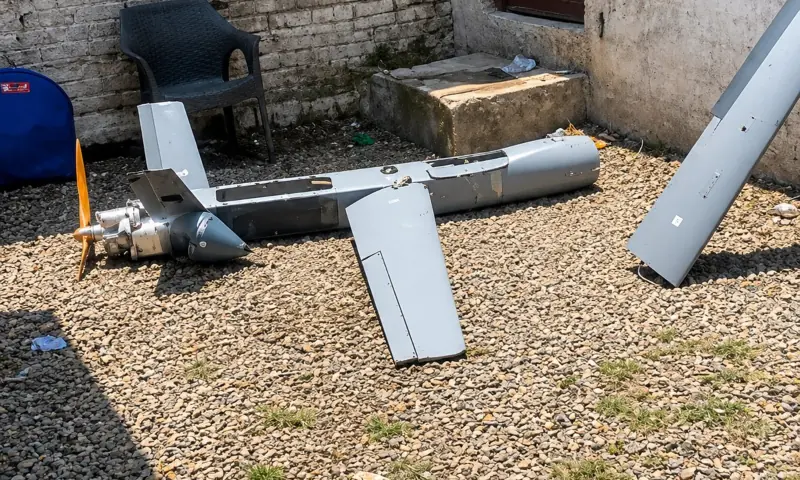
According to the Pakistani statement, one rudimentary drone from the Afghan side intruded into Pakistan’s airspace near Shinko in Khyber district on Friday. It was promptly identified and neutralised by the Pakistan Air Force’s air defence system. The ministry released an image of the downed drone to support its account.
**Official Response**
Information Ministry officials asserted that such claims by the Taliban are routine attempts to mask their patronage of cross-border terrorism targeting neighbouring countries. They specifically accused the regime of backing Daesh, Fitna Al Khawarij, Fitna Al Hindustan, and affiliated networks.
Pakistan has repeatedly highlighted the presence of TTP sanctuaries in Afghanistan as the primary driver of heightened militancy in its western provinces. Security forces have conducted extensive counter-terrorism operations in response.
**Security Statistics and Context**
Data from recent reports indicate a significant surge in terrorist activity. In 2025, Pakistan recorded 1,139 terrorism-related deaths and 1,045 incidents, marking the highest levels since 2013 and placing the country at the top of the Global Terrorism Index for the first time.
Khyber Pakhtunkhwa and Balochistan bore the brunt of these attacks, with TTP responsible for a 24 percent increase in incidents in 2025 compared to the previous year. The group claimed or was linked to 595 attacks, resulting in 637 deaths — the highest for TTP since 2011.
Pakistani security forces reported conducting over 32,000 counter-terrorism operations in recent periods, neutralising 1,861 terrorists, primarily in the border regions. Despite these efforts, cross-border infiltration from Afghanistan remains a persistent challenge.
The 2,600-kilometre Durand Line border has seen repeated tensions. Earlier escalations in 2026 included Pakistani strikes on militant targets in Afghan provinces and retaliatory actions, contributing to heightened alerts along the frontier.
**Background of Tensions**
Relations between Islamabad and Kabul have deteriorated since the Taliban’s return to power in 2021. Pakistan accuses the Afghan regime of failing to honour commitments to prevent the use of its soil against Pakistan. The TTP, which shares ideological and ethnic ties with the Afghan Taliban, has regrouped and intensified operations from Afghan sanctuaries, according to Pakistani intelligence assessments.
Afghan authorities consistently deny providing safe havens and have countered with their own accusations against Pakistan. Friday’s exchange fits into this cycle of claims and refutations amid ongoing border volatility.
In 2025–2026, security operations in Khyber Pakhtunkhwa and Balochistan resulted in hundreds of militant casualties, alongside losses to security personnel and civilians. Pakistani forces have emphasised intelligence-based, precise targeting to minimise collateral damage while dismantling networks.
**Reactions and Regional Implications**
The latest incident underscores deep mutual distrust. Diplomatic channels remain strained despite occasional mediation attempts by regional powers, including China. Trade and people-to-people contacts across the border have suffered due to repeated closures and security measures.
Markets in border areas showed caution following the reports, though no major disruptions were immediately reported in major cities. Analysts note that sustained militancy has economic costs, with impacts on investment, infrastructure projects like CPEC extensions, and regional connectivity.
Public sentiment in Pakistan remains focused on demands for stronger border management and decisive action against infiltration. Military spokespersons have reiterated commitment to defending territorial integrity without escalation unless provoked.
**Strategic Outlook**
The episode highlights the complex security dynamics in the region. Persistent TTP activity from Afghan territory continues to test Pakistan’s defensive posture and counter-terrorism strategy. With over 1,000 incidents recorded in 2025 alone, long-term stability requires addressing root causes, including cross-border sanctuaries.
Pakistani authorities maintain that verifiable action by Kabul against shared threats is essential for normalising ties. Future developments may hinge on sustained diplomatic pressure, enhanced border fencing and surveillance, and coordinated regional efforts against transnational militancy.
As operations continue in KP and Balochistan, the focus remains on disrupting networks while managing escalation risks along the volatile frontier. The coming weeks are likely to see further security assessments and potential adjustments in operational posture.