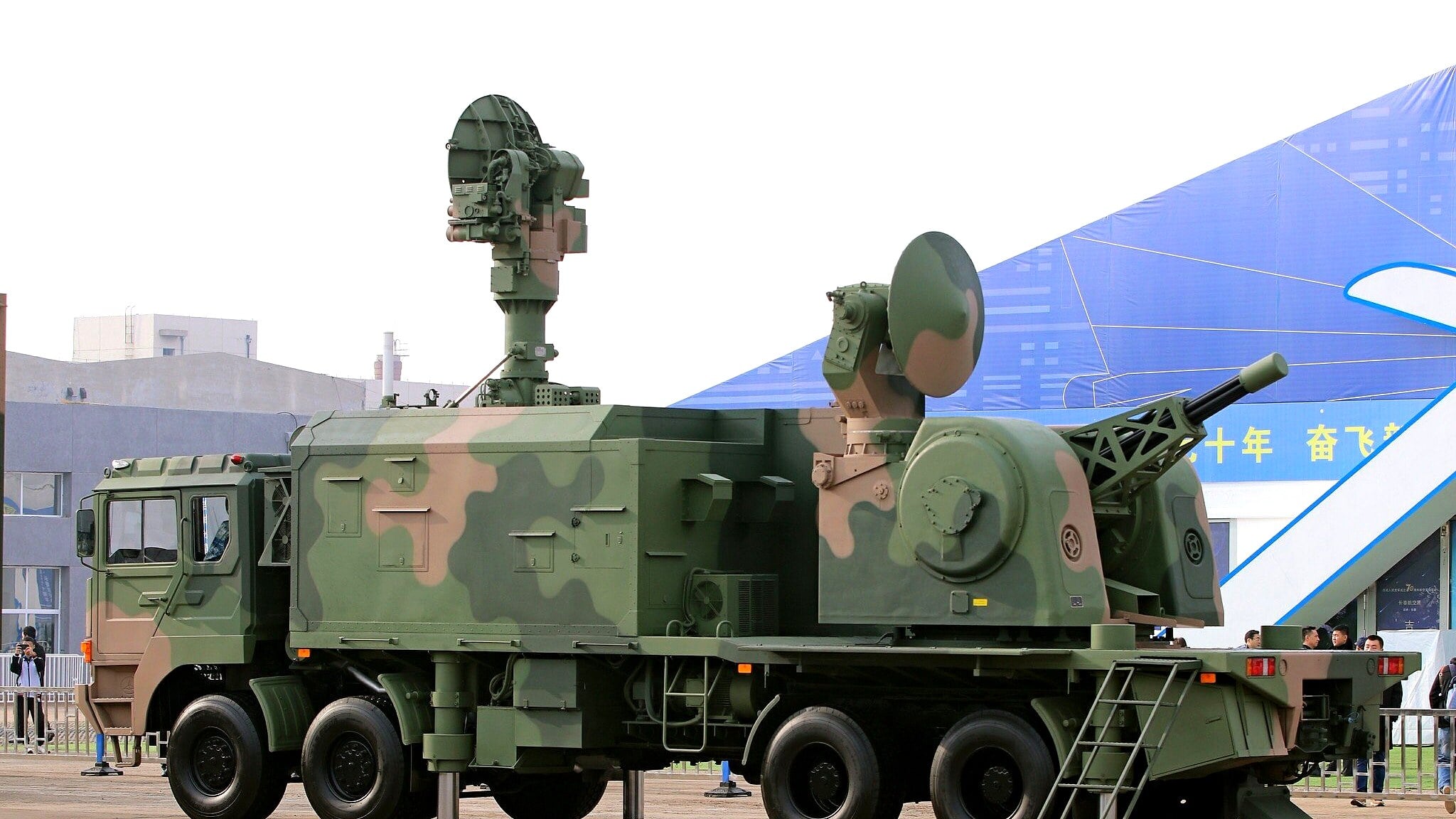




(Pakistan to receive a significant boost to its air defence system capabilities)
System
ISLAMABAD: Pakistan has received a significant boost to its air defence capabilities with the induction of the Chinese LD-3000 rapid-fire defence system.
The system, known for its high-rate firepower, will enhance protection of key strategic installations and forward military positions against aerial threats.
Defence sources confirmed that initial batches of the LD-3000 have arrived in Pakistan as part of a broader defence cooperation agreement with China.
The LD-3000 is capable of unleashing up to 12,000 rounds per minute, making it one of the most potent close-in weapon systems in the region. It integrates advanced radar tracking with automated gun systems designed to intercept low-flying aircraft, drones, and incoming missiles.
According to military officials, the system features multiple 30mm barrels and uses advanced fire-control technology for rapid target acquisition. Its effective engagement range extends several kilometres, providing layered defence when integrated with existing surface-to-air missile systems.
The Pakistan Air Force and Army Air Defence units will jointly operate the new system. Senior defence officials described the induction as a timely upgrade amid evolving regional security dynamics.
A statement from the Inter-Services Public Relations (ISPR) noted that the LD-3000 significantly improves Pakistan’s ability to counter saturation attacks and low-altitude threats. “This acquisition strengthens our defensive posture and ensures better protection of vital assets,” the statement added.
The deal forms part of ongoing Pakistan-China defence collaboration under which Beijing has supplied various platforms including JF-17 fighter jets, Type 054A/P frigates, and VT-4 tanks in recent years.
Defence analysts estimate the LD-3000 acquisition involves multiple units with associated training and maintenance packages. While exact financial figures remain classified, similar Chinese air defence systems have typically ranged in the hundreds of millions of dollars for complete packages.
The LD-3000 builds upon earlier systems like the LD-2000, with improved electronics and higher firing rates. Chinese manufacturers developed it primarily for export markets facing modern drone and missile threats.
Pakistan’s existing air defence network includes Chinese HQ-9 and HQ-16 surface-to-air missiles alongside American-supplied systems and indigenous developments. The addition of the LD-3000 provides a critical short-range layer that complements longer-range interceptors.
Regional security observers point to increased aerial activity near Pakistan’s western borders and ongoing tensions with India as key factors driving this upgrade. Both countries have accelerated modernisation of their air defence capabilities in recent years.
The system’s high rate of fire makes it particularly effective against swarms of unmanned aerial vehicles, a growing concern for militaries worldwide. Military sources indicate that Pakistani crews have already begun training on the platform at specialised facilities.
This development comes as Pakistan continues to diversify and strengthen its defence inventory through both indigenous production and strategic partnerships. The country allocates approximately 2.5 to 3 percent of GDP to defence spending, with significant portions directed toward force modernisation.
Analysts suggest the LD-3000 will be deployed to protect major airbases, naval facilities, and critical infrastructure in Punjab, Sindh, and Khyber Pakhtunkhwa provinces. Its mobility allows rapid repositioning based on threat assessments.
In response to the induction, regional experts have noted the deepening military-technical ties between Islamabad and Beijing. China remains Pakistan’s largest defence supplier, accounting for a substantial share of military hardware imports over the past decade.
Market reactions in Pakistan remained stable following the announcement, with defence-related stocks showing minor positive movement on the Pakistan Stock Exchange. The development is expected to have limited immediate impact on broader economic indicators but reinforces investor confidence in national security.
The LD-3000 operates effectively in various terrain and weather conditions, an important factor for Pakistan’s diverse geography ranging from mountainous northern regions to coastal areas. Its integration with existing command-and-control networks will allow real-time data sharing across services.
Defence Minister Khawaja Asif has previously emphasised the need for continuous modernisation to maintain deterrence. “Our forces must stay ahead of emerging threats through timely acquisitions and local manufacturing,” he stated during a recent parliamentary session.
As Pakistan incorporates the new system, focus will shift toward full operationalisat