



ISLAMABAD:
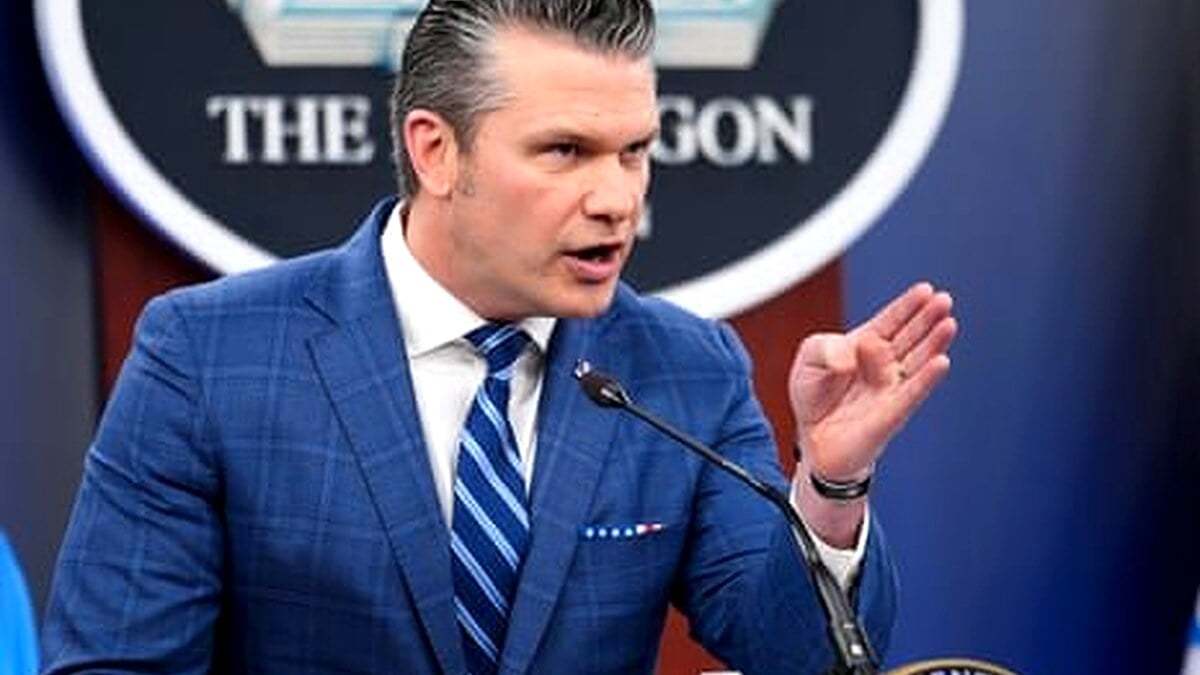
United States Defense Secretary Pete Hegseth has described the evolving relationship between Washington and Islamabad as a “true friendship,” marking one of the strongest public endorsements of Pakistan by a senior US security official in recent years.
Speaking during the Shangri-La Dialogue security summit in Singapore, Hegseth praised Pakistan’s role in ongoing diplomatic efforts linked to negotiations between the United States and Iran, while highlighting what he called an “unexpected development” in bilateral relations.
The remarks come at a time when Pakistan has been increasingly active in regional diplomacy, particularly following its reported involvement in facilitating communication channels between Washington and Tehran during months of heightened tensions in the Middle East.
According to statements released from the summit, Hegseth specifically acknowledged the roles of Prime Minister Shehbaz Sharif and Field Marshal Syed Asim Munir in ongoing peace-related discussions involving Iran and the United States.
“I think an unexpected development and a true friendship is developing there,” Hegseth said while discussing Pakistan’s diplomatic engagement in the region.
The comments are being viewed by analysts as a notable shift in the public tone of Washington’s security establishment toward Islamabad, particularly after years of fluctuating relations centered on Afghanistan, counterterrorism cooperation, and regional strategic competition.
Pakistan’s involvement reportedly gained greater visibility after diplomatic efforts connected to a broader US-Iran de-escalation process, which followed weeks of military tensions across the Middle East. Several reports indicate Islamabad served as an interlocutor during negotiations that contributed to an April ceasefire arrangement.
Hegseth also refrained from directly identifying either Pakistan or India as security threats while discussing regional military dynamics and strategic capabilities.
The US defense chief noted that both South Asian countries remain nuclear powers and continue to view each other through long-standing security concerns, but emphasized that Washington was not currently “pointing fingers” at either side.
The latest remarks add to a series of positive statements from senior US officials regarding Pakistan over the past year.
US President Donald Trump has repeatedly praised Pakistan’s leadership during recent engagements, publicly describing Prime Minister Shehbaz Sharif as a “great” leader while also commending Field Marshal Asim Munir’s role in regional security matters.
In addition, US Secretary of State Marco Rubio previously stated that Washington sees opportunities to broaden cooperation with Pakistan while maintaining separate strategic partnerships elsewhere in the region.
Pakistan and the United States maintain a complex relationship spanning more than seven decades, covering defense cooperation, intelligence coordination, trade, counterterrorism operations, and regional security engagement.
Bilateral trade between the two countries has remained above $7 billion annually in recent years, while security cooperation has continued through military contacts, training programs, and strategic consultations despite periods of political strain.
The recent diplomatic developments have emerged against the backdrop of broader geopolitical changes across Asia and the Middle East.
Pakistan’s geographic position, its relationships with Gulf states, China, Iran, and Western powers, as well as its role in regional connectivity initiatives, have increasingly placed Islamabad at the center of several diplomatic discussions involving conflict management and strategic stability.
Regional observers note that Hegseth’s comments were delivered at one of Asia’s most influential defense forums, attended annually by military chiefs, defense ministers, policymakers, and strategic experts from dozens of countries.
That context has given the remarks additional significance beyond routine diplomatic messaging.
At the same time, analysts caution that positive rhetoric alone does not automatically translate into major policy shifts.
Washington continues to maintain extensive defense and economic ties with India, while Pakistan’s future engagement with the United States will likely depend on concrete cooperation in areas including regional stability, counterterrorism, trade expansion, and crisis mediation.
However, the language used by America’s top defense official suggests that Islamabad’s diplomatic role in recent regional developments is receiving growing recognition within US strategic circles.
With tensions across the Middle East still unresolved and negotiations involving Iran continuing to evolve, Pakistan’s position as a potential intermediary could remain an important factor in future diplomatic efforts, potentially opening new avenues for engagement between Islamabad and Washington in the months ahead.