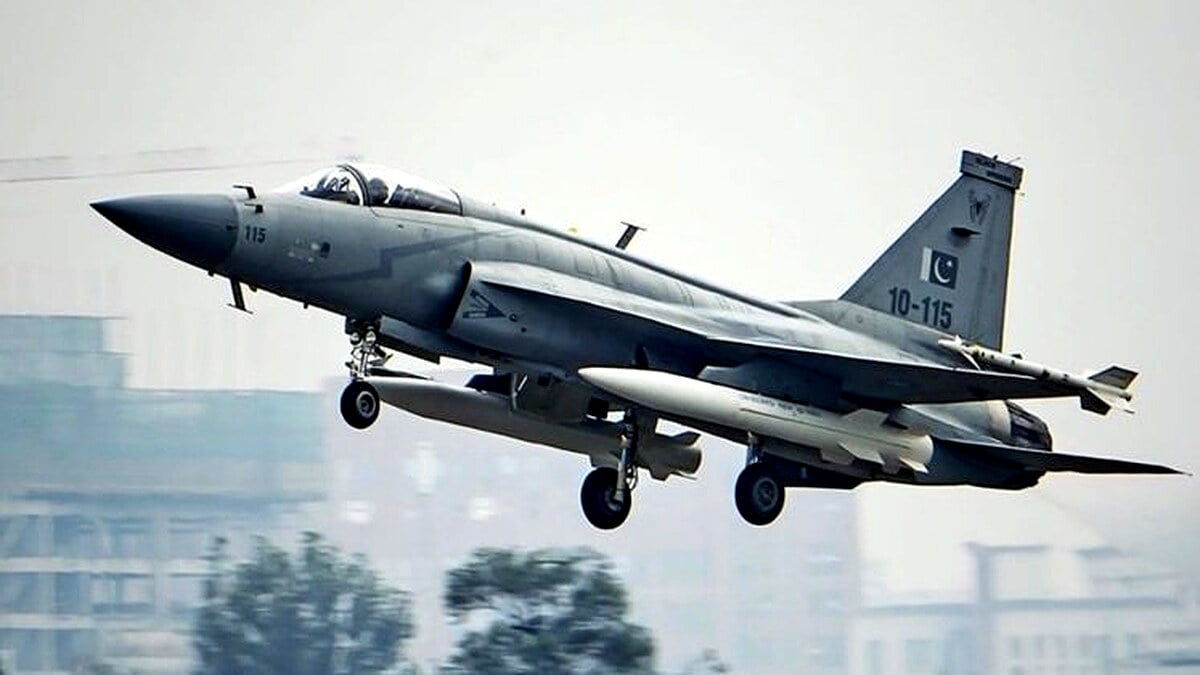




ISLAMABAD: Pakistan has begun operational deployment of the upgraded CM-400AKG air-launched missile with an extended range of 400 kilometres, defence officials confirmed on Saturday.
The development follows successful combat use of the system during the May 2025 India-Pakistan conflict, where the missile reportedly neutralised an Indian S-400 air defence battery.
The Pakistan Air Force (PAF) integrated the enhanced variant primarily with JF-17 Thunder fighter jets. Officials described the upgrade as a significant boost to the country’s precision strike and suppression of enemy air defences (SEAD) capabilities.
According to PAF sources, the missile’s range was increased from the previous 290km specification through improvements in propulsion and guidance systems. The system now achieves terminal speeds of up to Mach 5, with a high-altitude cruise followed by a steep dive profile that challenges modern air defence networks.
A senior defence official, speaking on condition of anonymity, stated: “The CM-400AKG has proven its effectiveness in real conflict conditions. The extended range allows our pilots to engage high-value targets from safer standoff distances while maintaining precision.”
The missile weighs approximately 910kg and can carry either a 150kg blast fragmentation warhead or a 200kg penetrator warhead. It features multiple seeker options, including inertial navigation with GNSS updates, passive radar for anti-radiation missions, and infrared/TV guidance.
During the May 2025 conflict, PAF pilots used the CM-400AKG in SEAD operations against Indian integrated air defence systems. One confirmed strike disabled an S-400 battery, marking a notable success against a system previously considered highly advanced.
The missile’s quasi-ballistic flight trajectory enables it to climb to high altitudes before accelerating in the terminal phase, reducing reaction time for enemy defences. Circular error probable (CEP) remains under 10 metres in optimal conditions.
This deployment comes amid ongoing regional tensions. Pakistan has prioritised modernisation of its air-launched standoff weapons to maintain credible conventional deterrence against superior Indian numerical advantages in aircraft and air defence systems.
The PAF operates over 150 JF-17 Thunder variants, many of which have been progressively upgraded to Block III standards. Each aircraft can carry two CM-400AKG missiles, significantly enhancing the platform’s multi-role capabilities.
Defence analysts note that the upgrade aligns with Pakistan’s broader strategy of investing in asymmetric capabilities. The country has steadily expanded its missile inventory, including both air-launched and surface-to-surface systems, to address evolving threats along its eastern border.
The CM-400AKG was originally developed by China’s CASIC corporation. Pakistan became the first export customer, with integration work completed on the JF-17 platform several years ago. The recent range extension reflects continued bilateral cooperation in defence technology.
Military sources indicated that several squadrons have already received the upgraded missiles. Training programmes for pilots and ground crews were intensified following the 2025 conflict to ensure rapid operational readiness.
The system’s passive radar seeker mode proved particularly effective against active emissions from enemy radar systems during last year’s engagements. This capability allows the missile to home in on air defence radars even if they attempt to switch to silent mode intermittently.
Economic aspects of the programme remain classified, but defence procurement budgets have seen steady increases. Pakistan’s annual defence spending hovers around 2.5-3 percent of GDP, with significant allocations directed toward indigenous production and upgrades of Chinese-origin systems.
Regional reactions have been measured. Indian media outlets reported heightened alertness along the border following confirmation of the deployment. However, no official statement has emerged from New Delhi on the matter so far.
The development is expected to influence future force posture planning on both sides. Analysts suggest it may accelerate Indian efforts to develop counter-measures and deeper strike options.
The CM-400AKG’s success in 2025 has also drawn attention from other regional air forces evaluating similar standoff weapons. Its combination of speed, range, and precision positions it as a competitive option in contested environments.
Pakistan maintains a policy of credible minimum deterrence. The missile upgrade fits within this framework, providing conventional options before escalation to strategic systems.
Further enhancements, including potential integration with additional PAF platforms, remain under consideration. Officials emphasised that the focus remains on maintaining technological edge through continuous upgrades rather than sheer quantity.
The deployment occurs as Pakistan continues to balance its defence needs with economic challenges. Recent fiscal measures have aimed to sustain military modernisation programmes despite inflationary pressures averaging 8-12 percent in recent quarters.
Strategic experts believe the extended-range CM-400AKG strengthens Pakistan’s ability to conduct deep strikes against high-value targets while minimising risk to launch platforms. This could prove decisive in future limited conventional conflicts.
As regional security dynamics evolve, the operational status of such systems will likely influence deterrence stability in South Asia. Upcoming defence exhibitions and high-level military talks may provide further clarity on integration timelines and export prospects.
The Pakistan Armed Forces continue routine exercises to validate the missile’s performance across different operational scenarios, including maritime strike roles against slow-moving surface targets.
Future developments may include software updates to guidance systems and potential warhead improvements to address emerging threats. Defence planners are monitoring advancements in electronic warfare and directed energy systems that could impact missile effectiveness.
The CM-400AKG deployment underscores Pakistan’s commitment to maintaining a robust defensive posture through targeted technological investments.