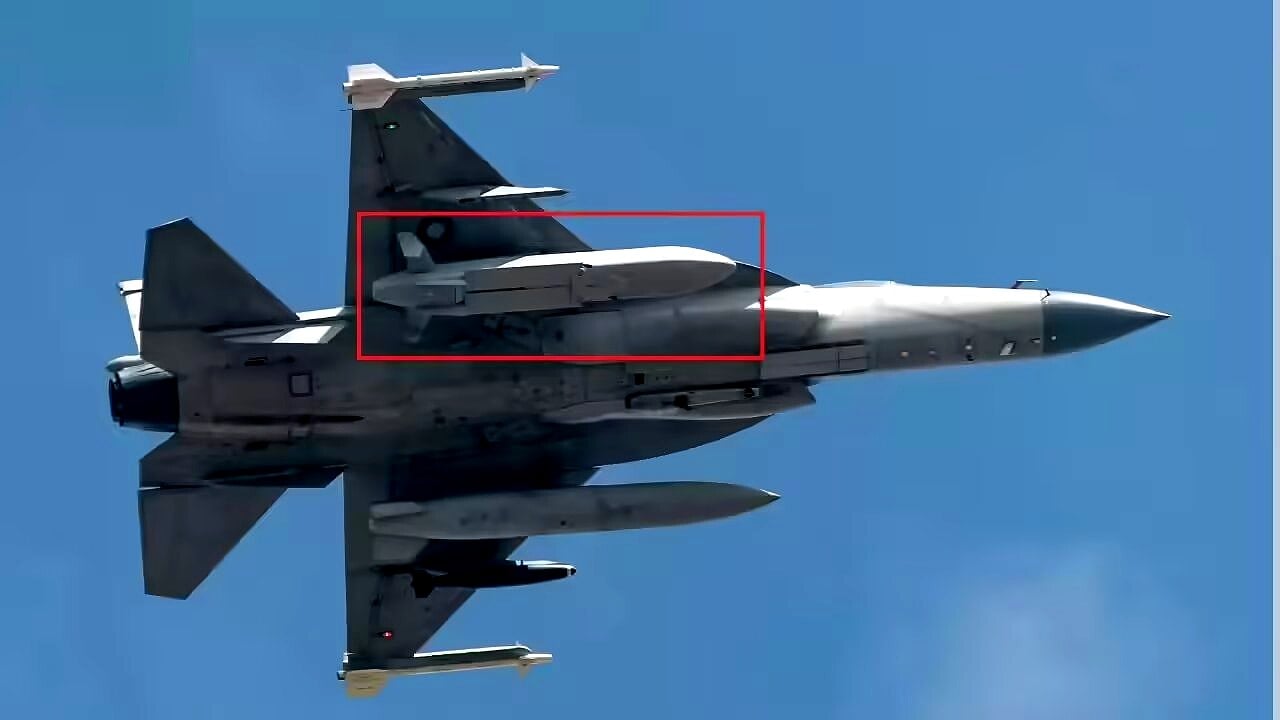




ISLAMABAD: The JF-17 Thunder fighter aircraft might soon enhance Pakistan’s strategic capabilities.
Sources indicate its potential role in delivering nuclear payloads.
This development hinges on the integration of the Ra’ad-II ALCMs.
The JF-17, a lightweight and versatile fighter developed by Pakistan and China, has been a crucial part of the Pakistan Air Force.
Recent military reports suggest it may be outfitted with two Ra’ad-II ALCMs.
Each missile has a reported range of approximately 600 kilometers.
This capability would provide a formidable stand-off strike capacity.
Ra’ad-II, an air-launched cruise missile, is engineered to deliver nuclear warheads.
Its inclusion signifies a significant advancement in deterrence strategy.
Defense analysts view this as a strategic move to bolster regional security.
The integration process, however, is still under discussion and implementation stages.
Reports show that work is actively ongoing in the relevant military sectors.
The potential nuclear delivery role of the JF-17 could reshape regional military dynamics.
It represents a significant leap in indigenous defense capabilities.
Observers expect enhanced training and operational procedures to accompany this development.
The geopolitical implications of such advancement are yet to fully surface.
Commentators call attention to the balance of power in South Asia.
Neighboring countries closely monitor these developments.
Although unconfirmed officially, this move aligns with Pakistan’s strategic doctrines.
Past doctrines have emphasized credible minimum deterrence.
The acquisition of these capabilities indicates ongoing enhancement of defense forces.
The strategic maneuver demonstrates drive for self-reliance in defense.
This is a developing story with many facets yet to emerge.
Updates on this project are anticipated from official defense sources.
Understanding its full impact remains vital for regional security analysis.
Future assessments will focus on both technical and geopolitical dimensions.