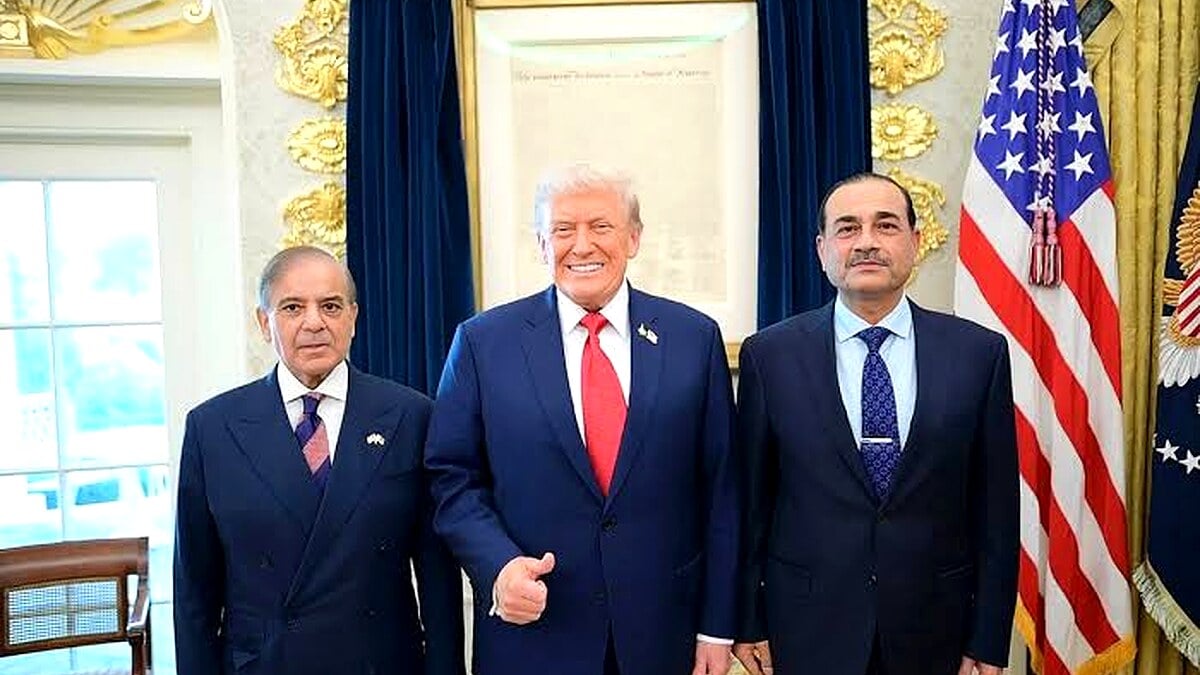




Pakistan Declines US Proposal to Join Expanded Abraham Accords
ISLAMABAD: Pakistan has firmly rejected a US request to join the Abraham Accords as part of efforts to expand normalisation agreements with Israel.
The decision came in response to a direct call from US President Donald Trump, who urged several Muslim-majority countries including Pakistan to sign the accords en masse while negotiating an agreement to end tensions with Iran.
A Pakistani security source confirmed the rejection, stating the two issues remain unrelated and cannot be linked. “Pakistan is under no compulsion to adhere to any such demand,” the source said, Reuters has quoted.
Trump made the appeal during phone conversations on Saturday with leaders from Saudi Arabia, Qatar, Pakistan, Turkey, Egypt, and Jordan. He also contacted the United Arab Emirates and Bahrain, which already signed the accords in 2020.
In a Truth Social post, Trump described the move as creating an “unparalleled World Coalition” if Iran reaches an agreement with the United States. He highlighted previous US efforts to resolve complex regional dynamics.
**Official Position**
Pakistan’s stance aligns with its long-held policy linking any normalisation with Israel to a comprehensive resolution of the Palestinian issue, including the establishment of an independent state with Al-Quds Al-Sharif as its capital.
The Foreign Office has consistently maintained this position, emphasising principled support for Palestinian self-determination. Pakistani diplomatic passports continue to prohibit travel to Israel.
No immediate public reactions emerged from most other countries contacted by Trump. Saudi Arabia, in particular, has conditioned any participation on a clear roadmap toward Palestinian statehood, citing its role as custodian of Islam’s two holiest sites.
**Background on Abraham Accords**
The Abraham Accords, brokered during Trump’s first term, were signed on September 15, 2020, between Israel, the UAE, and Bahrain. Morocco and Sudan followed later that year.
These agreements marked the first formal normalisation between Israel and Arab states since Jordan’s 1994 treaty. Kazakhstan joined the grouping in November 2025.
Economically, the accords have produced measurable results. Bilateral trade between Israel and the UAE rose from approximately $189 million in 2020 to over $3 billion by 2024. Israeli defence exports to Accords countries increased their share from 3% in 2023 to 12% in 2024, contributing to a record $14.8 billion in total defence exports.
Analysts estimate that full realisation of the accords’ potential across multiple countries could generate up to $1 trillion in new economic activity and four million jobs in the first decade, according to Rand Corporation projections.
**Current Regional Context**
Trump’s latest push comes amid ongoing diplomatic efforts to finalise an understanding with Iran. He described negotiations as “proceeding nicely” but provided no timeline for completion.
The proposal attempts to broaden the accords framework by linking it to a potential Iran ceasefire. However, Pakistani officials view the matters as distinct.
The Gaza conflict has strained existing ties. Egypt and Jordan, which already maintain diplomatic relations with Israel, have seen those relationships tested since the escalation. Turkey’s relations with Israel have also faced significant pressure.
**Reactions and Implications**
Israeli Prime Minister Benjamin Netanyahu’s office did not immediately comment on Trump’s statement.
US Senator Lindsey Graham, a Trump ally, described the linkage as “beyond transformative” for the region. Others, including analysts at the International Crisis Group, expressed caution about tying fragile diplomatic efforts to broader regional restructuring.
In Pakistan, the decision reinforces domestic consensus on the Palestinian issue. Public sentiment remains strongly supportive of Palestinian rights, with successive governments upholding this position across decades.
The rejection carries diplomatic weight. Pakistan maintains strong ties with Gulf states and plays an influential role in the Organisation of Islamic Cooperation. Its stance may affect how other nations respond to similar pressure.
**Strategic Considerations**
Pakistan’s economy, currently navigating post-flood recovery and inflation challenges, benefits from diversified partnerships across the Middle East. Trade and remittances from Gulf countries remain vital, with millions of Pakistani workers employed in the region.
By maintaining its traditional position, Pakistan avoids potential domestic backlash while preserving strategic autonomy in foreign policy. The country continues to balance relations with major powers including the United States, China, and Gulf monarchies.
Analysts note that any shift on the Israel-Palestine file would require substantial progress toward a two-state solution. Current regional dynamics, including unresolved Gaza issues, make such movement unlikely in the near term.
The coming weeks may see further clarification from involved parties as Iran negotiations progress. Trump has indicated that one or two countries may have specific reasons for hesitation, but most should be prepared to participate.
Pakistan’s firm response underscores the complexities of expanding the Abraham Accords framework. While economic incentives exist, political and public opinion barriers remain significant across several Muslim-majority nations.
Future developments will likely depend on progress in Iran talks and any concrete steps addressing core Palestinian demands. The situation continues to evolve with careful diplomatic calculations on all sides.